
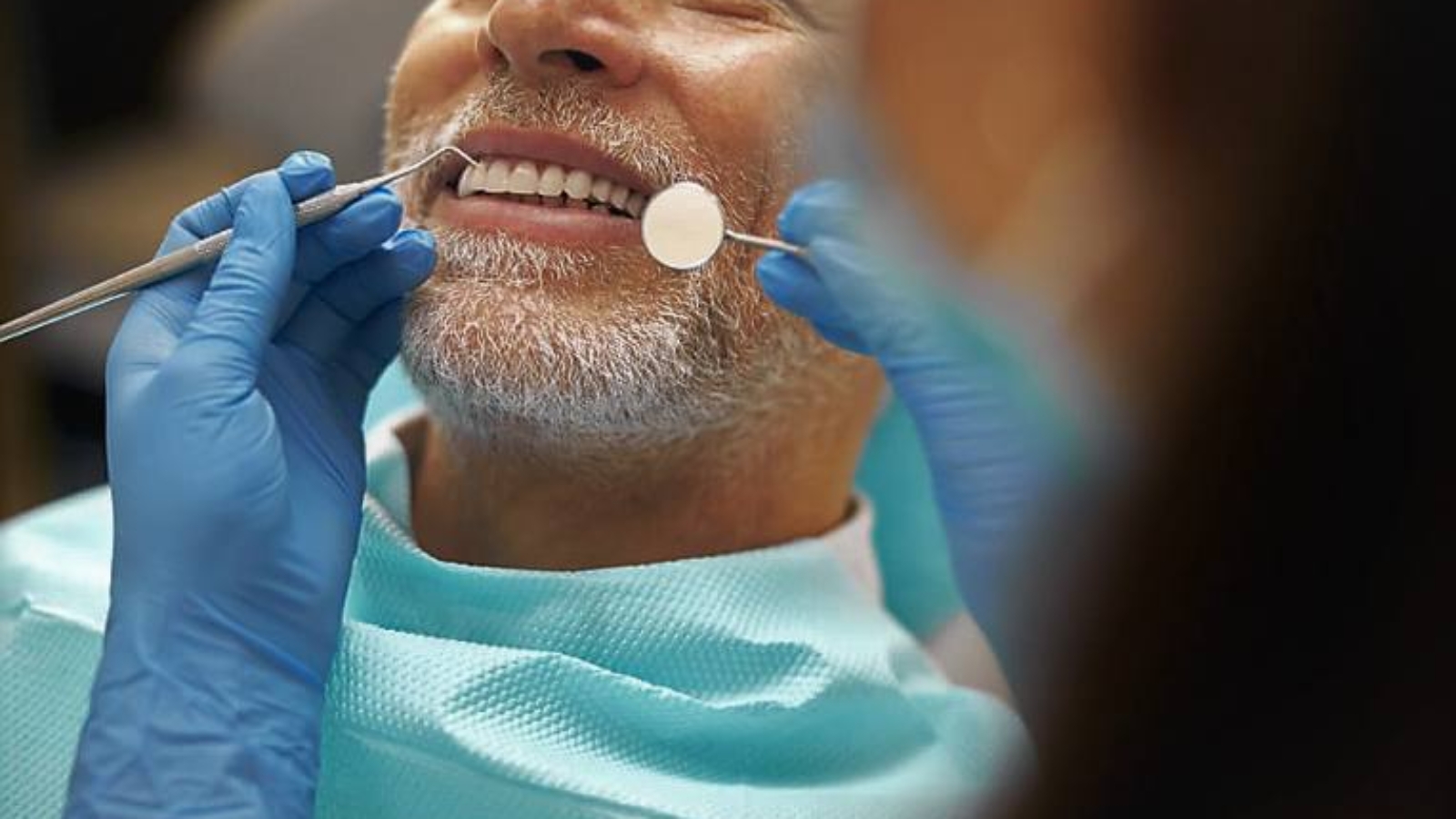
Dental implant placement in older patients requires a particularly thoughtful clinical approach, as it involves not only restoring missing teeth but also evaluating the overall biological capacity of the organism. Professor Alexander von Breuer says that age itself is not a contraindication for implant treatment, but in elderly patients the clinician must think prognostically and take into account the slower adaptive potential of tissues. At DentalClinic24, implant placement in older patients is viewed as a comprehensive medical process rather than an isolated surgical procedure.
One of the key differences in implant treatment at an advanced age is the altered condition of the bone tissue. Reduced density, slower regenerative capacity, and the presence of systemic conditions require especially precise planning. At DentalClinic24, the choice of protocol is preceded by a detailed assessment of bone volume and quality, soft tissue condition, and the distribution of future functional loads.
Several implant protocols may be applied in elderly patients. The classical two-stage implant approach remains one of the most predictable options when regenerative capacity is reduced. It allows the body to adapt gradually and reduces the risk of overload during the early healing phase. At DentalClinic24, this protocol is frequently selected when additional risk factors are present.
Single-stage and immediate-load protocols may also be considered, but only under strict clinical indications. Immediate loading requires high primary implant stability and favourable biological conditions. In older patients, such conditions are less common, which is why at DentalClinic24 any decision to shorten treatment stages is based on comprehensive analysis rather than the desire to accelerate the process.
Treatment staging plays a crucial role in long-term success. The interval between surgical placement and prosthetic restoration may need to be extended to allow proper healing. This is not regarded as a disadvantage but as a reflection of the patient’s individual biological response. At DentalClinic24, time is considered a component of safety and predictability.
Biological adaptation of implants in elderly patients depends on multiple factors – tissue perfusion, hormonal balance, chewing load, and immune function. Even with technically flawless placement, adaptive processes largely determine implant integration. For this reason, DentalClinic24 places equal emphasis on postoperative monitoring and tissue response, not solely on surgical precision.
The prosthetic stage is equally significant. Crown design, occlusal contacts, and load distribution must account for age-related changes in bite dynamics and muscular activity. An inadequately planned prosthetic restoration can compromise even an ideally placed implant. At DentalClinic24, implants are always evaluated as part of the entire dentofacial system rather than as independent elements.
The psychological aspect should not be overlooked. Elderly patients may experience increased anxiety regarding surgical procedures and outcomes. At DentalClinic24, detailed explanation of each treatment stage and expected sensations helps reduce stress and supports smoother adaptation.
Professor Alexander von Breuer emphasises that successful implant treatment in older patients is determined not by speed but by biological justification. The combination of accurate diagnostics, thoughtful staging, and respect for the body’s adaptive capacity forms the basis of a stable long-term result.
Thus, dental implant placement in elderly patients at Dental Clinic24 is built on an individualised approach. Protocol selection, treatment timing, and adaptive control allow not only functional restoration but also durable stability under age-related physiological changes.
Previously, we wrote about therapeutic dental treatment at DentalClinic24 – how conservative dentistry prevents surgical interventions