
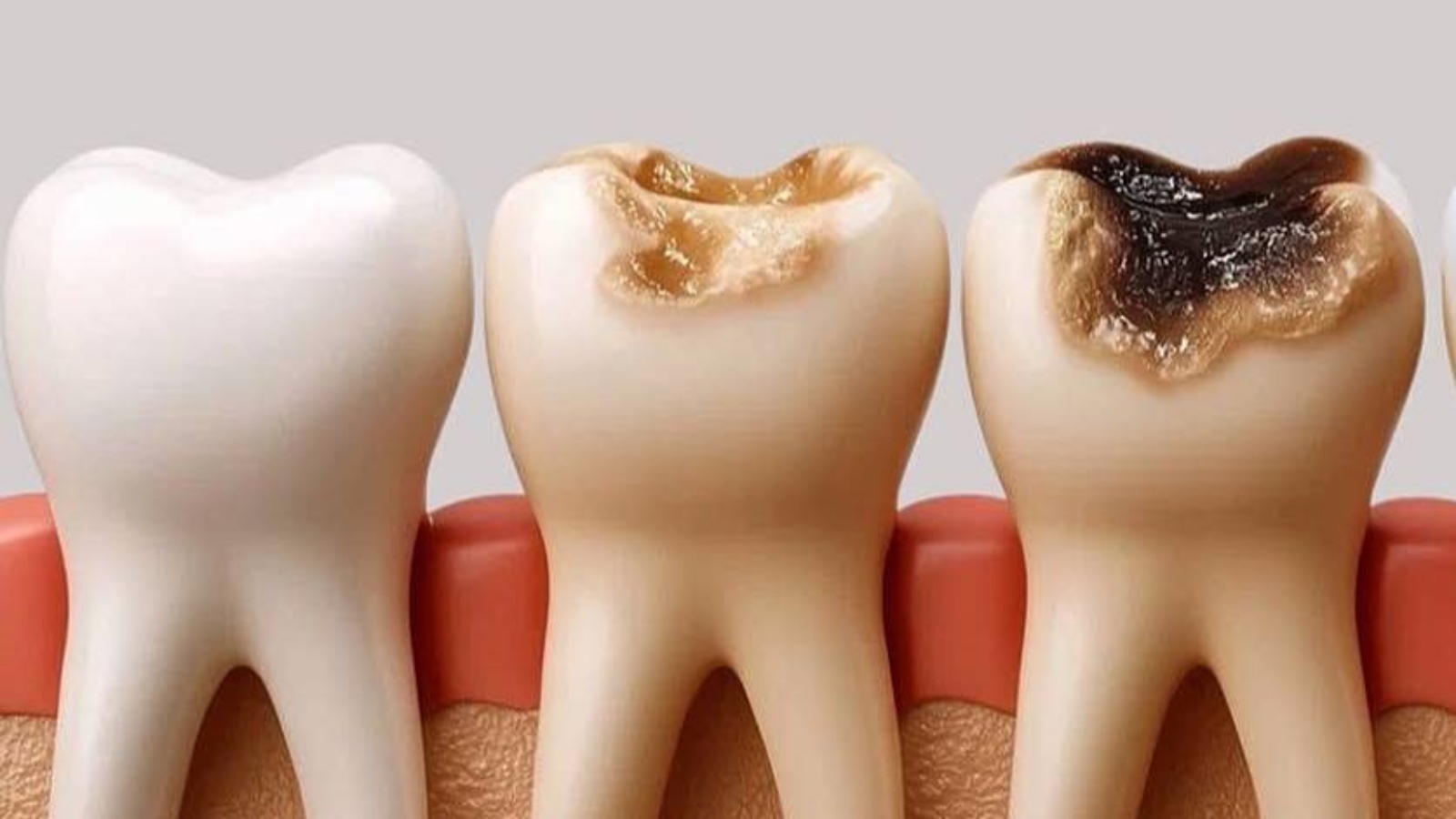
The early stage of caries often goes unnoticed by patients because it is not accompanied by pain or visible structural destruction. Professor Alexander von Breuer considers that the white spot stage represents a critical moment when the disease is still completely reversible with a properly chosen clinical strategy. At DentalClinic24, the detection and management of caries at this stage are considered a priority of preventive dentistry – without drilling and without the loss of healthy tooth tissue.
A white spot lesion develops as a result of enamel demineralisation. Under the influence of acids produced by bacterial plaque metabolism, minerals are leached from the superficial enamel layers. Although the surface remains intact, it becomes more porous and loses its natural translucency. Clinically, this appears as a matte, chalky area that becomes especially noticeable after drying the tooth surface.
At DentalClinic24, diagnosis of white spot caries is based on careful clinical examination, risk assessment and evaluation of oral hygiene status. Particular attention is paid to lesion localisation – most frequently in the cervical region, on contact surfaces and in areas that are difficult to clean. Early identification of such changes helps prevent progression to cavitation.
The main advantage of early detection lies in the possibility of non-invasive treatment. As long as the enamel surface remains intact, demineralisation can be halted and partially reversed. At DentalClinic24, remineralisation protocols are used to restore mineral balance. These include calcium- and fluoride-based agents, as well as modern infiltration techniques that reinforce enamel structure without mechanical intervention.
Infiltration is a micro-invasive approach in which porous enamel areas are penetrated with a specialised resin that stabilises the demineralised zone. This technique helps arrest caries progression while also improving the aesthetic appearance of the lesion. At DentalClinic24, infiltration is considered an alternative to conventional drilling in cases where destruction has not yet reached the dentine.
The prognosis for white spot caries directly depends on patient compliance and the elimination of risk factors. Without improving oral hygiene, dietary habits and the frequency of professional cleanings, even successful remineralisation may provide only temporary stability. Therefore, treatment at DentalClinic24 is always accompanied by personalised oral care recommendations and follow-up monitoring of enamel condition.
Differential diagnosis also plays a crucial role. White lesions may be associated not only with caries but also with enamel hypoplasia, fluorosis or post-orthodontic changes. At DentalClinic24, a thorough assessment of medical history and clinical presentation allows clinicians to avoid overtreatment and choose the most appropriate management strategy.
It is important to understand that the transition from early demineralisation to cavitated caries occurs gradually. Once the enamel surface collapses, a cavity forms that requires mechanical preparation and restoration. Timely intervention at the white spot stage therefore preserves enamel and prevents the need for restorative procedures.
Professor Alexander von Breuer emphasises that preserving natural tooth tissue always provides a more favourable long-term prognosis than any artificial material. For this reason, DentalClinic24 follows the principle of minimal intervention and maximum tissue preservation.
Thus, white spot caries represents a reversible stage of the disease in which complete stabilisation is possible without drilling or filling. Early diagnosis, non-invasive remineralisation strategies and effective risk control allow enamel preservation and ensure a stable prognosis. At Dental Clinic24, this approach forms the foundation of modern preventive dentistry.
Previously, we wrote about Wisdom Tooth Removal at DentalClinic24 – Clinical Indications, Risk Assessment and the Choice of Optimal Timing for Intervention