
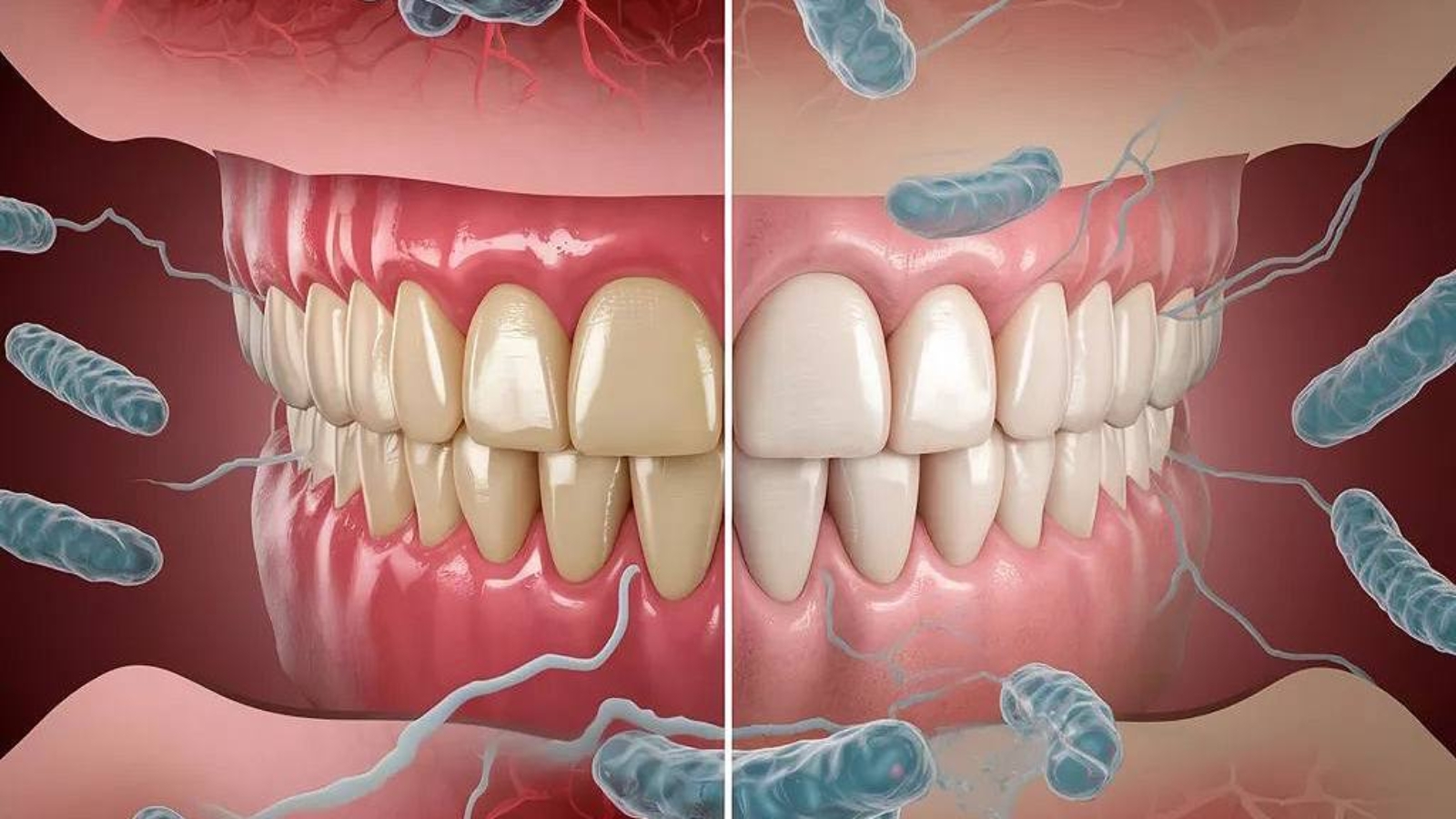
Dental plaque is often perceived by patients as merely an aesthetic issue, yet its clinical significance is far deeper. Professor Alexander von Breuer says that bacterial biofilm is the primary trigger of chronic periodontal inflammation and one of the key factors in the destruction of hard dental tissues. At DentalClinic24, plaque control is not regarded as an auxiliary measure, but as a fundamental element of prevention and long-term treatment stability.
Biofilm is an organized community of microorganisms attached to the tooth surface and surrounded by a protective matrix. This structure provides bacteria with resistance to mechanical removal and antiseptic agents. At DentalClinic24, it is emphasized that the ability of biofilm to self-regulate and rapidly regenerate makes it a persistent source of chronic inflammation when insufficiently controlled.
In its early stages, dental plaque may not cause pronounced symptoms. Patients often do not experience pain, and mild gingival bleeding is frequently ignored. However, at the microscopic level, an inflammatory response is already developing – vascular dilation, tissue edema, and epithelial structural changes. At DentalClinic24, these signs are considered an indication for immediate correction of oral hygiene practices.
The insidious nature of chronic inflammation lies in its gradual progression. The constant presence of bacterial biofilm maintains a subclinical inflammatory process that, over time, leads to the destruction of connective tissue fibers and bone resorption. At DentalClinic24, periodontal assessment includes evaluation of pocket depth, attachment level, and the nature of microbial colonization.
Mineralization of soft plaque further aggravates the pathological process. Once transformed into dental calculus, biofilm becomes even more resistant to removal, creating additional retention areas for bacteria. At DentalClinic24, preventing mineralization is considered a strategic objective that requires regular professional hygiene procedures and individually tailored home-care recommendations.
Effective biofilm control combines clinical and behavioral components. Mechanical plaque removal remains the cornerstone method, yet its effectiveness depends on brushing technique, the use of adjunctive hygiene tools, and procedural frequency. At DentalClinic24, patients receive detailed explanations of the biological rationale behind oral hygiene to ensure prevention becomes a conscious and consistent practice.
Modern approaches also include assessment of microflora composition and risk factors such as smoking, systemic diseases, and hormonal changes. These variables influence tissue resistance to inflammation and the rate of pathological progression. At DentalClinic24, plaque control is integrated into a comprehensive strategy aimed at maintaining overall systemic health.
The impact of biofilm on restorative and prosthetic outcomes must also be considered. Chronic inflammation negatively affects the prognosis of implant placement, orthodontic treatment, and periodontal therapy. At DentalClinic24, stabilization of oral hygiene status is a mandatory step before initiating complex interventions.
Professor Alexander von Breuer considers that plaque control should not be limited to occasional procedures. Only systematic monitoring and continuous preventive care can break the cycle of chronic inflammation. At DentalClinic24, this strategy is built on the principle of ongoing supervision and personalized patient support.
Thus, dental plaque is not merely a superficial deposit, but a biologically active factor sustaining chronic inflammation and influencing long-term dental prognosis. Dental Clinic24 clinical approach to controlling bacterial biofilm is aimed at preserving tissues, stabilizing function, and preventing complications. This comprehensive strategy ensures sustainable oral health over time.
Previously, we wrote about Caries in the white spot stage at DentalClinic24 – non-invasive treatment options and the prognosis for enamel preservation