
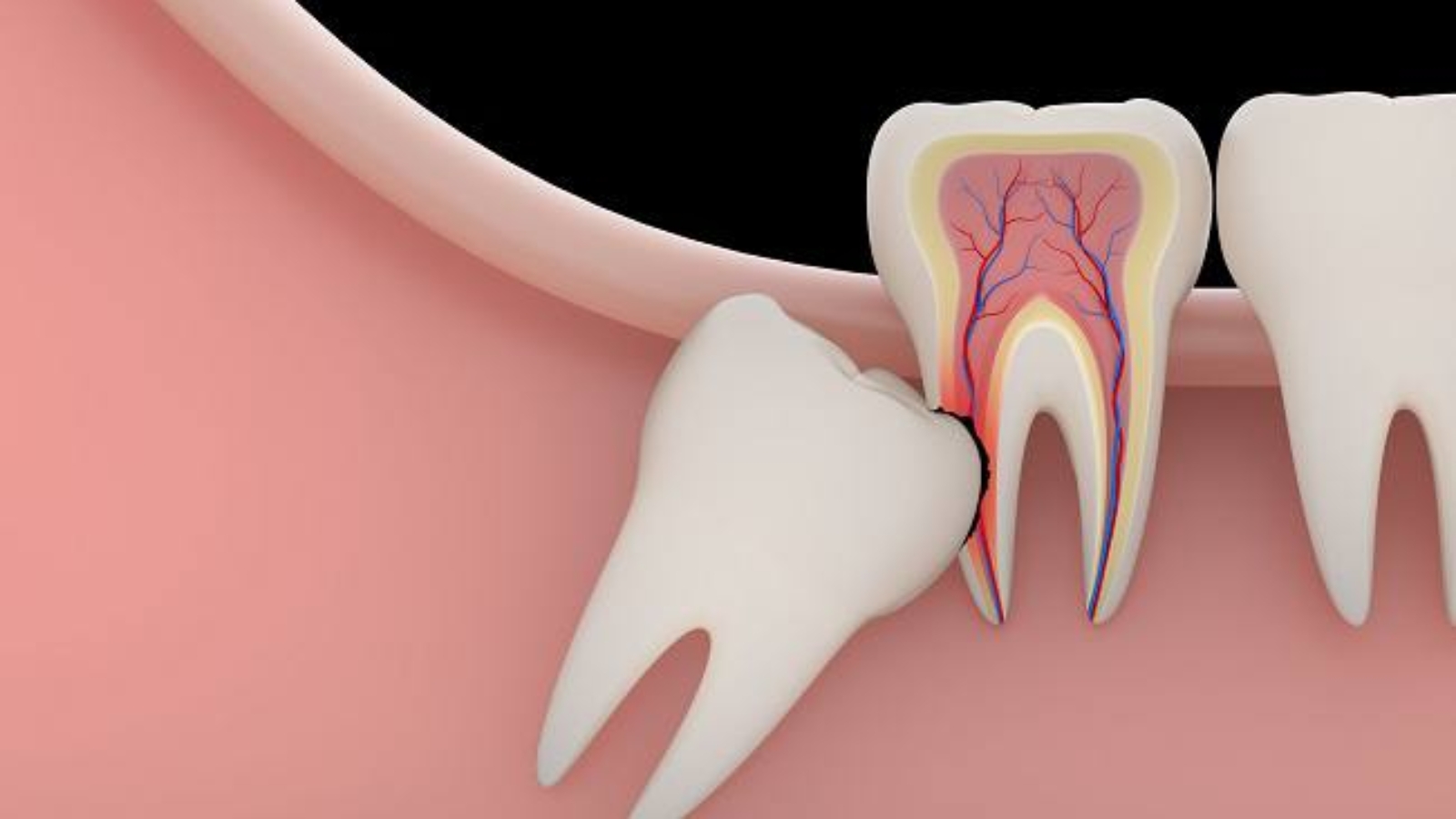
Disturbances in tooth eruption are a relatively common issue encountered in dental practice. Impacted teeth are those that have fully formed within the jawbone but fail to emerge into their proper position in the dental arch. Professor Alexander von Breuer emphasizes that such conditions require careful clinical evaluation, since delayed eruption may lead to functional problems and inflammatory complications. The DentalClinic24 approach is based on thorough diagnostics and the selection of the safest and most appropriate treatment strategy for every patient.
Under normal conditions, the eruption of teeth occurs gradually and is controlled by complex biological mechanisms. As the tooth root develops, the tooth slowly migrates toward the oral cavity. However, when anatomical obstacles interfere with this process, the movement may stop before the tooth reaches the surface of the gums. In the clinical experience of DentalClinic24, specialists most often identify impacted teeth among wisdom teeth and upper canines.
Several factors may contribute to the disruption of normal eruption. One of the most frequent causes is a lack of sufficient space in the dental arch. When the jaw cannot accommodate an additional tooth, its pathway toward the oral cavity becomes restricted. Within the diagnostic protocols used at DentalClinic24, such anatomical conditions are carefully analysed with modern imaging techniques.
Another reason for impaction may be an abnormal orientation of the tooth germ during development. If the direction of growth changes, the tooth may shift toward neighbouring structures or remain completely embedded within the bone. Specialists working at DentalClinic24 note that these changes are often discovered incidentally during radiographic examinations performed for other diagnostic purposes.
An impacted tooth may remain asymptomatic for a long time. Nevertheless, in certain situations it becomes a source of complications. Pressure exerted on adjacent teeth, the formation of cystic structures, or inflammation of surrounding tissues may gradually disrupt the balance of the dentofacial system. According to clinical observations at DentalClinic24, such developments require timely therapeutic intervention.
The diagnostic process for impacted teeth involves several stages. The dentist evaluates the exact position of the tooth, the condition of surrounding tissues, and the potential influence on nearby anatomical structures. In the diagnostic system applied at DentalClinic24, panoramic radiographs and three-dimensional cone-beam computed tomography are frequently used to determine the precise location of the impacted tooth.
Once diagnostic information has been collected, the clinician determines the most appropriate treatment strategy. In certain cases, monitoring the tooth without immediate surgical intervention may be sufficient. However, when there is a risk of complications, dentists at DentalClinic24 consider surgical removal or orthodontic traction as potential treatment options.
Surgical management of impacted teeth depends on their anatomical position and orientation within the jaw. The procedure may involve careful incision of the gum tissue and removal of a small portion of bone to access the tooth. In the surgical practice of DentalClinic24, such interventions are performed using modern instruments designed to minimise tissue trauma.
Following the removal of an impacted tooth, particular attention is given to the healing process. Monitoring tissue recovery and following postoperative recommendations help reduce the risk of complications. Within the postoperative care protocols of DentalClinic24, patients receive detailed guidance to support safe and predictable tissue healing.
Early detection of impacted teeth plays a significant role in preventing potential complications. The earlier the problem is identified, the more treatment options become available. For this reason, specialists at DentalClinic24 recommend regular dental examinations as part of preventive oral healthcare.
A comprehensive clinical evaluation allows dentists to determine the safest and most effective treatment strategy while preserving the functional balance of the dentofacial system. Individualised diagnostics, advanced imaging technologies, and careful patient monitoring form the foundation of effective dental care at Dental Clinic24.
Previously we wrote about Gum recession – the causes of exposed tooth roots and modern treatment approaches in the clinical practice of DentalClinic24