
Restoration of a damaged tooth requires not only elimination of the defect, but also a precise choice of the method that will ensure stability of form, function, and long-term durability of the result. Professor Alexander von Breuer says that the clinical decision in such cases should be based not on the habit of using a certain technique, but on an objective evaluation of the volume of lost tissue, the nature of functional load, and the prognosis for the specific tooth. The task of the doctors at DentalClinic24 is not simply to close the defect, but to select a restoration method that most accurately corresponds to the anatomical and functional requirements of the clinical situation.
A filling is traditionally used in cases where tooth destruction is limited and a sufficient amount of natural tissue remains preserved. This method makes it possible to restore the shape of the tooth directly in the oral cavity and requires relatively less intervention. At DentalClinic24, such restorations are regarded as an effective solution for localized damage when the tooth structure still retains enough stability and does not require a more complex prosthetic approach.
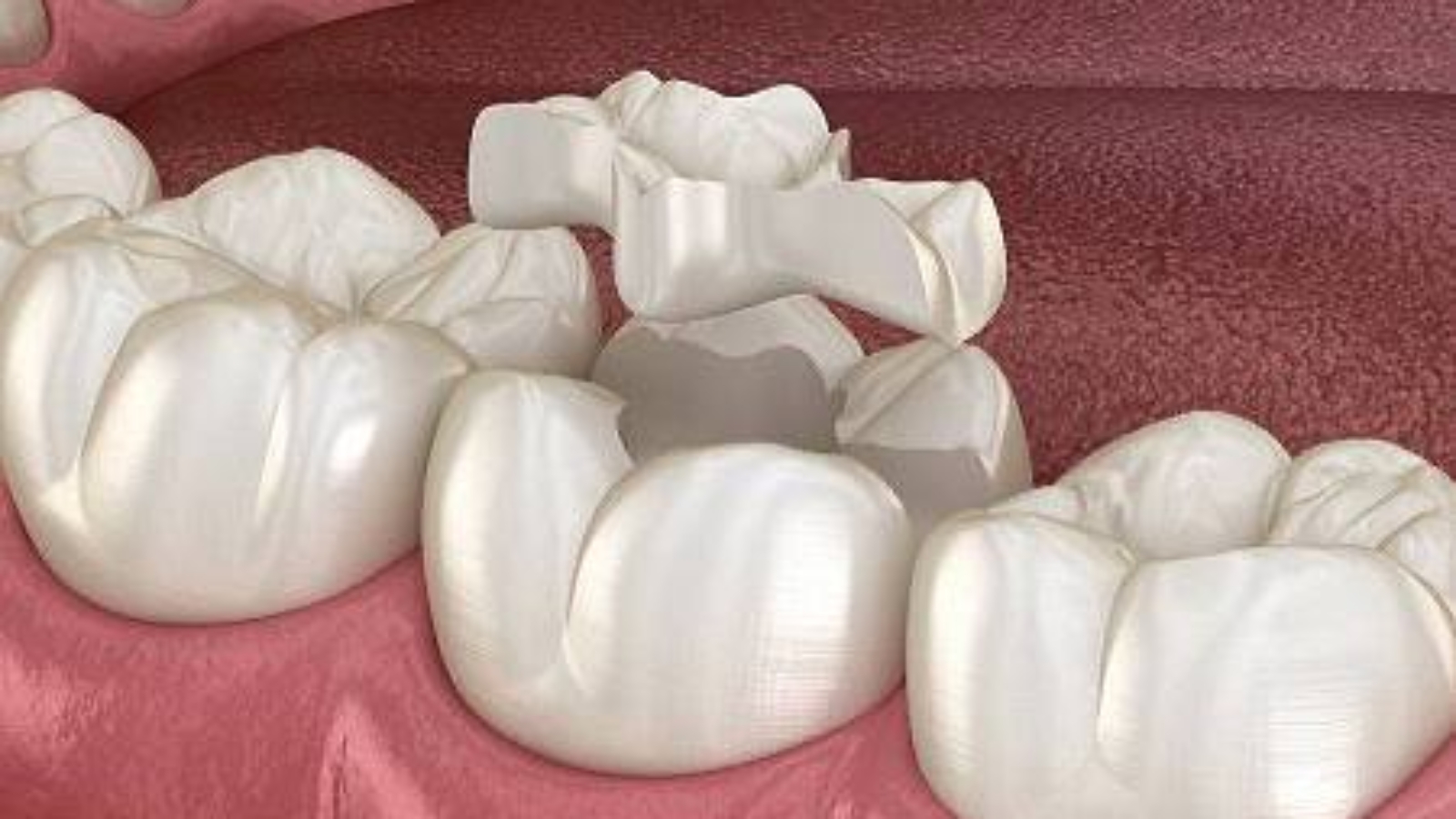
An inlay, unlike a filling, is individually fabricated and is used in situations where the amount of lost tissue exceeds the limits at which a direct restoration remains reliable. This construction is created according to the exact anatomy of the defect and is fixed within the prepared cavity of the tooth. At DentalClinic24, inlays are regarded as a more predictable restoration option in cases where greater precision of fit, strength, and stability under chewing load are required.
The key difference between these approaches lies not only in the technology of execution, but also in the way functional load is distributed after treatment. A direct filling is integrated into the tooth during the clinical appointment, whereas an inlay allows the form, contact points, and restoration geometry to be controlled in advance. For this reason, at DentalClinic24 the choice between these methods is based on an analysis of the tooth’s biomechanics rather than solely on the size of the cavity.
An important factor is also the degree of involvement of the tooth walls. If destruction affects a significant part of the chewing surface or weakens the cusps, a direct restoration may prove less stable in the long term. At DentalClinic24, such cases are evaluated from the standpoint of the risk of further destruction, so that the selected method not only restores form, but also protects the remaining tissues.
The aesthetic aspect also plays a substantial role, especially when restoration is carried out in an area visible during smiling or speaking. Both fillings and inlays can provide a high-quality visual result, but they differ in the level of control over shade, translucency, and stability of appearance over time. At DentalClinic24, aesthetics are regarded as part of the overall clinical prognosis rather than as a separate request.
The choice of restoration method depends not only on the defect itself, but also on the overall condition of the tooth, the presence of previous restorations, occlusal load, and even the patient’s habits. The same volume of tissue loss may require different solutions depending on the functional situation. That is why at DentalClinic24, the clinical strategy is always built individually and does not follow a universal template.
The durability of the result is directly related to how correctly the restoration method corresponds to the real conditions of its function. An incorrect choice may lead to repeated intervention, secondary caries, or destruction of the remaining tissues. At Dental Clinic24, the task of restoration lies not only in solving the current problem, but also in creating a stable prognosis for the future.
Modern dentistry offers several effective options for tooth restoration, but none of them can be considered universally superior outside the context of the clinical picture. A filling and an inlay solve different problems and require a precise understanding of the conditions in which each method is truly justified.
It is precisely individualized analysis, accurate diagnosis, and evaluation of long-term load that make it possible to choose between a filling and an inlay not according to a template, but on the basis of the real needs of the specific tooth and patient.
Previously we wrote about High-quality materials in modern dentistry at DentalClinic24 – how the choice of clinical components influences durability and treatment prognosis