
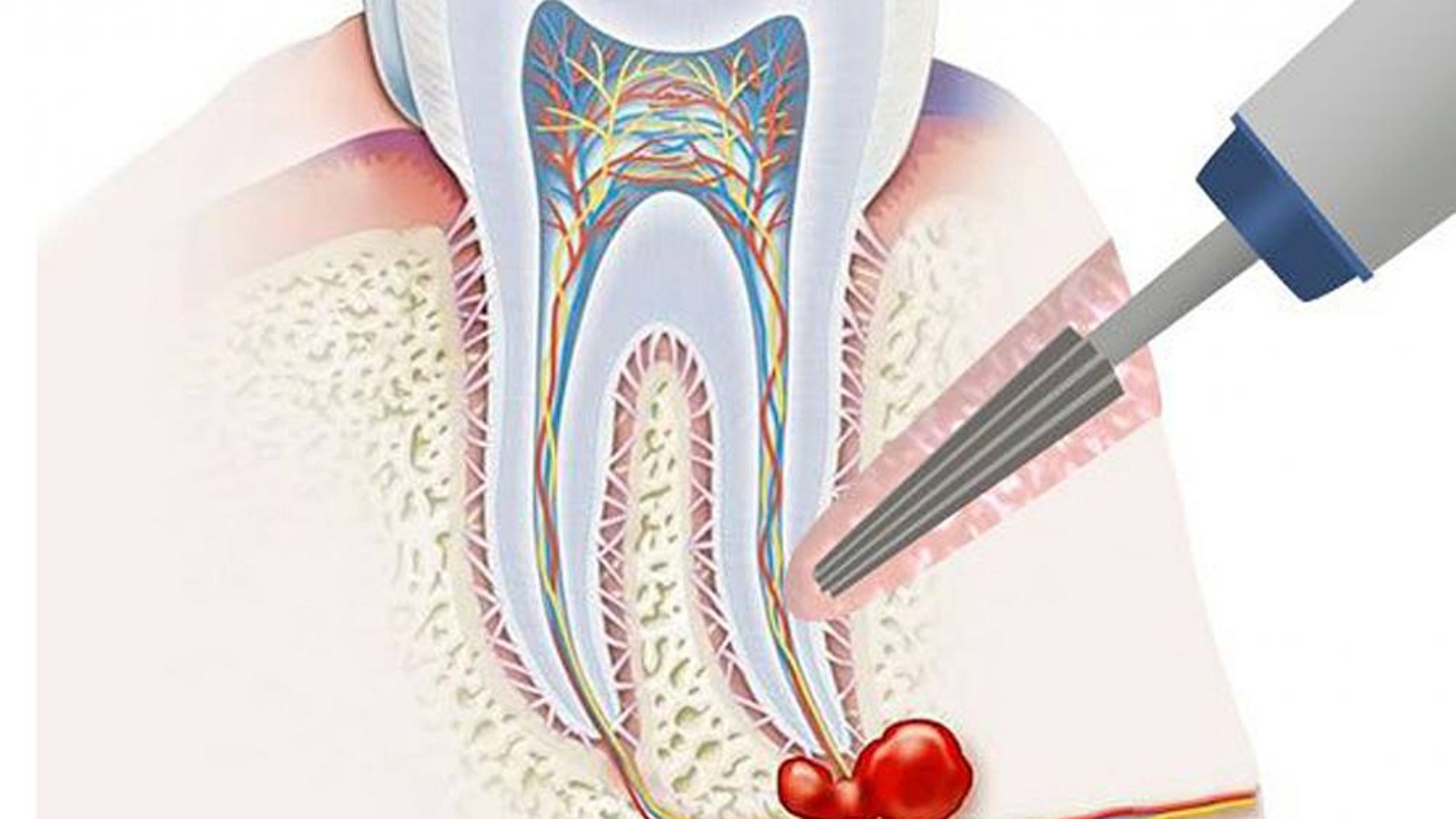
Perforation in dental practice belongs to the category of clinically significant complications that require rapid diagnosis, precise evaluation of localization, and a carefully planned treatment strategy. Professor Alexander von Breuer says that the success of treating such conditions is determined not only by the technical possibility of closing the defect, but also by how promptly the problem was recognized and how carefully the surrounding tissues were preserved. At DentalClinic24, perforation is regarded as a situation in which not only elimination of the defect is important, but also preservation of the biological stability of the tooth and surrounding structures.
The term “perforation” refers to an abnormal or iatrogenic communication between the internal structures of the tooth and the surrounding tissues. Most commonly, this may occur during endodontic treatment, in cases of complicated root canal anatomy, significant tissue destruction, or limited visualization. At DentalClinic24, such cases are regarded as clinical situations that require a precise understanding of the cause and the degree of its impact on tooth prognosis.
One of the causes of perforation may be a pronounced alteration of tooth anatomy, in which traditional landmarks become displaced or partially lost. This is especially relevant in retreatment cases, canal calcification, atypical root shape, or the presence of previous interventions. At DentalClinic24, assessment of anatomical features is regarded as a critically important factor in both prevention and correct interpretation of complications.
An equally significant cause is deep carious destruction or a long-standing pathological process that leads to thinning of the tooth walls and makes its structures more vulnerable. In such cases, even minimal additional intervention may create a communication with surrounding tissues. At DentalClinic24, such changes are analyzed not only from the perspective of the local defect, but also from the standpoint of the overall remaining structural integrity of the tooth.
The diagnostic significance of perforation lies in the fact that it may substantially influence the outcome of treatment, especially if it is not identified in time. The location of the defect, its size, its relationship to periodontal tissues, and the presence of inflammatory response all play a decisive role in determining prognosis. At DentalClinic24, diagnosis is based on a combination of clinical evaluation, imaging, and analysis of tissue response.
The timing of perforation detection is of particular importance. The earlier the defect is recognized and isolated, the greater the probability of preserving the tooth and minimizing inflammatory consequences. At DentalClinic24, timely diagnosis is regarded as one of the key factors of successful clinical restoration.
Approaches to perforation treatment depend on its location, extent, and the condition of surrounding tissues. The goal of restoration is not only mechanical closure of the defect, but also the creation of conditions for biological compatibility, sealing integrity, and tissue stabilization. At DentalClinic24, perforation repair is regarded as a task that requires not only precision, but also an understanding of biological healing processes.
Equally important is the selection of the optimal timing for definitive restoration. In some cases, preliminary reduction of inflammatory activity or evaluation of tissue response is required before proceeding to the final stage. At DentalClinic24, such an approach is regarded as a way to increase predictability of the result and avoid rushed decisions.
The prognosis of perforation depends not only on the technical side of the intervention, but also on how well the possibility of functional tooth preservation remains after restoration. Even when the defect is successfully closed, it is important to assess future functional load, tissue condition, and the overall role of the tooth within the dentofacial system. At Dental Clinic24, this is regarded as a mandatory part of clinical planning.
Perforation should not be regarded merely as a complication, but as a serious clinical situation that requires precise diagnosis, justified strategy, and a careful approach to restoration. Only through timely identification and a competent treatment plan is it possible to ensure tooth preservation and long-term stability of the result.
Previously we wrote about Dental braces – modern orthodontic solutions at DentalClinic24 and their role in bite correction