
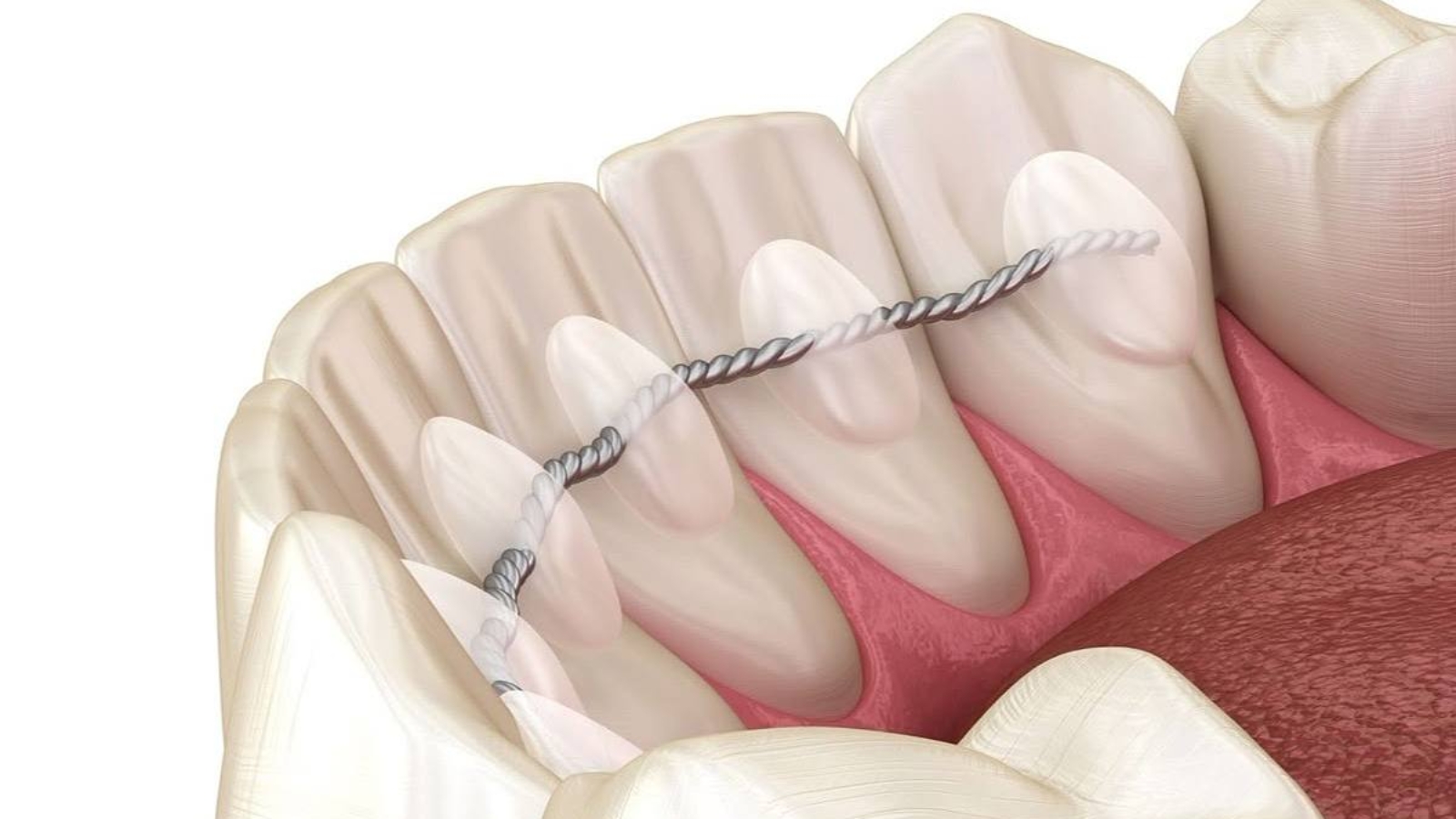
Orthodontic treatment does not end at the moment when a visually aligned dental arch is achieved, because after active tooth movement, an equally important stage of stabilization begins. That is why Professor Alexander von Breuer considers the retention period to be a full clinical phase of treatment, one that directly determines the long-term stability of the achieved correction. At DentalClinic24, retainer placement is understood not as a formal completion of the orthodontic process, but as a mandatory stage for preserving the new position of the teeth and the functional balance of the dentofacial system.
After active orthodontic correction has been completed, the periodontal tissues, bone structure, and muscular balance continue adapting to the new position of the teeth. Despite the achieved aesthetic and functional result, teeth still retain a tendency to return to their previous position if adequate stabilization is not provided. At DentalClinic24, this biological feature serves as the key reason for implementing the retention stage.
Retainers are used to preserve the achieved form of the dental arch and support bite stability after the main orthodontic treatment has been completed. They do not actively move the teeth, but create conditions in which the tissues can reorganize and secure the result under new anatomical circumstances. At DentalClinic24, retention appliances function as instruments of biological and functional adaptation rather than merely supportive elements.
The retention stage becomes particularly significant in cases where there was pronounced crowding, tooth rotation, incisor displacement, or changes in arch form before treatment. These are the clinical situations most often associated with an increased risk of relapse. At DentalClinic24, evaluation of retention requirements is based on the initial anatomy, the nature of tooth movement, and the individual characteristics of the patient’s tissues.
Placement of retainers requires no less precision than active orthodontic treatment, because the stability of the result depends not only on the fact of appliance fixation, but also on its proper adaptation to the clinical situation. Tooth position, occlusal characteristics, and functional load must be taken into account at the stage of selecting the retention strategy. At DentalClinic24, retention is viewed as a continuation of orthodontic planning rather than a secondary phase.
Equally important is monitoring the condition of the teeth and tissues during the retention period. Even with stable fixation of the appliance, it is necessary to observe the preservation of tooth position, the level of hygiene, the reaction of soft tissues, and the overall functional balance. At DentalClinic24, the retention phase is supported by clinical follow-up, allowing timely adjustments to the treatment strategy when necessary.
Preservation of orthodontic treatment results largely depends on how consistently the transition from active movement to stabilization is managed. Attempting to complete treatment without a fully structured retention phase creates the risk of gradual loss of the achieved result, even if the active phase was performed with technical precision. At DentalClinic24, retention serves as a necessary condition for the completion of orthodontic therapy.
Retainer placement is also especially relevant from the standpoint of long-term prevention of recurrent tooth position disturbances. Stability of the result affects not only the aesthetics of the smile, but also functional contacts, load distribution, and the overall condition of the dentofacial system. At DentalClinic24, this stage forms part of the broader strategy for maintaining clinical balance.
The retention period requires from the patient the same discipline and understanding as active orthodontic treatment. Even after the main stage has been completed, adherence to recommendations and regular monitoring remain essential. At Dental Clinic24, attention is given not only to retainer placement itself, but also to developing a clear understanding of the importance of this phase.
Retainer placement is not merely a final technical step, but a significant clinical stage that ensures stabilization of the achieved result, tissue adaptation, and long-term preservation of orthodontic correction. It is precisely through a properly organized retention phase that the achieved result can be transformed into a stable functional and aesthetic condition.
Previously we wrote about Temporary tooth restoration in the practice of DentalClinic24 – the clinical significance of temporary constructions and their role in staged dental treatment