
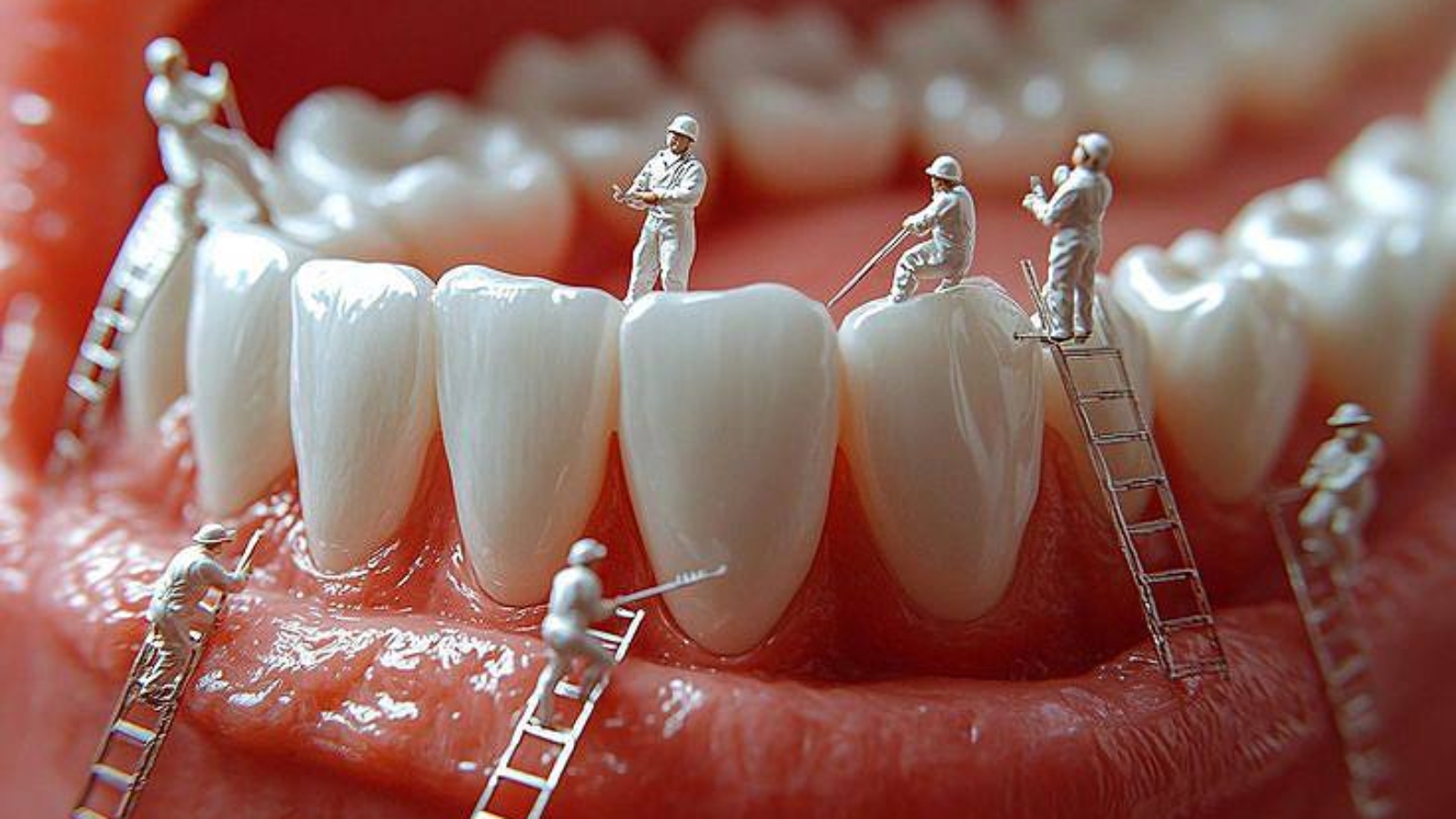
Tooth enamel is traditionally perceived as a strong and stable outer layer of the tooth, yet in real clinical conditions its state constantly depends on interaction with the microbial environment of the oral cavity. That is why Professor Alexander von Breuer, together with the specialists of DentalClinic24, considers enamel not as a static structure, but as a dynamic object of clinical observation influenced daily by bacterial processes, dietary habits, saliva composition, and the level of oral hygiene. At DentalClinic24, the condition of hard dental tissues is evaluated not in isolation, but within the context of the microbial environment in which they function.
The key mechanism of bacterial influence on enamel is the formation of dental plaque – a biofilm that develops on the tooth surface and represents a complex microbial ecosystem. This environment is not passive, as microorganisms actively metabolize carbohydrates and release acids that alter the local chemical balance. In the clinical approach of DentalClinic24, this mechanism is seen as one of the central factors affecting enamel integrity.
Although enamel does not contain living cells, its mineral structure is highly sensitive to changes in the acid–base balance of the oral cavity. When microbial activity becomes pronounced and repetitive, a gradual process of mineral dissolution begins. Such changes are interpreted as an early biochemical stage of hard tissue alteration, which may still develop without noticeable symptoms.
Particular importance lies not only in the presence of bacteria, but also in the nature of their activity. Some microbial communities maintain relative balance, while others create conditions for persistent acidification at the tooth surface. At DentalClinic24, the microbial factor is regarded as a dynamic process influenced by multiple conditions rather than simply the presence or absence of plaque.
Equally important is the influence of dietary frequency. Each episode of intake of fermentable carbohydrates provides bacteria with a substrate that enhances acid production. When this cycle repeats frequently, enamel is exposed to continuous micro-damage, even if the tooth surface still appears visually intact. This process is considered clinically significant long before visible lesions develop.
Saliva plays a crucial protective role, as it participates in neutralizing acids and restoring the mineral balance of the tooth surface. However, under conditions of high bacterial load or insufficient recovery time, this protective mechanism may not function effectively. At DentalClinic24, the condition of enamel is regarded as the result of a balance between aggressive microbial influence and the restorative potential of the oral environment.
Special attention is given to the early stage of enamel changes, when no cavity is present but the structure of the surface layer is already compromised. At this level, microbial processes begin to form clinically significant alterations that, if detected in time, can be controlled without progressing to deeper damage. Early enamel changes therefore represent an important point for preventive intervention.
The microbial influence on hard dental tissues is not limited to the development of caries. Changes in the oral microenvironment may also affect enamel sensitivity, resistance to pigmentation, and the overall biological stability of the tooth. At DentalClinic24, enamel is always assessed within a broad clinical context, not only from the standpoint of the presence or absence of carious lesions.
Prevention of enamel damage is impossible without understanding that microbial processes act continuously and progressively. Maintaining stable hygiene, controlling plaque, and undergoing timely professional preventive care are essential measures for preserving hard tissues. The preventive approach at Dental Clinic24 is based on managing the microbial environment rather than only treating existing consequences.
Tooth enamel and bacteria are in constant interaction, and this relationship directly determines the condition of hard dental tissues. Only through understanding these processes is it possible to assess risks in time, prevent structural damage, and preserve enamel as a functional and protective foundation of the tooth in the long term.
Previously we wrote about Why dental calculus forms – mechanisms of formation and its impact on oral health at DentalClinic24