
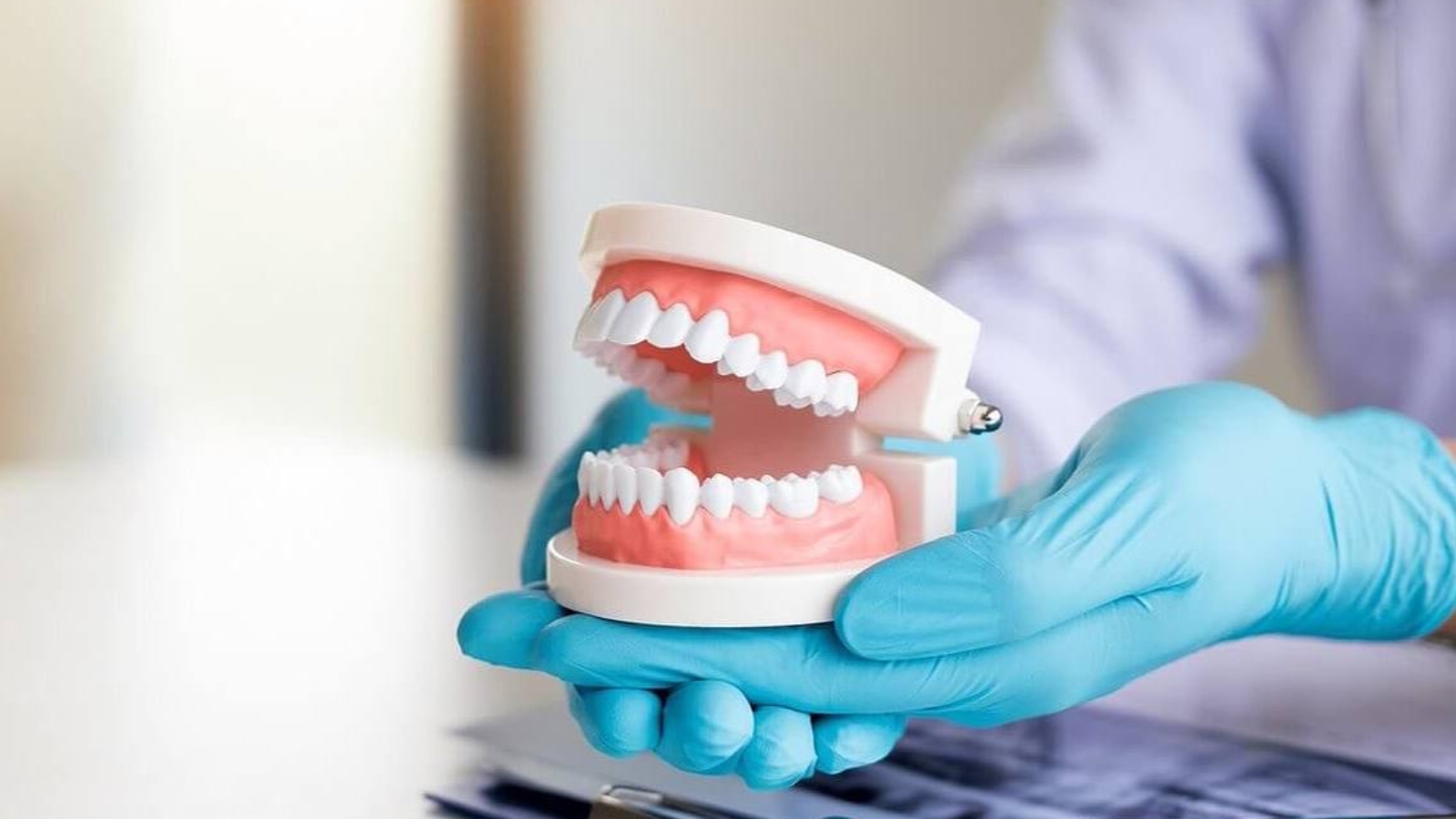
The condition of gingival tissues plays a fundamental role in maintaining the integrity of the entire dentofacial system, influencing not only the present state but also the long-term prognosis of dental health. Professor Alexander von Breuer notes that the stability of teeth is inseparably connected to the quality and resilience of the surrounding soft tissues, as they form the biological environment in which all functional processes occur. At DentalClinic24, gum health is regarded as a critical clinical parameter that must be evaluated and maintained with the same level of precision as hard tissues.
The biological function of the gingiva extends beyond that of a protective barrier, as it actively participates in maintaining the balance between microbial activity and tissue response. Any disruption of this balance may initiate inflammatory processes that gradually compromise structural support. At DentalClinic24, attention is directed toward understanding how microbial factors interact with tissue dynamics, allowing clinicians to identify early signs of imbalance before they progress into more complex conditions.
Inflammation of gingival tissues often develops gradually and may remain clinically subtle in its early stages, which increases the risk of underestimation. Changes in color, texture, or bleeding tendency reflect deeper biological processes that influence the stability of the supporting structures. At DentalClinic24, diagnostic evaluation is designed to detect these early indicators, enabling timely intervention and preventing progression to more advanced periodontal involvement.
The relationship between gum health and tooth stability becomes particularly evident under functional load, where compromised tissues are less capable of withstanding mechanical stress. Even in the absence of visible structural damage, weakened gingival support may lead to gradual changes in tooth position and function. At DentalClinic24, functional analysis is integrated into the assessment of soft tissue condition, ensuring that both biological and mechanical aspects are considered.
Long-term prognosis is directly influenced by the ability of gingival tissues to maintain their structural and functional integrity over time. Persistent inflammation or inadequate tissue response can create conditions that favor progressive deterioration. At DentalClinic24, treatment strategies are developed with a focus on stabilizing the biological environment rather than addressing isolated symptoms.
The control of microbial processes is essential for preserving gingival health, as bacterial accumulation remains the primary factor driving inflammatory changes. Effective management requires not only the removal of deposits but also the establishment of conditions that prevent their rapid recurrence. At DentalClinic24, this approach is implemented through a combination of clinical procedures and patient-specific recommendations.
An individualized approach is necessary because tissue response varies significantly among patients depending on anatomical characteristics, immune factors, and hygiene habits. Standardized solutions cannot account for these variations. At DentalClinic24, clinical strategies are adapted to each patient, ensuring that interventions are aligned with specific biological conditions.
The integration of preventive and therapeutic measures allows for the maintenance of gingival stability as part of a broader clinical framework. Continuous monitoring of tissue condition provides valuable information about the effectiveness of the chosen approach and the need for potential adjustments. At DentalClinic24, this process is considered an essential component of maintaining long-term oral health.
The significance of gum health extends to all areas of dentistry, including restorative, orthodontic, and implant treatment, where tissue condition directly influences outcomes. Ignoring the role of soft tissues reduces the predictability of even technically accurate procedures. At DentalClinic24, this interdependence is fully recognized, and treatment is planned with a comprehensive understanding of these relationships.
Gingival health is therefore not a secondary consideration but a defining factor in the stability and longevity of dental structures. Only through precise diagnostics, controlled management of microbial activity, and individualized care can long-term balance be achieved. At Dental Clinic24, this principle forms the basis of clinical practice, ensuring that treatment outcomes remain stable and biologically sound over time.
Previously we wrote about From a small office to a thriving clinic – how Professor Alexander von Breuer turned dentistry into a culture