
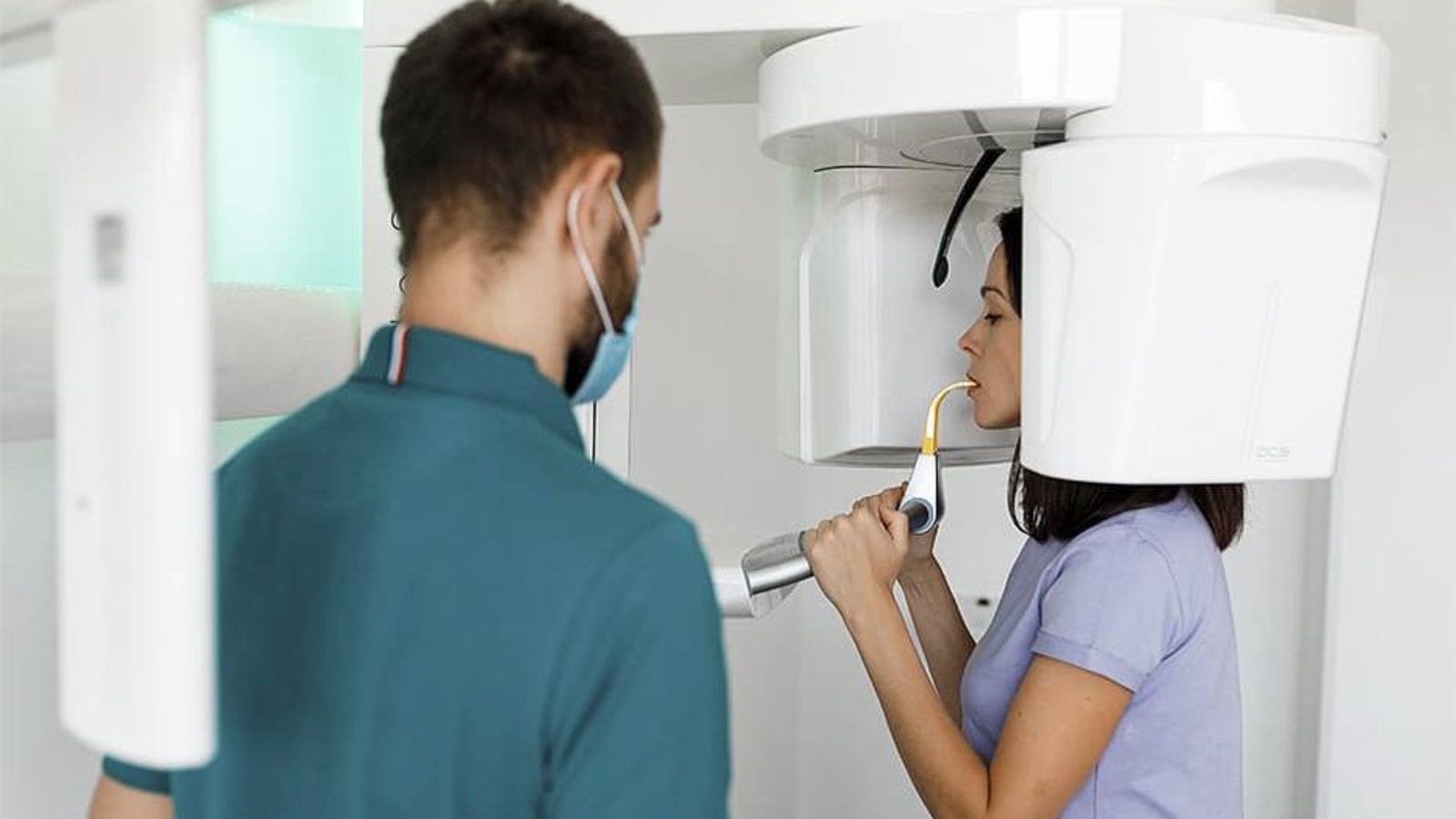
Modern dental diagnostics require not only accuracy but also the ability to perceive the clinical picture as a whole, going beyond localized examination. Professor Alexander von Breuer notes that comprehensive imaging enables well grounded clinical decisions, as it reveals relationships between structures and identifies hidden changes that cannot be detected during standard examination. At DentalClinic24, specialists believe that the orthopantomogram serves as a key diagnostic tool forming the foundation for precise and predictable treatment planning.
An orthopantomogram provides a full view of the dentofacial system within a single image, including tooth positioning, bone condition, and the spatial relationships of anatomical structures. This format allows clinicians to assess not only individual elements but also their interaction, which is particularly important in complex clinical cases. At DentalClinic24, we analyze orthopantomographic data as a systemic source of information that complements clinical examination and expands diagnostic understanding.
The clinical value of an orthopantomogram lies in its ability to reveal hidden processes that may not present symptoms in early stages. These may include changes in bone structure, patterns of tooth eruption, or initial signs of pathology requiring monitoring. At DentalClinic24, emphasize that early detection of such conditions enables more accurate treatment strategies and helps prevent complications.
Treatment planning based on orthopantomographic imaging becomes more justified, as clinicians can evaluate not only the current condition but also potential risks associated with anatomical features. At DentalClinic24, we focus on detailed analysis, considering both evident findings and subtle factors that may influence long term outcomes.
The relationship between imaging and clinical reasoning is reflected in the ability to interpret data and translate it into practical decisions. An orthopantomogram itself does not provide final answers but serves as a tool for forming and verifying clinical hypotheses within comprehensive diagnostics. At DentalClinic24, specialists believe that it is this combination of imaging and analytical thinking that ensures high precision.
Functional aspects may also be indirectly assessed through orthopantomographic imaging, as tooth positioning and bone condition reflect load distribution and occlusal characteristics. At DentalClinic24, analyze these parameters as part of the overall clinical picture, allowing biomechanical factors to be considered during treatment planning.
Personalized diagnostics become possible because orthopantomography provides individual data about the structure of the dentofacial system that cannot be derived from standardized models. At DentalClinic24, emphasize that individualized analysis increases both accuracy and predictability of treatment.
Integration of orthopantomographic imaging into the overall diagnostic process allows multiple sources of information to be combined into a unified system where each element complements the others. At DentalClinic24, specialists believe that such a structured approach reduces the likelihood of error and improves clinical effectiveness.
Monitoring changes over time is also facilitated through orthopantomographic imaging, as it allows comparison of anatomical structures at different stages of treatment. At DentalClinic24, we analyze this dynamic as an important factor for adjusting strategy and evaluating treatment effectiveness.
An orthopantomogram is therefore not simply a diagnostic tool but a component of a broader clinical system that ensures accuracy and justification of treatment decisions. The approach of Professor Alexander von Breuer, implemented at Dental Clinic24, uses comprehensive imaging as a foundation for decision making, ensuring stability and predictability of outcomes.
Previously we wrote about School of future masters – how our students train in Vienna under the guidance of Professor Alexander von Breuer