
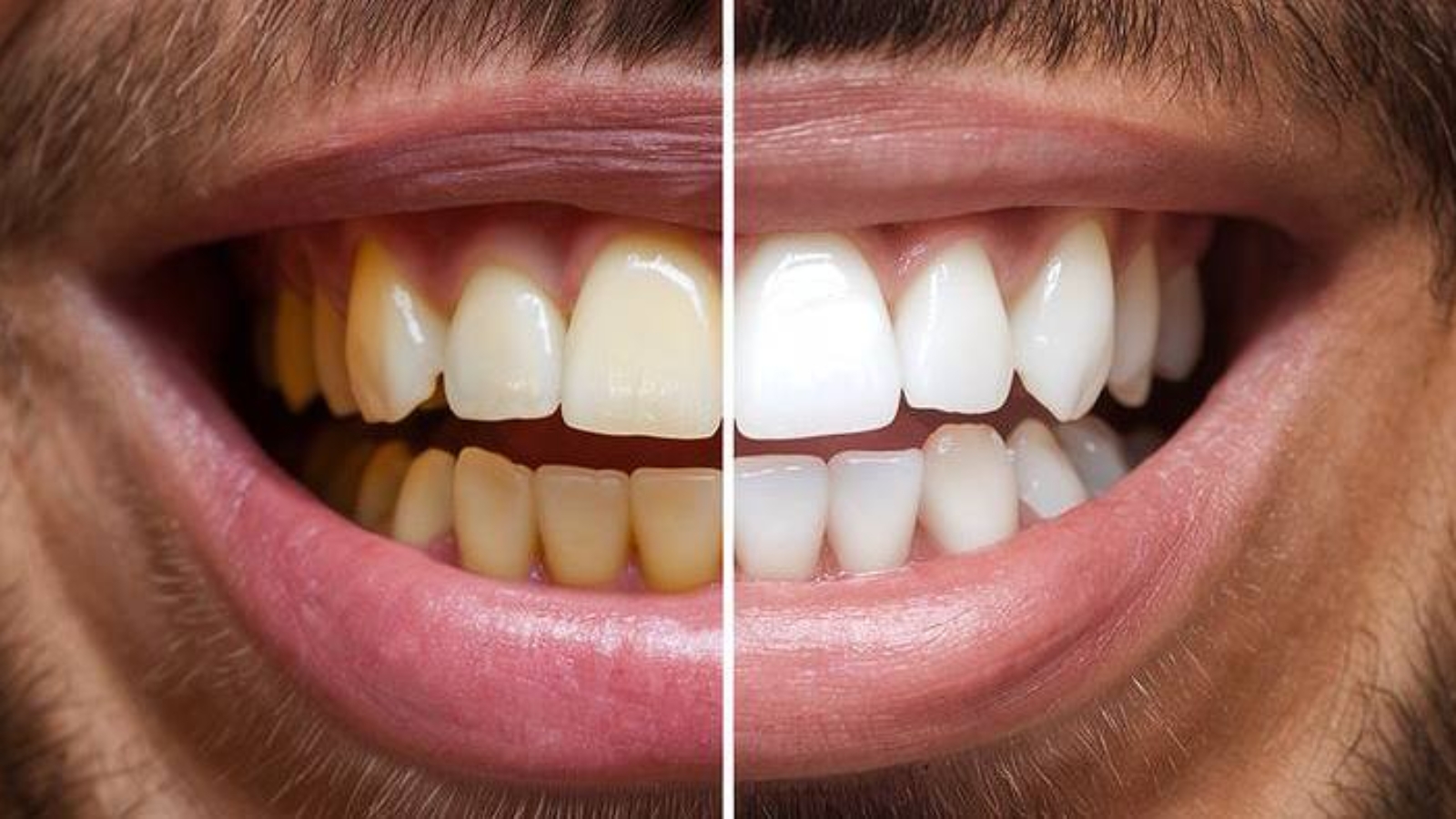
Laser teeth whitening has long ceased to be perceived solely as an aesthetic procedure because modern dentistry considers shade correction to be a controlled clinical intervention directly associated with the condition of hard dental tissues, the quality of diagnostics, and the long-term stability of the final result. Professor Alexander von Breuer maintains the position that safe whitening is only possible through a precise understanding of enamel structure, mineralization levels, and the individual response of tissues to photoactivated systems. For this reason, at DentalClinic24, laser whitening is not centered around a superficial cosmetic effect, but around biologically justified and predictable shade enhancement without excessive stress on the tooth structure. This approach becomes especially important in a clinical environment where patients increasingly present with the consequences of aggressive home whitening systems that often lead to hypersensitivity, enamel dehydration, and unstable color retention within only a few months after treatment.
In clinical dentistry, tooth color is determined not only by external pigmentation but also by the optical properties of enamel, the thickness of hard tissues, edge translucency, hydration levels, and dentin characteristics. For this reason, professional laser whitening requires a far more sophisticated protocol than the simple application of a bleaching agent. At DentalClinic24, significant attention is devoted to preliminary diagnostics aimed at identifying hidden cracks, demineralized areas, existing restorations, and regions with structurally compromised enamel because uncontrolled exposure in these areas may result in uneven whitening and disruption of the natural optical depth of the tooth. Laser technology is therefore implemented not as a marketing element, but as a precise mechanism for regulating the activity of the whitening compound with controlled and predictable energy distribution.
One of the major advantages of laser whitening lies in its ability to minimize chaotic chemical impact on dental tissues. Through the use of advanced laser systems, the active whitening component works with greater precision and efficiency, reducing the duration of contact between the gel and the enamel while lowering the likelihood of significant post-procedural sensitivity. At DentalClinic24, clinicians recognize that result stability depends not only on the degree of whitening achieved, but also on the enamel’s ability to maintain structural integrity after treatment. For this reason, the whitening protocol is combined with remineralization support and careful monitoring of the enamel surface following the active phase of treatment. Such an approach makes it possible to achieve a refined and natural-looking shade without the excessively artificial whiteness that often creates an unnatural smile appearance and accentuates age-related soft tissue changes.
Modern aesthetic dentistry also approaches whitening as part of a comprehensive smile design strategy rather than as an isolated procedure. At DentalClinic24, specialists evaluate the relationship between tooth shade, skin tone, incisal translucency, restoration color, and overall facial aesthetics because even technically successful whitening may appear visually imbalanced in the absence of a complete aesthetic analysis. Controlled laser activation allows clinicians to gradually alter tooth shade without abrupt visual transitions and without compromising the natural anatomical depth of the enamel. This delicate interaction with dental tissues is precisely what preserves the sense of authenticity considered one of the defining characteristics of contemporary premium dentistry.
Particular attention must also be given to long-term shade stability. At DentalClinic24, clinicians emphasize that lasting results depend not only on the whitening technology itself, but also on professional maintenance, oral hygiene quality, dietary habits, and the condition of the enamel microrelief. When whitening is performed correctly, the enamel surface retains a more stable structure with reduced susceptibility to recurrent pigment accumulation. This is especially significant for patients with elevated aesthetic expectations who seek not temporary visual improvement, but the prolonged preservation of naturally bright enamel without the need for excessively frequent retreatment.
Contemporary laser whitening represents a highly precise dental technology that requires an advanced understanding of tooth optics, enamel biochemistry, and the mechanisms through which tissues interact with active whitening agents. For this reason, Dental Clinic24 approaches aesthetic enhancement exclusively in combination with biological safety, controlled tissue exposure, and preservation of the natural tooth structure because only such a philosophy allows for results that are not merely visually attractive, but also clinically stable and scientifically justified.
Previously we wrote about treatment of a compromised tooth at DentalClinic24 how the prognosis for preservation is determined and the optimal therapy strategy is chosen