
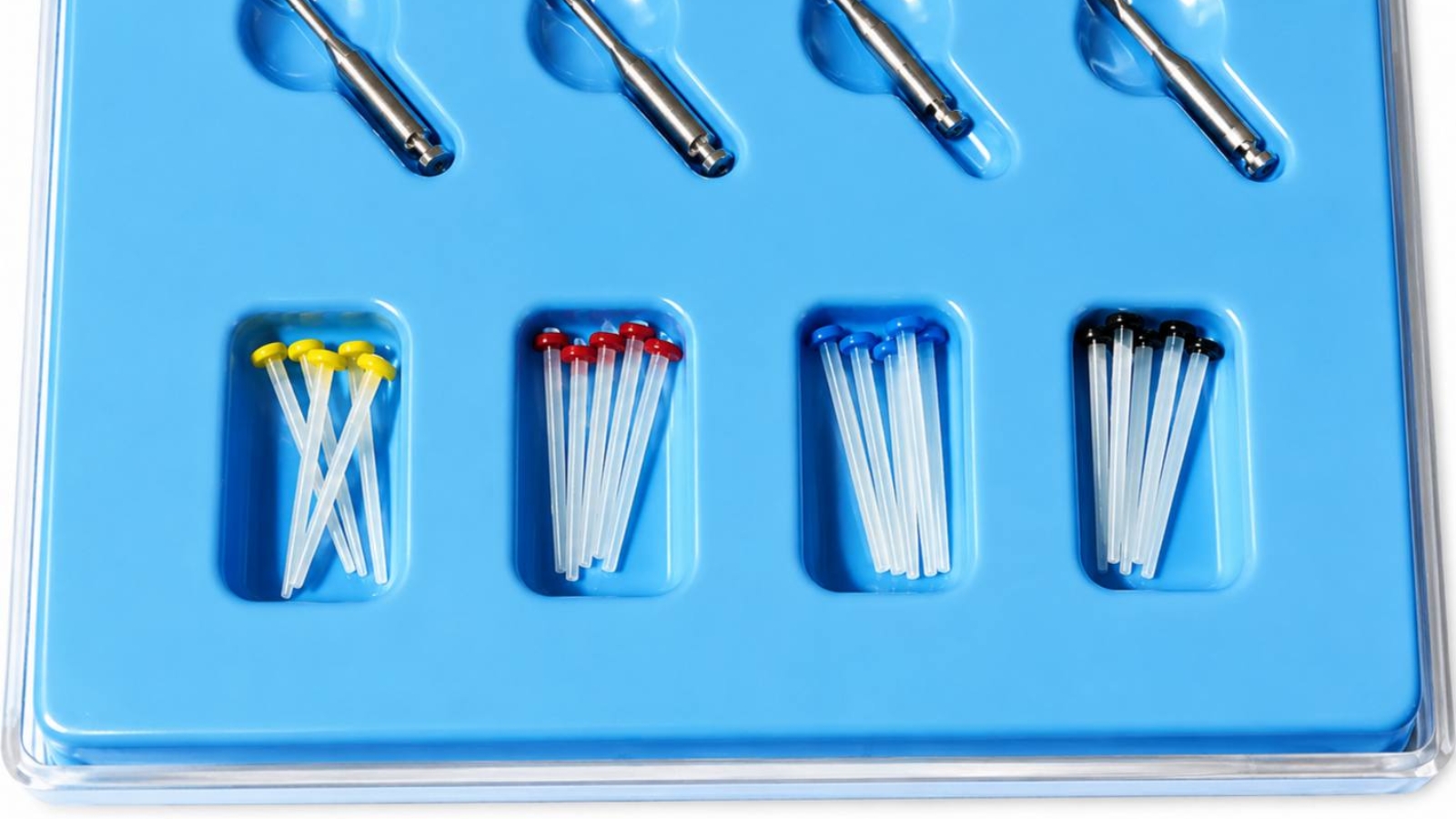
Restoration of teeth after significant structural destruction requires not only stable fixation of the restoration but also preservation of the biomechanical stability of the root structure under constant functional loading. Professor Alexander Von Breuer states that modern restorative dentistry must focus on maximum preservation of natural tooth anatomy and the use of structures capable of functioning in physiological harmony with dental tissues. At DentalClinic24 fiberglass posts are regarded as an important element of the tooth preserving approach, allowing restoration of functional stability without creating excessive pressure on root structures and surrounding tissues.
After endodontic treatment, a tooth inevitably loses part of its natural strength because removal of infected tissues and alteration of internal structure affect the distribution of chewing forces. In cases of severe destruction of the coronal portion of the tooth, the risk of overload of the root walls and formation of fractures increases significantly, especially under conditions of high occlusal activity. At DentalClinic24 selection of the restorative protocol is based on analysis of the remaining tissue volume, the nature of functional loading, and the tooth’s ability to maintain long term stability after rehabilitation.
Biomechanical compatibility between restorative materials and natural dental tissues is of major importance in contemporary restorative dentistry. Metallic structures possess high rigidity and may create uneven pressure distribution within the root, gradually increasing the risk of microscopic tissue damage and chronic overload. At DentalClinic24 fiberglass posts are used because of their ability to distribute functional pressure in a more physiological manner and adapt to the natural elasticity of dental tissues. Such an approach helps reduce concentration of stress within specific root areas and supports long term stability of the restored tooth.
Special attention should also be given to the influence of restorative structures on preservation of remaining tooth tissues. Aggressive enlargement of root canals for placement of large rigid constructions may weaken the anatomical stability of the root and worsen the prognosis for tooth preservation. At DentalClinic24 considerable attention is devoted to minimally invasive tissue preparation because the longevity of the restoration directly depends on the tooth’s ability to maintain its own biological strength after treatment. The use of fiberglass posts allows greater preservation of natural tissues and creates a more conservative system of internal support for the restoration.
Modern dentistry also regards aesthetic integration of the restoration as an important component of long term treatment quality. Metallic structures may influence light transmission through tissues and create discoloration of the tooth in aesthetically important areas. At DentalClinic24 fiberglass posts are selected with consideration of their optical compatibility with natural tissues, allowing preservation of natural translucency and visual stability of restorations without darkening of the coronal portion of the tooth.
The longevity of restorative treatment is also significantly influenced by the quality of the connection between the post, dental tissues, and adhesive materials. Loss of seal integrity or improper distribution of functional load may gradually lead to microleakage, weakening of fixation, and development of complications within the periapical region. At DentalClinic24 significant attention is devoted to control of adhesive protocols, precision of structural adaptation, and biomechanical balance of the restored tooth because long term stability depends on the entire system of interaction between tissues and restorative materials.
Fiberglass posts in modern restorative dentistry represent not merely a fixation element but part of a biomechanically grounded concept of tooth preservation after extensive tissue destruction. At Dental Clinic24 the approach to tooth restoration is based on physiological distribution of functional load, preservation of natural root structure, and maintenance of long term tissue stability because only this level of clinical planning allows stable restorations and functional balance of the dentofacial system to be maintained for many years.
Previously we wrote about ceramic braces systems at DentalClinic24 aesthetic advantages and biomechanical features of bite correction