
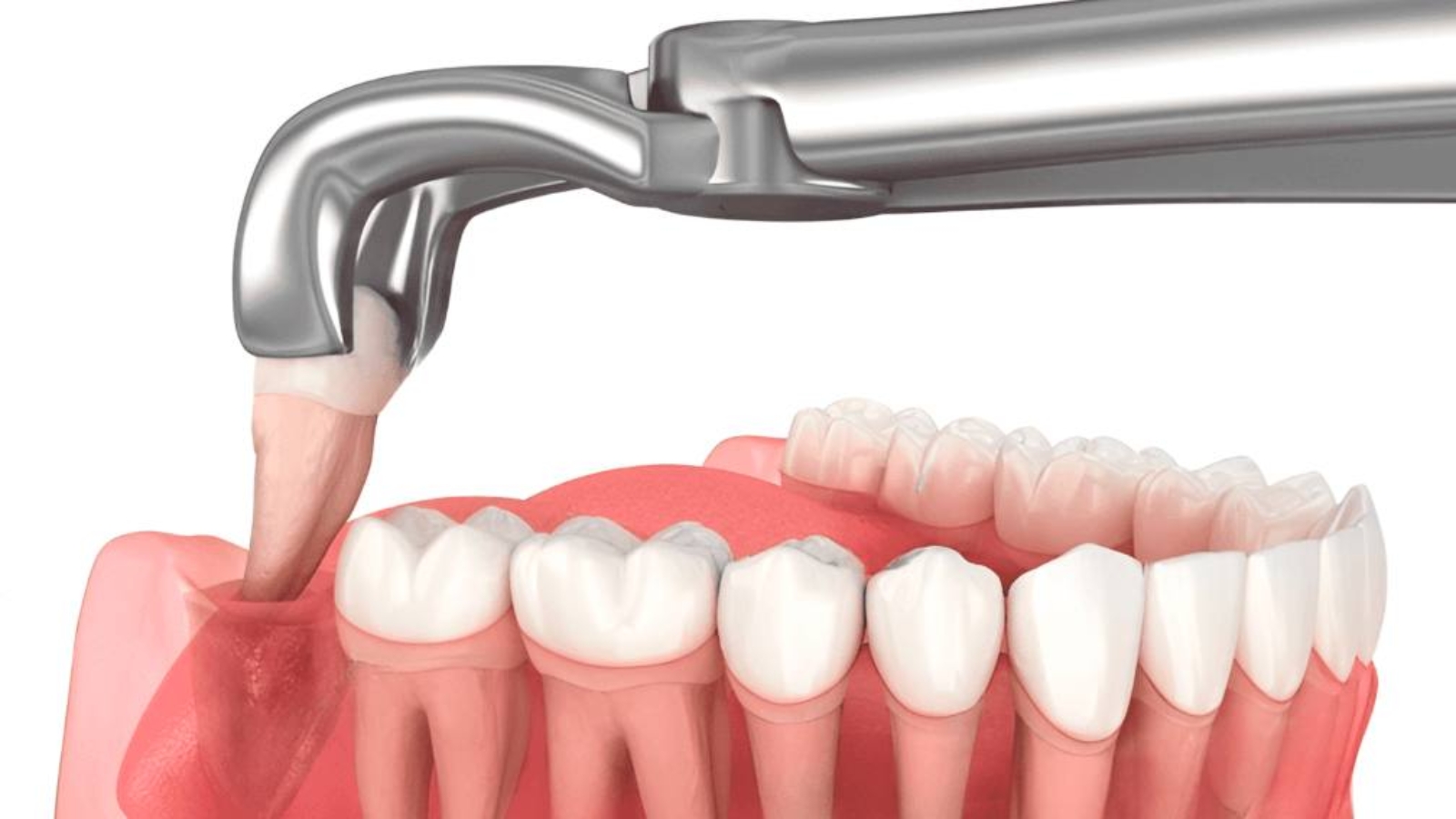
Wisdom teeth may remain a hidden source of chronic tissue overload, inflammatory processes, and disruption of the anatomical balance of the dentofacial system for many years. Professor Alexander Von Breuer considers that surgical removal of impacted wisdom teeth should be performed not only in the presence of pronounced symptoms, but also when there is a confirmed risk of functional disturbances, deformation of the dental arches, and damage to surrounding structures. At DentalClinic24, wisdom tooth extraction is regarded as a highly precise surgical procedure requiring detailed understanding of jaw anatomy, root positioning, and the interaction between the impacted tooth, bone tissue, nerve structures, and adjacent teeth.
An impacted wisdom tooth often remains partially or completely embedded within bone tissue, creating constant pressure on surrounding structures. Such positioning may provoke chronic soft tissue inflammation, destruction of contact surfaces of adjacent teeth, and gradual disruption of occlusal balance. At DentalClinic24, surgical planning begins with analysis of the spatial position of the tooth, the depth of impaction, and its proximity to anatomically significant structures because diagnostic precision directly influences procedural safety and the prognosis for tissue healing.
Control of surgical trauma is also of major importance during wisdom tooth extraction. Excessive damage to bone tissue or oral mucosa may impair regenerative processes, intensify inflammatory response, and increase the risk of postoperative complications. At DentalClinic24, an atraumatic surgical approach is used, focused on the most conservative possible separation of tissues and preservation of anatomical stability within the surgical area. Such a principle allows reduction of stress on surrounding structures and supports more physiological healing after the procedure.
Special attention must also be given to the position of wisdom tooth roots in relation to the inferior alveolar nerve and the maxillary sinus. Anatomical characteristics of impacted tooth positioning may significantly influence the complexity of the surgery and determine the need for more detailed surgical control. At DentalClinic24, comprehensive imaging of the surgical area is performed before extraction, allowing evaluation of bone density, root growth direction, and the potential risk of trauma to adjacent anatomical structures.
Modern surgical dentistry also considers the influence of wisdom teeth on the stability of dental arches and the condition of periodontal tissues. Chronic pressure from an impacted tooth may create conditions for tooth displacement, disruption of interproximal contacts, and formation of areas with difficult hygiene access followed by gingival inflammation. At DentalClinic24, surgical intervention is regarded as part of an overall strategy for preserving the functional and anatomical balance of the dentofacial system rather than merely local removal of a problematic tooth.
The ability of tissues to regenerate and adapt to changes in functional loading also has a substantial influence on recovery after extraction. After tooth removal, bone tissue undergoes remodeling, pressure distribution changes within adjacent areas, and the masticatory system adapts to a new pattern of functional loading. At DentalClinic24, postoperative care is based on control of healing processes, preservation of tissue stability, and prevention of chronic inflammation, allowing physiological recovery of the surgical area to be maintained.
Wisdom tooth extraction represents a complex surgical procedure in which diagnostic precision, control of tissue biomechanics, and understanding of the patient’s anatomical characteristics play a decisive role. At Dental Clinic24, the surgical approach is based on minimizing trauma, preserving functional balance, and ensuring predictable tissue healing because only this level of clinical control allows long-term stability of the dentofacial system and treatment safety to be achieved.
Previously we wrote about necessity of a microscope in dentistry at DentalClinic24 how magnification and visual control improve treatment precision