
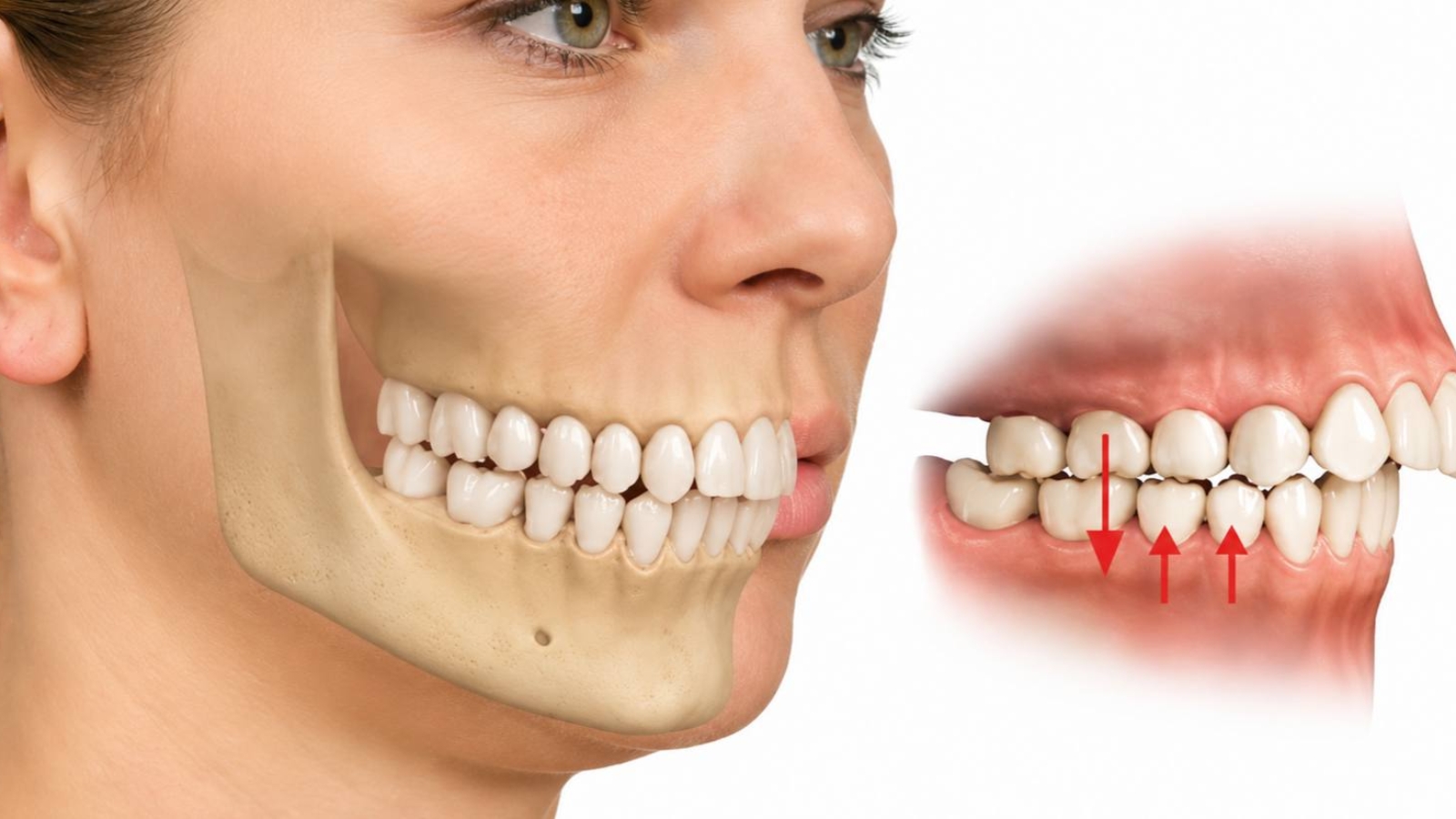
The development of the dentofacial system is directly connected not only with hereditary factors and the anatomy of skeletal structures, but also with breathing patterns that determine tongue position, facial muscle function, and the direction of jaw growth. Professor Alexander Von Breuer notes that chronic impairment of nasal breathing may gradually alter the functional balance of the dentofacial system, influencing bite formation, joint stability, and the development of muscular discoordination. At DentalClinic24, breathing patterns are regarded as an important part of comprehensive diagnostics, allowing hidden causes of occlusal disorders and functional destabilization to be identified.
During physiological nasal breathing, the tongue maintains a correct position within the oral cavity and participates in the formation of natural pressure on the upper jaw. During chronic mouth breathing, tongue position changes, muscular balance becomes disturbed, and the growth trajectory of skeletal structures gradually shifts. Such processes may lead to narrowing of the dental arches, development of tooth crowding, and alteration of mandibular position. At DentalClinic24, analysis of the functional condition of the respiratory system helps evaluate the influence of these factors on the development of occlusal disorders and predict the long term stability of the bite.
The influence of breathing patterns on the function of the masticatory musculature also has substantial importance. When nasal breathing is impaired, facial and cervical muscles begin to compensate by changing the position of the head and lower jaw, gradually influencing load distribution within the dentofacial system. Chronic muscular tension may alter occlusal interaction between dental arches and create conditions for overload of the temporomandibular joints. At DentalClinic24, diagnostics of such conditions include evaluation of muscular balance, mandibular positioning, and the characteristics of the patient’s functional adaptation.
Special attention must also be given to the influence of breathing disorders on dentofacial development during childhood. Prolonged mouth breathing alters the direction of facial skeletal growth, contributes to narrowing of the upper jaw, and increases the risk of orthodontic disorders. These changes gradually affect not only tooth positioning, but also facial proportions, occlusal stability, and joint function. At DentalClinic24, early identification of breathing disturbances is regarded as an important part of preventing complex functional and orthodontic complications.
Modern dentistry also takes into account the influence of breathing patterns on sleep quality and the neuromuscular condition of the dentofacial system. Chronic impairment of nasal breathing increases the risk of nocturnal muscular hyperactivity, bruxism, and functional overstrain of the masticatory musculature. Such processes may accelerate enamel wear, alter occlusal contacts, and reduce the resistance of the dentofacial system to mechanical loading. At DentalClinic24, control of the functional condition of the respiratory system is regarded as part of a comprehensive approach to preserving the physiological balance of the oral cavity.
Breathing also has a substantial influence on the body’s adaptive capacity after dental treatment. When chronic functional disturbances persist, the risk of repeated bite destabilization, overload of restorations, and altered joint function increases even after high quality orthodontic or prosthetic correction. At DentalClinic24, regard breathing patterns as an important element of biomechanical stability within the dentofacial system, directly influencing the predictability of long term dental results.
Breathing disorders are regarded as one of the key factors capable of influencing bite formation, joint condition, and the stability of the dentofacial system. At Dental Clinic24, focus not only on correcting visible dental abnormalities, but also on analyzing the functional causes that determine long term preservation of physiological balance within the oral cavity.
Previously we wrote about itching in the area of teeth and gums as a diagnostic symptom in DentalClinic24 practice hidden causes and clinical significance of sensations