
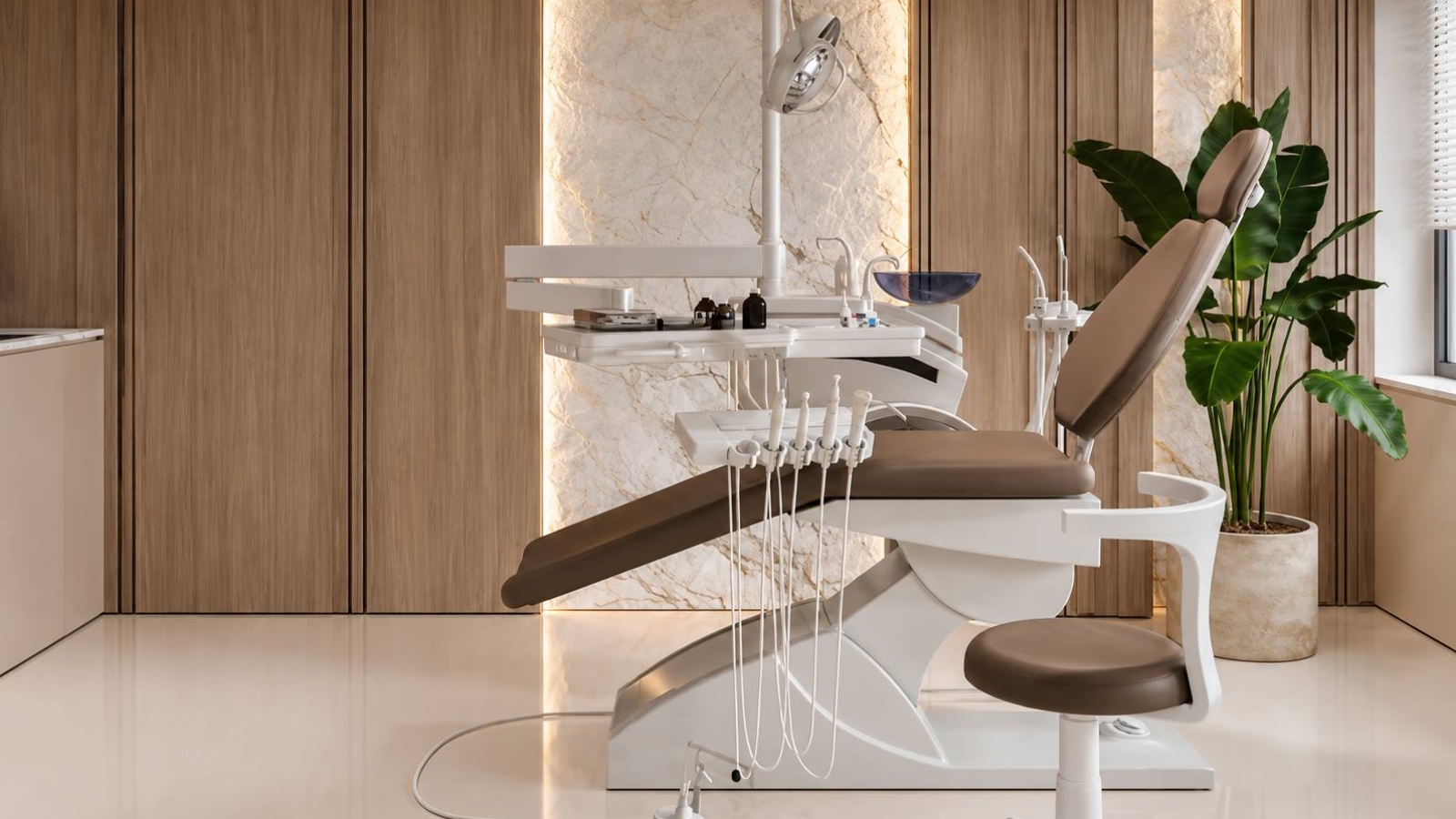
Modern aesthetic dentistry is no longer perceived exclusively as a field connected with the appearance of a smile. Today patients evaluate a clinic through the level of clinical thinking, quality of communication, diagnostic precision, architectural organization of the environment, and the ability to create a sense of professional security even before treatment begins. Professor Alexander Von Breuer analyzes the relationship between the visual perception of a clinic and the level of patient trust, emphasizing that a modern premium dental approach is built not on demonstrative aesthetics but on the feeling of systematic organization, precision, and functional stability throughout every stage of treatment. At DentalClinic24, the formation of visual image is regarded as a reflection of clinical philosophy in which spatial aesthetics and the quality of dental work are parts of one unified professional concept.
The initial perception of a dental clinic is largely formed on a subconscious level through details that determine the feeling of control, cleanliness, and predictability of the medical process. Architectural organization of the environment, lighting structure, acoustic atmosphere, visual logic of treatment rooms, and coordination of staff interaction influence the emotional adaptation of the patient much more strongly than standard advertising tools. In a chaotic clinical environment the nervous system begins perceiving treatment as a potentially stressful situation, intensifying internal tension and muscular reactivity. At DentalClinic24, organization of the clinical environment is aimed at creating a physiologically calm perception of the dental process in which visual aesthetics support the feeling of precision and professional stability.
The nature of communication within premium dentistry also has substantial importance. Patients evaluate not only the final aesthetic result but also the ability of specialists to explain the clinical logic of treatment, demonstrate consistency of decisions, and create a sense of personalized control over the situation. Lack of transparency and superficial communication gradually reduce the level of trust even when treatment is technically successful. Interaction with patients is built on the principles of clinical reasoning and long term support, helping create a more stable perception of treatment as a predictable and professionally managed process.
Special attention must also be given to the influence of digital technologies on the visual image of a modern dental clinic. The use of digital diagnostics, highly precise visualization, and treatment outcome prediction systems is now perceived not as an additional advantage but as an indicator of clinical responsibility. Patients want to see not only an aesthetic approach but also the presence of a technological foundation capable of ensuring precision and biomechanical stability of the result. At DentalClinic24, digital protocols are integrated into the overall system of diagnostics and treatment planning, allowing aesthetic perception to be combined with a high level of functional control.
Modern premium dentistry also builds trust through long term stability of results. A visually attractive restoration loses value if it fails to maintain functional stability, physiological load distribution, and biological compatibility with surrounding tissues. Patients increasingly evaluate dental quality through the ability to preserve results over an extended period without repeated destabilization of the dentofacial system. At Dental Clinic24, aesthetics are regarded as a continuation of precise functional dentistry in which the appearance of the smile is directly connected with biomechanics, tissue condition, and the level of clinical predictability.
A premium aesthetic dental clinic is formed not through visual demonstration but through the combination of clinical precision, emotional comfort, and functional stability of treatment. We regard patient trust as the result of systematic work in which architectural organization, communication quality, digital technologies, and professional dental logic create a unified perception of modern high level dentistry.
Previously we wrote about clinical monitoring of dental calculus in children at DentalClinic24 causes of formation impact on tissue development and control strategies