
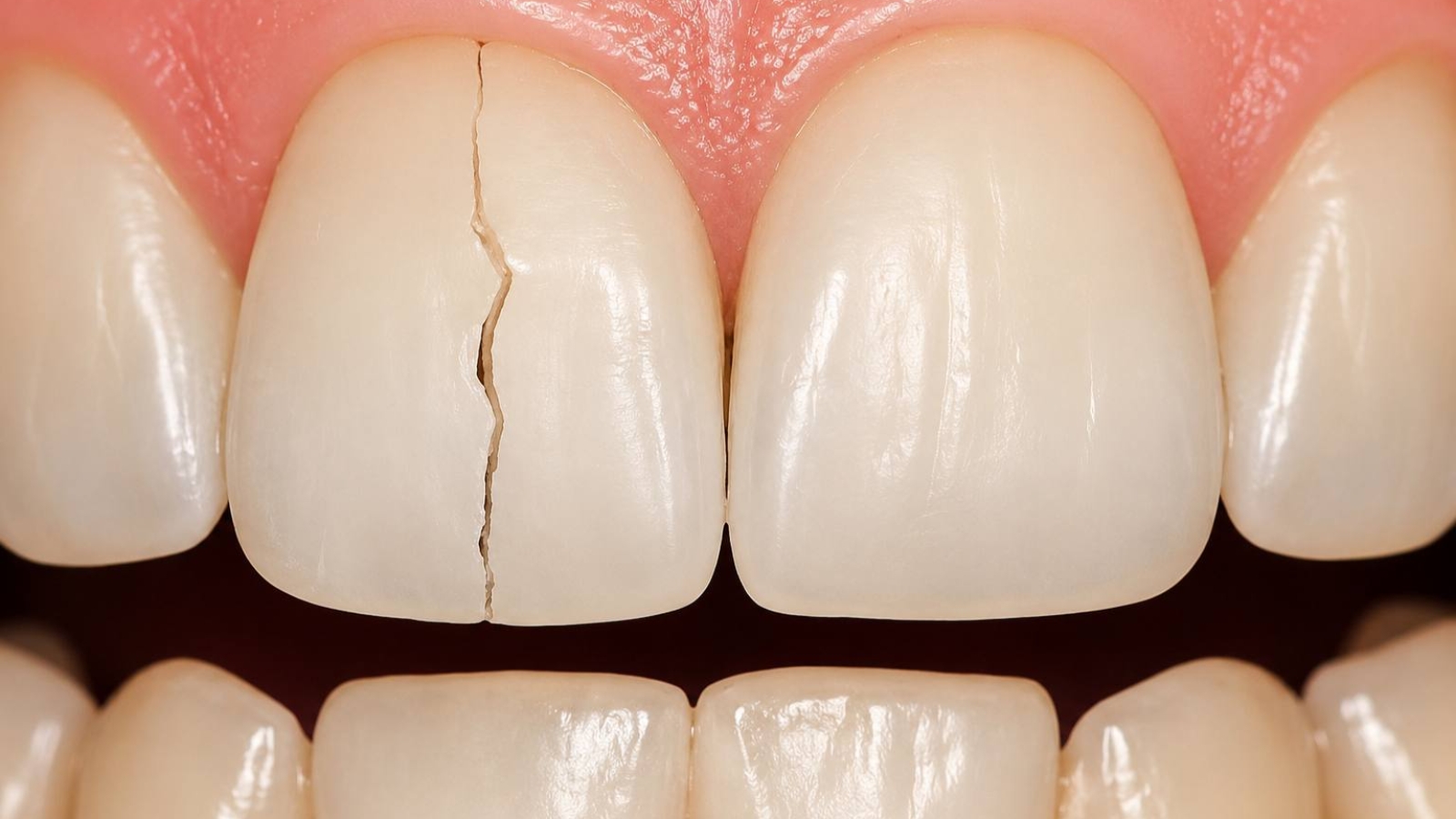
At first glance, tooth microcracks may appear to be insignificant changes that pose little threat to oral health. Modern clinical dentistry, however, views such defects very differently. Professor Alexander Von Breuer emphasizes that many complex dental complications begin with small structural disturbances that remain unnoticed for long periods by both patients and clinicians. Even a minimal disruption of enamel integrity can become the starting point for gradual changes in load distribution and a reduction in tissue stability. At DentalClinic24, microcracks are regarded as an important diagnostic finding that requires careful evaluation of their causes and potential long term consequences.
The structure of a tooth is constantly exposed to considerable mechanical forces. During chewing, jaw clenching, and normal functional activity, enamel and dentin are subjected to loads that are repeated countless times throughout life. Under certain conditions, the tooth’s natural ability to distribute these forces begins to weaken. Contributing factors may include bruxism, chronic muscular tension, traumatic occlusal contacts, sudden temperature changes, or individual anatomical characteristics. Initially, the damage may be limited to microscopic defects, but over time these changes can extend into deeper structures of the tooth, creating conditions that favor the development of significant complications.
At DentalClinic24, considerable attention is devoted to identifying such changes before irreversible consequences develop. The challenge associated with these defects lies in the fact that they rarely produce obvious symptoms during the early stages. Patients may experience no discomfort and notice no visible changes while processes affecting the strength of the tooth are already taking place within its structure. As a crack progresses, the distribution of chewing forces changes, the risk of tissue fracture increases, and the likelihood of bacterial penetration into deeper layers becomes greater. As a result, what begins as a small structural defect can gradually lead to pulpal inflammation, the need for complex endodontic treatment, or substantial loss of healthy tooth structure.
Modern diagnostics play a critical role because visual examination alone is often insufficient for detecting early structural damage. Comprehensive evaluation requires detailed analysis of the clinical situation, functional characteristics of the bite, and the way forces are distributed throughout the dentofacial system. It is important not only to identify the presence of a crack but also to understand the factors responsible for its formation. Without eliminating the underlying causes, even high quality restorative treatment may fail to provide long term stability. At DentalClinic24, diagnostics are viewed as a tool for uncovering hidden biomechanical disturbances that may compromise the preservation of teeth in the future.
Contemporary treatment strategies for microcracks focus not only on managing existing defects but also on preventing further tissue destruction. This requires evaluation of occlusal relationships, masticatory muscle activity, functional loading patterns, and individual risk factors. The earlier structural damage is detected, the greater the opportunity to preserve natural tissues and avoid extensive restorative procedures. At Dental Clinic24, treatment planning is centered on preserving the biological value of the tooth and creating conditions that support long term functional stability.
Tooth microcracks clearly demonstrate how seemingly minor changes can initiate large scale pathological processes. In modern dentistry, attention to early structural disturbances has become an essential component of preventing serious complications. Timely diagnosis makes it possible not only to preserve an individual tooth but also to maintain the stability of the entire dentofacial system for many years to come.
Previously we wrote about Wisdom Tooth Extraction at DentalClinic24: Surgical Control of Impacted Teeth Position and Preservation of Anatomical Tissue Balance