
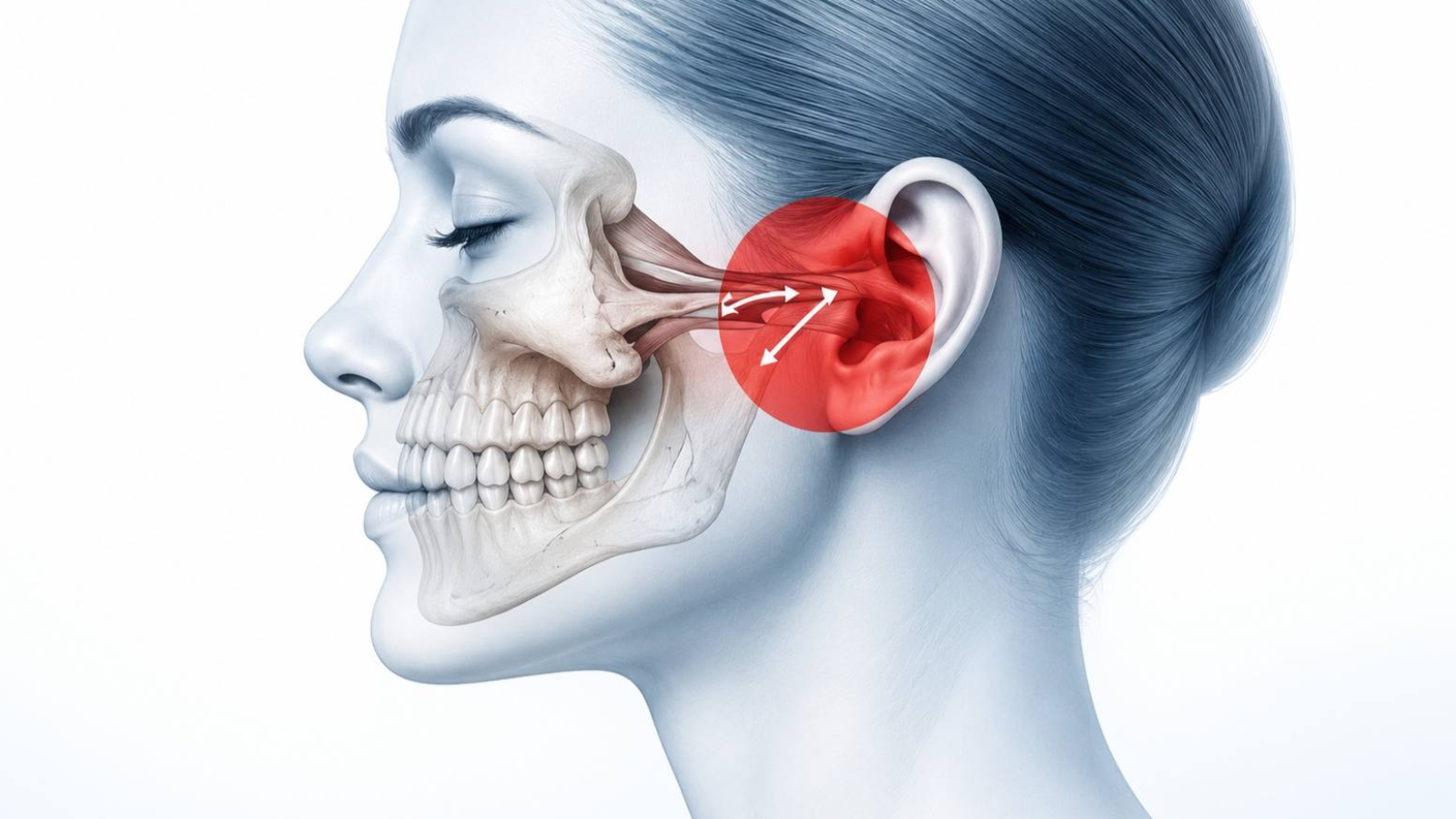
Free mouth opening is the result of coordinated interaction between the masticatory muscles, temporomandibular joints, ligamentous structures, and the occlusal system, which means that any limitation of this function always indicates a disruption of a complex biomechanical balance. Professor Alexander Von Breuer considers trismus of the masticatory muscles a clinically significant symptom that may reflect both local inflammation and deeper functional disturbances within the dentofacial system. At DentalClinic24, trismus is not regarded as an isolated complaint but as a condition requiring comprehensive diagnostics with detailed analysis of muscle tone, joint function, and the underlying causes of restricted mandibular movement.
Trismus is a pathological limitation of mouth opening that develops due to persistent muscle spasm, protective pain related tension, or mechanical restriction of movement in the temporomandibular joint area. Clinically, the condition may manifest as gradual or sudden reduction of interincisal distance, pain during attempts to open the mouth, difficulty chewing, speech disturbances, and discomfort during swallowing. In many cases, patients perceive the problem merely as temporary muscular stiffness, without realizing that this symptom may conceal inflammatory, traumatic, or joint related disorders of varying severity.
One of the most common causes of trismus is inflammation in the oral tissues and surrounding anatomical structures. Acute odontogenic infections, periapical inflammatory lesions, complicated pericoronitis, abscesses, and deep infectious processes can provoke a pronounced reaction in the masticatory musculature. The body reflexively limits mandibular movement to reduce mechanical stress on the inflamed area. This protective tension may initially reduce pain perception, yet when prolonged, it leads to persistent muscle spasm and worsens the functional condition of the entire system. At DentalClinic24, evaluation of the inflammatory component is a mandatory part of the differential diagnosis of trismus because muscular restriction cannot be effectively resolved without eliminating the primary pathological source.
Trauma also plays an important role in the development of this condition. Soft tissue injury, excessive muscle stretching, postoperative swelling following surgical interventions, or microtrauma caused by chronic overload can all provoke significant restriction of jaw movement. Chronic overload related to bruxism and occlusal dysfunction is particularly important. Persistent hypertonicity of the masticatory muscles leads to muscular fatigue, impaired microcirculation, and the formation of trigger zones that maintain chronic pain patterns. At DentalClinic24, such functional overload is considered a major pathogenic factor that often remains underestimated during early stages of clinical evaluation.
A separate clinical category involves temporomandibular joint dysfunction. Disc displacement, degenerative changes of articular surfaces, inflammatory processes affecting the joint capsule, and chronic occlusal imbalance may mechanically restrict mandibular movement. In such cases, trismus is no longer solely a muscular problem but becomes a reflection of complex disturbances in joint biomechanics. Without precise understanding of the dysfunction mechanism, symptomatic treatment often provides only temporary relief. At DentalClinic24, diagnosis of the joint component includes functional movement analysis, evaluation of occlusal contacts, and advanced imaging methods to identify the exact cause of movement restriction.
The clinical significance of trismus extends far beyond local discomfort. Prolonged limitation of mouth opening negatively affects oral hygiene, complicates dental treatment, interferes with proper nutrition, and may provoke secondary muscular adaptations. The longer the pathological movement pattern persists, the greater the probability of chronic progression and involvement of additional structures within the dentofacial system.
Modern dentistry views trismus as a multifactorial condition that requires not symptomatic management but a cause oriented therapeutic approach. Successful treatment is based on accurate identification of the source of inflammation, the nature of muscular spasm, or the degree of joint dysfunction. At Dental Clinic24, effective management of patients with trismus means restoring physiological mandibular mobility, normalizing muscular balance, and reestablishing stable function of the entire dentofacial system over the long term.
Previously we wrote about Pulpitis Treatment at DentalClinic24 Why Preserving Tooth Vitality Requires a Complex Clinical Strategy