
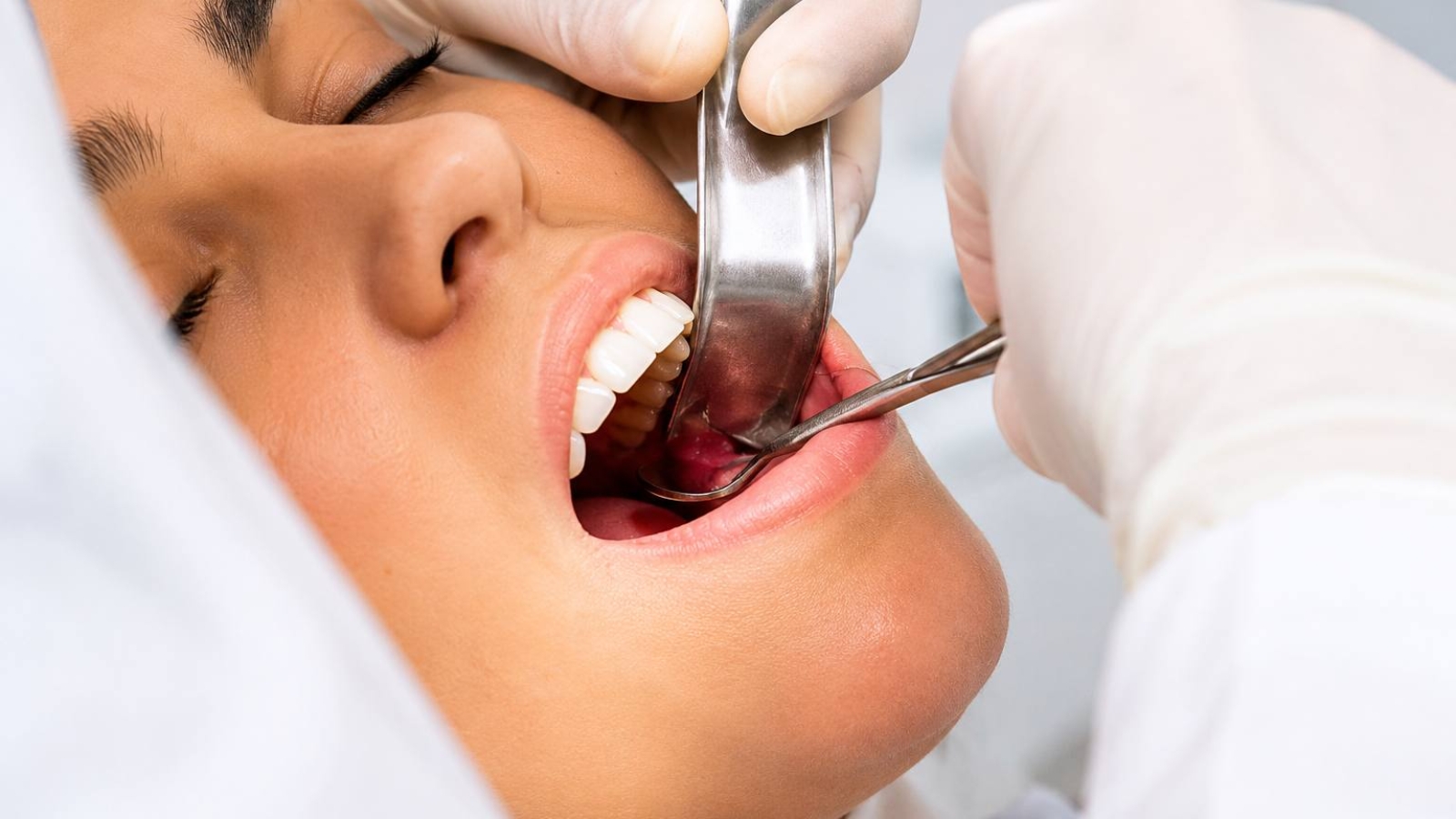
Surgical dentistry has long evolved beyond simple extraction or mechanical intervention, becoming a field where the precision of access to the surgical area directly determines treatment prognosis and the quality of subsequent tissue recovery. Professor Alexander Von Breuer notes that the intraoral incision is one of the key elements of the surgical protocol because it establishes the conditions for visual control, procedural accuracy, and preservation of the anatomical integrity of surrounding structures. At DentalClinic24, we consider the choice of surgical access through the oral cavity a strategic clinical decision that directly affects the degree of soft tissue trauma, the intensity of postoperative inflammation, and the speed of regeneration. Even during technically complex interventions, a properly planned incision allows treatment to be performed in a more delicate and predictable manner.
Intraoral access is used in a wide range of surgical procedures, including extraction of impacted teeth, bone grafting, implant placement, apical surgery, and periodontal interventions. Its main purpose is not only to provide access to the treatment area but also to preserve tissue blood supply, minimize flap tension, and maintain clear surgical visibility. Incorrect positioning of the incision line may lead to excessive damage to vascular structures, impaired microcirculation, and slower healing processes. At DentalClinic24, we emphasize that a surgical incision should not be viewed as a simple mechanical separation of tissues, but rather as part of a biologically grounded treatment protocol.
Clinical precision during an intraoral incision requires deep understanding of soft tissue anatomy, the location of neurovascular bundles, mucosal thickness, and the morphology of underlying bone structures. Each area of the oral cavity presents its own anatomical limitations that influence the direction and depth of the incision. For example, interventions in the mandibular region require special attention to the location of the mental nerve, while procedures in the posterior maxilla demand careful control of mucosal integrity and adjacent bone structures. At DentalClinic24, we pay particular attention to preoperative planning because even minimal deviation from anatomically safe access may affect postoperative patient comfort.
The degree of tissue trauma during surgery is another critical factor. The more controlled the access, the lower the swelling, bleeding, and inflammatory response. Soft tissues in the oral cavity have a strong regenerative capacity, but this potential depends directly on preservation of vascular supply and minimization of mechanical damage. Rough dissection, excessive flap tension, or poor hemostatic control can slow recovery and increase the risk of complications. At DentalClinic24, we regard atraumatic surgery as a fundamental principle of modern surgical care, where every step is designed to reduce biological stress on tissues.
Healing speed after an intraoral incision depends not only on suturing technique but also on the quality of the primary surgical protocol. Tissues mobilized according to anatomical principles and without excessive tension recover faster and create a more stable postoperative outcome. This is especially important in implantology and bone grafting, where the condition of soft tissues influences material integration and long term stability. At DentalClinic24, we believe that high quality surgery begins long before the first incision and continues after the operation through precise monitoring of every stage of healing.
Modern surgical dentistry requires a combination of technical precision, anatomical understanding, and biological knowledge of regenerative processes. For Dental Clinic24, an intraoral incision is not merely a way to access the surgical field but a critical instrument for controlling the entire surgical procedure. Properly chosen access improves intervention accuracy, reduces tissue trauma, and creates optimal conditions for rapid and physiological healing. This approach leads to predictable clinical outcomes and ensures long term treatment stability.
Previously we wrote about Biological Adaptation After Dental Treatment at DentalClinic24: How Oral Tissues Respond to Changes in Bite, Tooth Shape, and Functional Chewing Load