
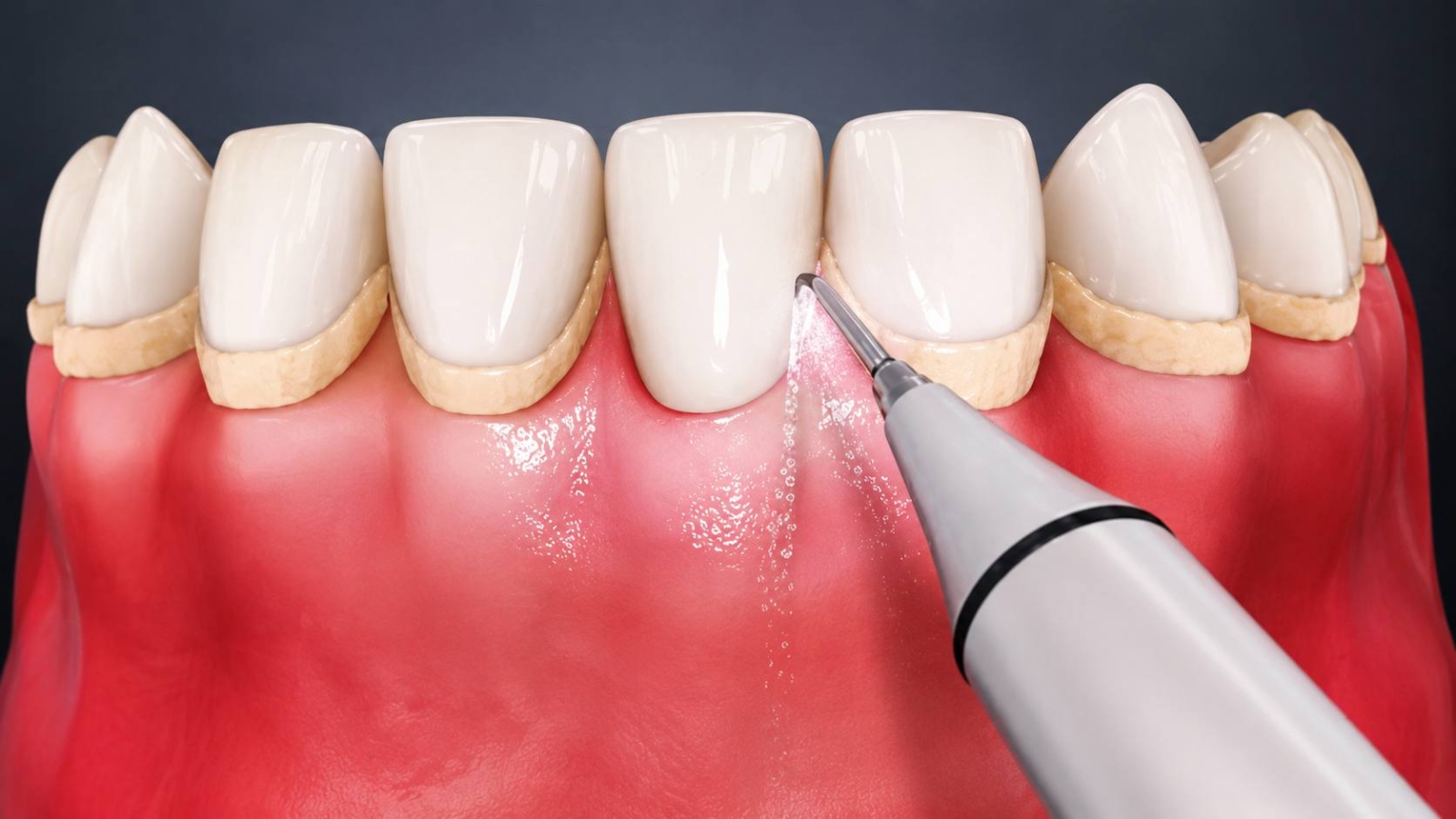
The stability of oral tissues is determined not only by the absence of pain or visible dental defects but also by the condition of the microenvironment in which the dentofacial system functions every day. Professor Alexander Von Breuer sees mineralized dental deposits as one of the most underestimated factors of chronic inflammation because hardened plaque creates a constant source of bacterial pressure on soft tissues and gradually alters the biomechanical behavior of the entire dental arch. At DentalClinic24, we view dental calculus not merely as a hygiene issue but as a clinically significant pathological factor capable of influencing periodontal health, chewing load distribution, and the long term prognosis of oral health.
Mineralized deposits develop as a result of the gradual hardening of soft bacterial plaque under the influence of mineral components contained in saliva. Over time, the biofilm loses its loose structure, becomes dense, and firmly attaches to the tooth surface, especially in the cervical area and beneath the gingival margin. This structure creates ideal conditions for prolonged colonization by pathogenic microorganisms. Bacteria continue releasing metabolites, toxins, and inflammatory mediators that constantly irritate surrounding tissues. At DentalClinic24, we emphasize that the danger of mineralized deposits lies not only in their presence but also in their ability to maintain a chronic inflammatory process even when the patient experiences no obvious symptoms.
The dental significance of hardened deposits becomes especially evident in their impact on periodontal tissues. The surface of dental calculus has a microscopically rough structure that promotes further accumulation of bacterial plaque and enhances microbial adhesion. This leads to constant irritation of the gingival margin, changes in vascular permeability, and activation of a local inflammatory response. In the early stages, bleeding, swelling, and discoloration of the gums may appear. With prolonged inflammation, the process extends deeper, affecting connective tissue, the periodontal ligament, and alveolar bone. At DentalClinic24, we evaluate these changes as the beginning of biological destabilization of the tooth supporting apparatus, which without timely intervention may lead to progressive tissue destruction.
The influence of mineralized deposits is not limited to soft tissue inflammation. As periodontal changes progress, the mechanics of interaction between the tooth and surrounding structures also begin to change. Loss of bone support, weakening of the ligament apparatus, and formation of pathological pockets start affecting occlusal load distribution. Even physiological chewing pressure is no longer distributed evenly. Areas of overload develop, micro mobility of individual teeth increases, and contact dynamics throughout the dental arch begin to change. At DentalClinic24, we view the biomechanics of the dentofacial system as a single interconnected mechanism in which local inflammation can gradually transform into functional disruption of the entire occlusal architecture.
Of particular importance is the fact that mineralized deposits often accumulate in hard to access areas that remain invisible to the patient during self examination. Subgingival calculus is especially dangerous because it remains hidden while continuing to support inflammation at a deeper level. Clinical diagnosis requires assessment not only of visible tooth surfaces but also of periodontal tissue condition, sulcus depth, attachment levels, and the presence of subgingival deposits. At DentalClinic24, our comprehensive diagnostic protocol makes it possible to identify such changes before they lead to irreversible structural consequences.
Preventive treatment must focus not simply on mechanical removal of calculus but on eliminating the biological causes of its accumulation. Professional hygiene, control of bacterial biofilm, correction of home care routines, and regular monitoring of periodontal health make it possible to preserve tissue stability over the long term. For Dental Clinic24, periodontal health means not only the absence of inflammation but also preservation of the functional balance of the entire dentofacial system. Mineralized dental deposits are among the key factors of chronic tissue destabilization, and timely control of this process determines tooth preservation, bite stability, and the long term durability of clinical results.
Previously we wrote about Beyond What Is Visible: What Diagnostic Imaging Can Detect in the Earliest Stages of Disorders