
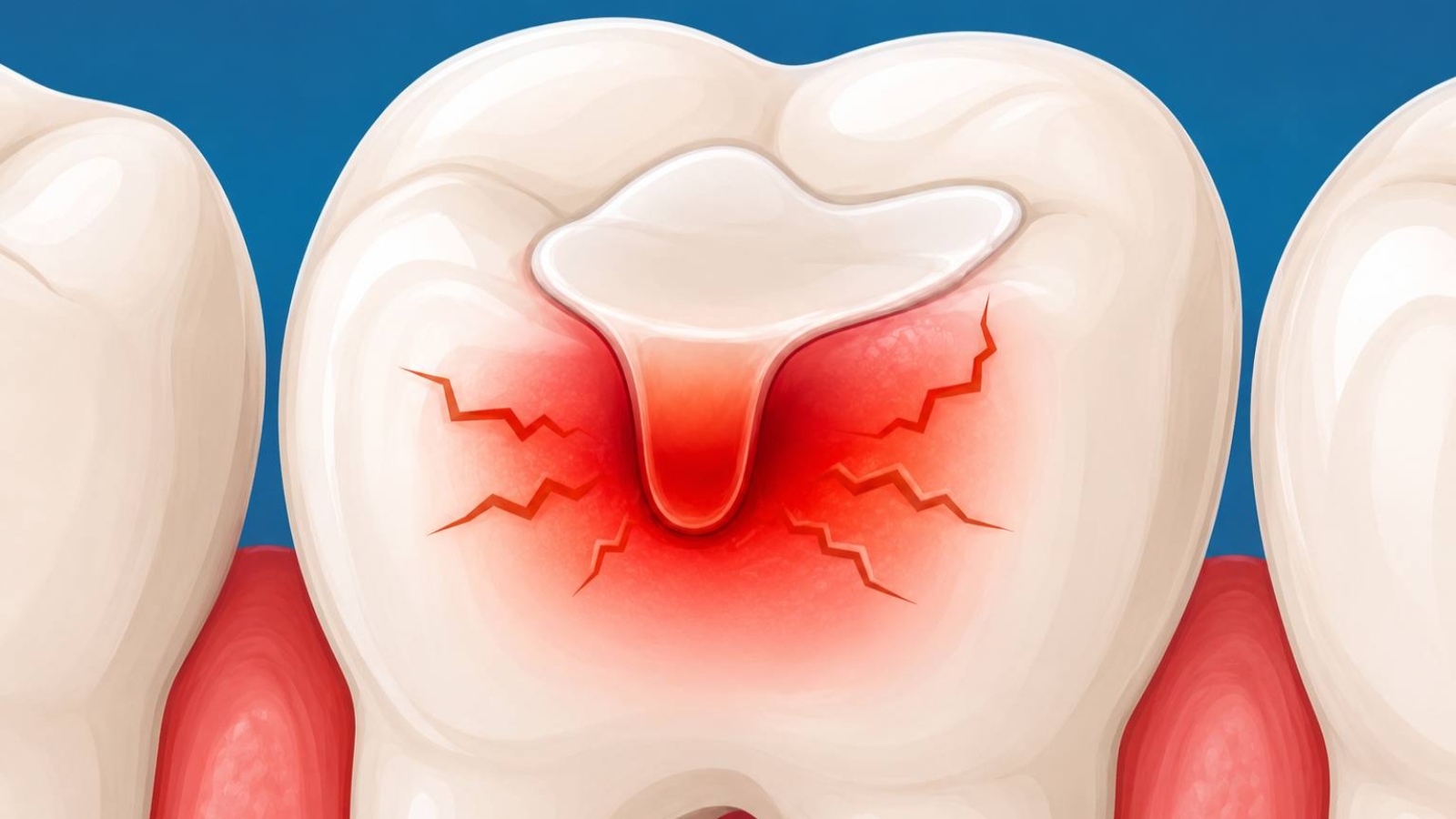
Pain under a filling after dental treatment is a clinical condition that requires particularly careful evaluation, since discomfort after restoration may represent either a temporary adaptive response of dental tissues or a sign of an ongoing pathological process. Professor Alexander Von Breuer analyzes such cases as an important diagnostic marker reflecting the biological response of the tooth to intervention, the quality of the restorative protocol, and the functional distribution of load after treatment. At DentalClinic24, we view pain under a filling not as an isolated symptom but as a signal requiring assessment of hard tissues, the pulpal complex, and occlusal balance.
After placement of a filling, the tooth enters a stage of adaptation to new biomechanical conditions. Even when treatment is technically flawless, temporary sensitivity to cold, heat, or chewing pressure may occur. This is associated with the effect of preparation and restoration on dentinal tubules, as well as changes in stress distribution within the coronal portion of the tooth. If pain gradually decreases over several days or weeks, this is most often related to post restorative sensitivity. However, persistent pain, increasing discomfort, or spontaneous painful episodes require deeper clinical analysis. At DentalClinic24, special attention is given to distinguishing physiological tissue adaptation from signs of complications.
One of the common causes of pain is secondary caries developing at the margin of an existing restoration. Microleakage, compromised sealing, or microscopic defects in adhesion create conditions for bacterial penetration beneath the filling material. This process may remain visually undetectable for a long time while gradually destroying dentin and bringing infection closer to the pulp. Patients often experience intermittent dull pain, sensitivity to sweet foods, or localized discomfort during chewing. At DentalClinic24, we emphasize that even minimal disruption in marginal adaptation of a restoration can eventually lead to significant biological consequences for the tooth.
An equally important factor is occlusal overload. After treatment, even a slight elevation of the filling can alter the pattern of contact between dental arches. During chewing, force distribution becomes uneven, creating localized pressure on the periodontal ligament and hard tissues of the tooth. This may cause pain during biting, a sensation of pressure, or the feeling that the tooth has become higher than the others. Chronic overload is dangerous not only because of discomfort but also because it can lead to enamel microcracks, overload of the ligament apparatus, and increased inflammatory response in the periapical area. At DentalClinic24, occlusal control after restoration is considered an essential component of quality treatment, since even ideal restoration anatomy cannot guarantee functional stability without proper occlusal contacts.
In some cases, pain under a filling is related to the condition of the pulp. If the carious process had progressed close to the nerve before treatment, inflammatory changes within the tooth may already have been present. After restoration, residual inflammation may continue to progress, especially if the original lesion was deep. In such situations, pain becomes more intense, prolonged, may occur spontaneously, and often worsens at night. This requires repeated diagnostics to assess pulp vitality and determine whether endodontic intervention is necessary. At DentalClinic24, we believe accurate interpretation of pain characteristics makes it possible to determine whether the tooth is experiencing a normal tissue response or a pathological condition requiring immediate correction.
Pain under a filling should never be ignored, especially when symptoms persist or worsen. For Dental Clinic24, the clinical prognosis of a restored tooth depends on the combination of biological tissue response, restoration sealing quality, and correct distribution of functional load. Timely diagnosis of the cause of pain helps prevent deep complications, preserve tooth vitality, and ensure long term stability of the restorative result.
Previously we wrote about Wisdom Tooth Extraction at DentalClinic24: Surgical Control of Impacted Teeth Position and Preservation of Anatomical Tissue Balance