
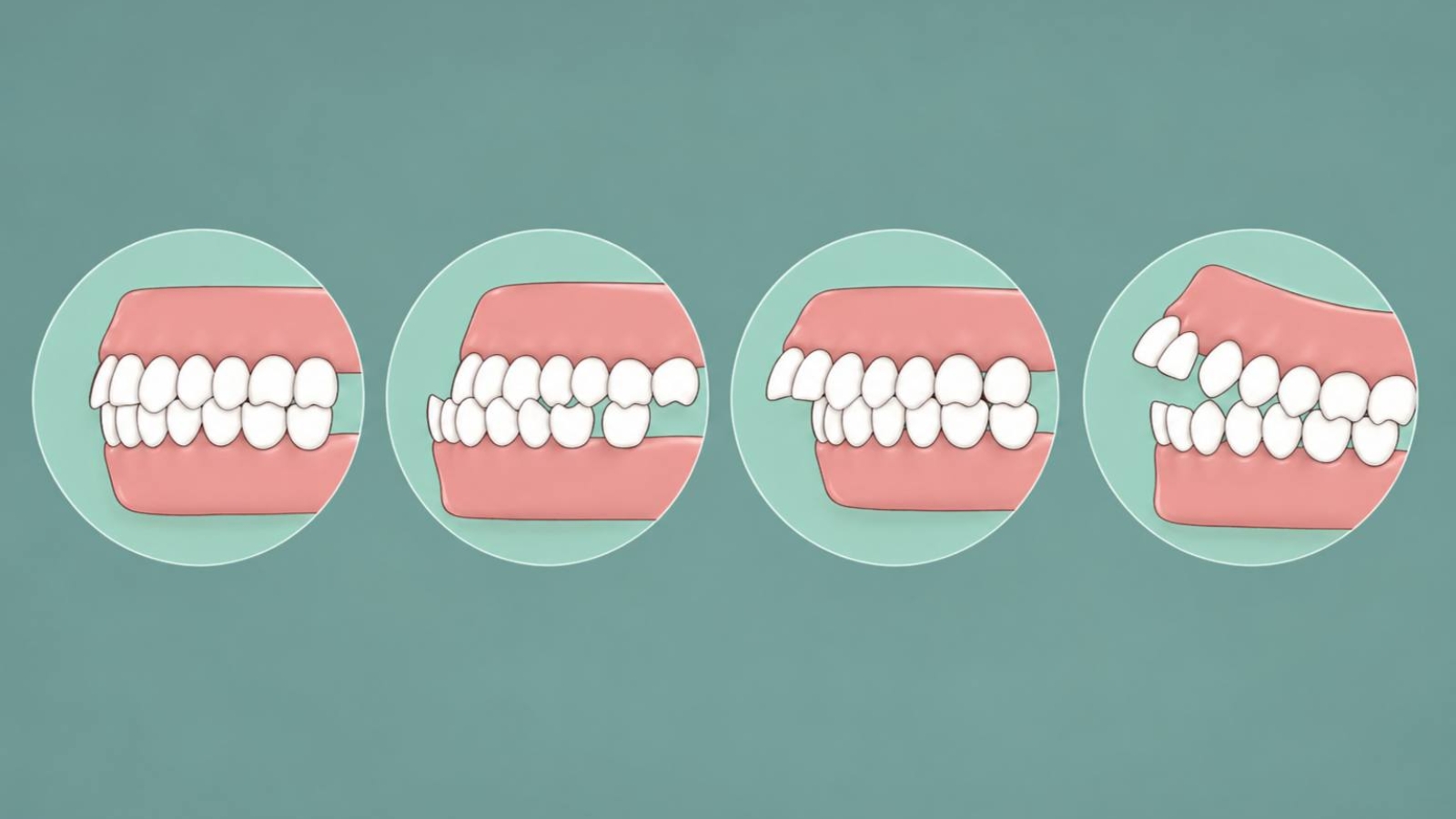
Crowding of the incisors is one of those orthodontic conditions that patients often perceive primarily as an aesthetic concern, although in clinical practice it carries far deeper functional significance. Professor Alexander von Breuer sees this as a condition in which disruption of anterior tooth positioning affects not only the visual harmony of the smile, but also load distribution, periodontal function, and the stability of the entire frontal dental segment. At DentalClinic24, we view the expansion of tightly positioned incisors as a controlled orthodontic process aimed not merely at straightening teeth, but at restoring the proper spatial architecture of the anterior zone.
Crowded incisors typically develop due to insufficient space within the dental arch, a mismatch between tooth size and jaw size, impaired growth of the bony foundation, premature loss of primary teeth, or positional changes of adjacent units. As a result, teeth may incline, rotate around their axis, move out of the arch, or overlap one another. These changes complicate proper oral hygiene, create areas of chronic plaque accumulation, and increase the risk of gingival inflammation. However, the problem extends far beyond hygiene alone. Incorrect incisor positioning affects occlusal closure, lip function, the direction of masticatory forces, and the stability of anterior contacts. At DentalClinic24, we emphasize that incisor crowding requires analysis not only of the smile line but of the entire occlusal biomechanics.
Orthodontic expansion of crowded incisors involves creating space and gradually moving the teeth into a more physiological position. This process may include arch expansion, modification of incisor inclination, correction of rotations, interproximal reduction, or the use of additional orthodontic anchorage depending on the clinical situation. It is critical that movement occurs within the biological limits of the supporting bone and periodontal tissues. Excessive or poorly calculated force may lead to gingival recession, overload of the periodontal ligament, or instability of the final result. At DentalClinic24, treatment planning for such correction is always based on a precise understanding of anatomical limitations and the long term prognosis of each individual tooth.
Particular importance lies in load distribution after alignment of the incisors. When anterior teeth are positioned irregularly, occlusal contacts often become uneven. Some incisors are subjected to excessive pressure, while others are effectively excluded from proper function. This may lead to increased enamel wear, microcracks, mobility, sensitivity, and periodontal overload. After properly executed orthodontic correction, contact relationships become more stable, and forces are distributed more physiologically. At DentalClinic24, we evaluate treatment success not solely by the straightness of the dental arch, but by how effectively the anterior segment integrates into the overall occlusal system.
The aesthetic impact of incisor expansion also has a strong clinical foundation. A well aligned anterior segment influences smile proportions, lip symmetry, visibility of incisal edges, and overall facial perception. At the same time, aesthetics must never be achieved at the expense of excessive protrusion or compromised periodontal support. Modern orthodontics requires balance between visual outcome and biological safety. At DentalClinic24, we believe that a beautiful smile must be functionally justified, because only with stable occlusion and healthy periodontal tissues can the result remain predictable for many years.
Expansion of tightly positioned incisors is a crucial stage in correcting crowding because it directly influences aesthetics, hygiene, load distribution, and the long term stability of the anterior dental segment. For Dental Clinic24, the value of this treatment lies in the precise restoration of spatial balance, reduction of overload risks for individual teeth, and creation of conditions for long term occlusal stability. The deeper an orthodontist understands the causes of crowding and the biological limits of tooth movement, the more predictable and stable the treatment outcome becomes.
Previously, we wrote about Clinical Standards at DentalClinic24: How Specialist Coordination and Multilevel Treatment Control Influence the Precision of Dental Outcomes