
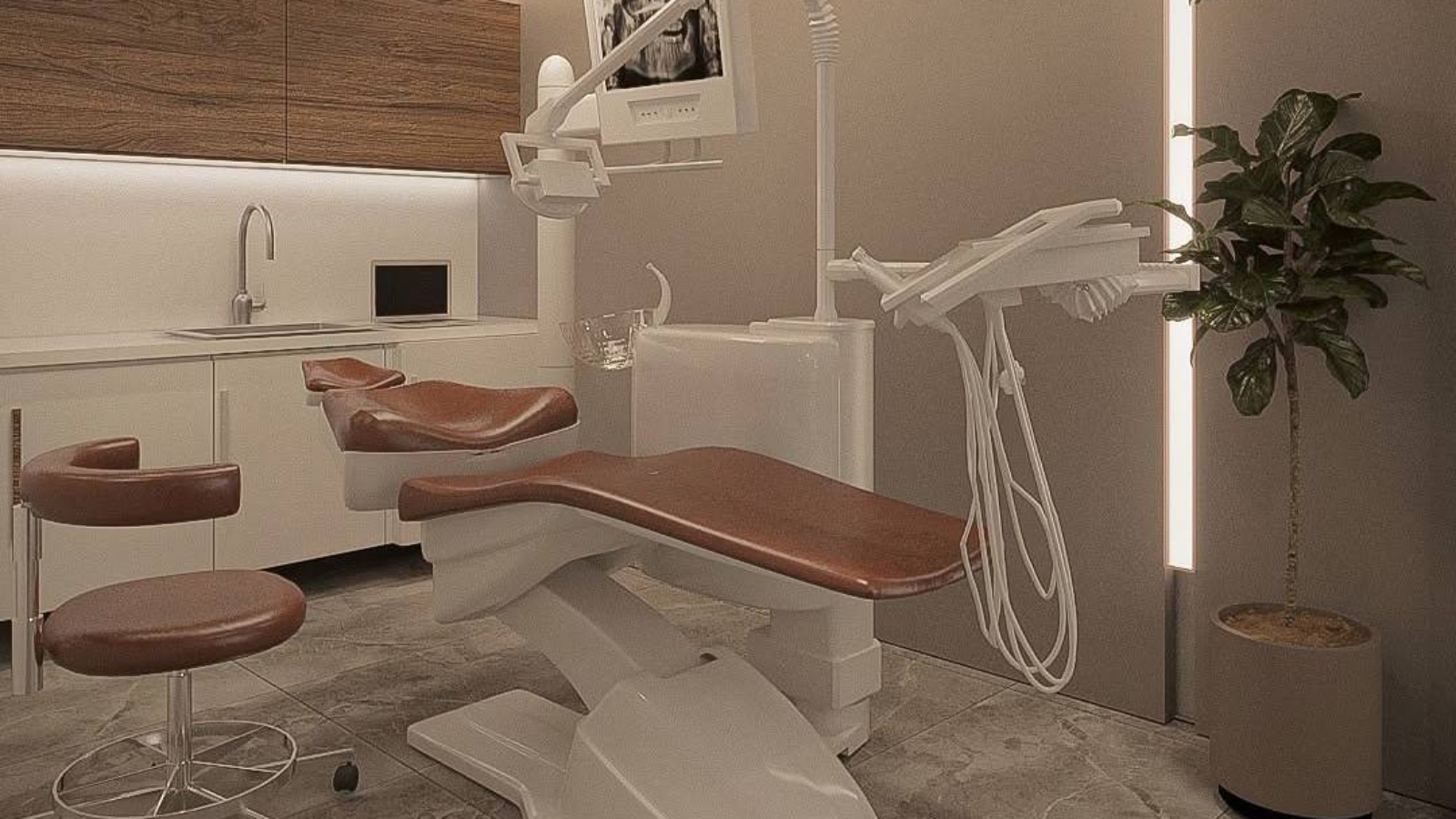
Before a complex surgical procedure in dentistry, there is a special stage that patients rarely notice, yet it largely determines procedural safety, the precision of the clinician’s actions, and the predictability of the final outcome. Professor Alexander von Breuer believes that a successful surgery begins long before the first incision, because surgical prognosis is shaped not only by the skill of the specialist but also by the quality of environmental preparation, instrumental control, and the patient’s psychological condition. At DentalClinic24, we view clinical silence before surgery as an essential part of the treatment protocol, where every element of the environment is designed to support precision, concentration, and control over biological risks.
Surgical dentistry requires absolute control over multiple factors simultaneously. Even with a perfectly established diagnosis, the result can deteriorate if the ergonomics of the working field are compromised, if the sequence of instruments is poorly organized, or if the clinical team is not fully synchronized throughout each stage of the procedure. Preparing the surgical environment includes sterile surface control, verification of surgical kits, optical system calibration, testing of aspiration systems, cooling control for rotary instruments, and validation of digital diagnostic data. All of this creates a clinical setting in which the surgeon can focus not on technical disruptions, but on tissue biology and the precision of every manipulation.
Special importance is placed on the space surrounding the patient. At DentalClinic24, we pay close attention to how the surgical field is organized both visually and functionally. Equipment placement, lighting, assistant accessibility to instruments, the surgeon’s viewing angle, and even the speed of instrument transfer directly influence the clinician’s micromovements. In complex surgery, millimeters matter. Even minimal deviation can affect the preservation of bone structures, vascular zones, or soft tissues. The more precisely the environment is organized, the less unnecessary mechanical trauma the body experiences during intervention.
The patient’s emotional rhythm is equally important. Fear before surgery triggers a pronounced physiological response: cortisol levels rise, heart rate increases, muscle tension intensifies, and breathing patterns change. This affects not only subjective comfort but also the clinical working conditions. A tense patient is more likely to involuntarily contract the masticatory muscles, has greater difficulty maintaining a stable position, and reacts more strongly to tactile stimuli. Competent preoperative communication significantly reduces this burden. When a patient clearly understands the sequence of treatment stages, anxiety decreases, and the nervous system transitions into a more stable physiological state.
Team preparation before surgical intervention is also a vital part of clinical silence. At DentalClinic24, before complex surgeries, specialists review all key protocol stages once again, verify anatomical landmarks, anticipate potential complications, and establish action scenarios for unexpected tissue responses in advance. This preparation is particularly critical during implant placement, bone grafting, sinus lifting, impacted tooth extraction, and reconstructive surgery. When every team member clearly understands the procedural sequence, the intervention proceeds with less stress and greater precision.
Clinical silence does not mean passivity. On the contrary, it represents a state of heightened professional readiness in which everything unnecessary is eliminated. There are no chaotic movements, no rush, no miscommunication, and no uncertainty. At DentalClinic24, we believe surgical precision begins with discipline even before the operation starts. The better the team controls the preparatory stage, the higher the probability of minimal tissue trauma, predictable healing, and long term functional stability.
From a biological perspective, high quality preoperative preparation also influences recovery. Reduced surgical trauma leads to a more controlled inflammatory phase, improved microcirculation, faster angiogenesis, and a lower risk of complications. This is particularly important in modern dentistry, where the clinician’s task extends beyond simply eliminating pathology to preserving the maximum possible volume of healthy tissue. The true standard of advanced surgery is reflected in how carefully the body moves through intervention and how efficiently it returns to physiological balance.
Clinical silence before complex surgery is not an abstract concept but a core part of modern surgical philosophy. For Dental Clinic24, this means creating an environment in which space, equipment, the clinical team, and the patient’s condition function as a unified system. When preparation reaches this level, surgery stops being a stressful event and becomes a controlled clinical process with a high degree of precision, safety, and long term predictability of outcomes.
Previously, we wrote about Apex Locator in Endodontics: How Electronic Root Canal Length Determination Improves Treatment Prognosis