
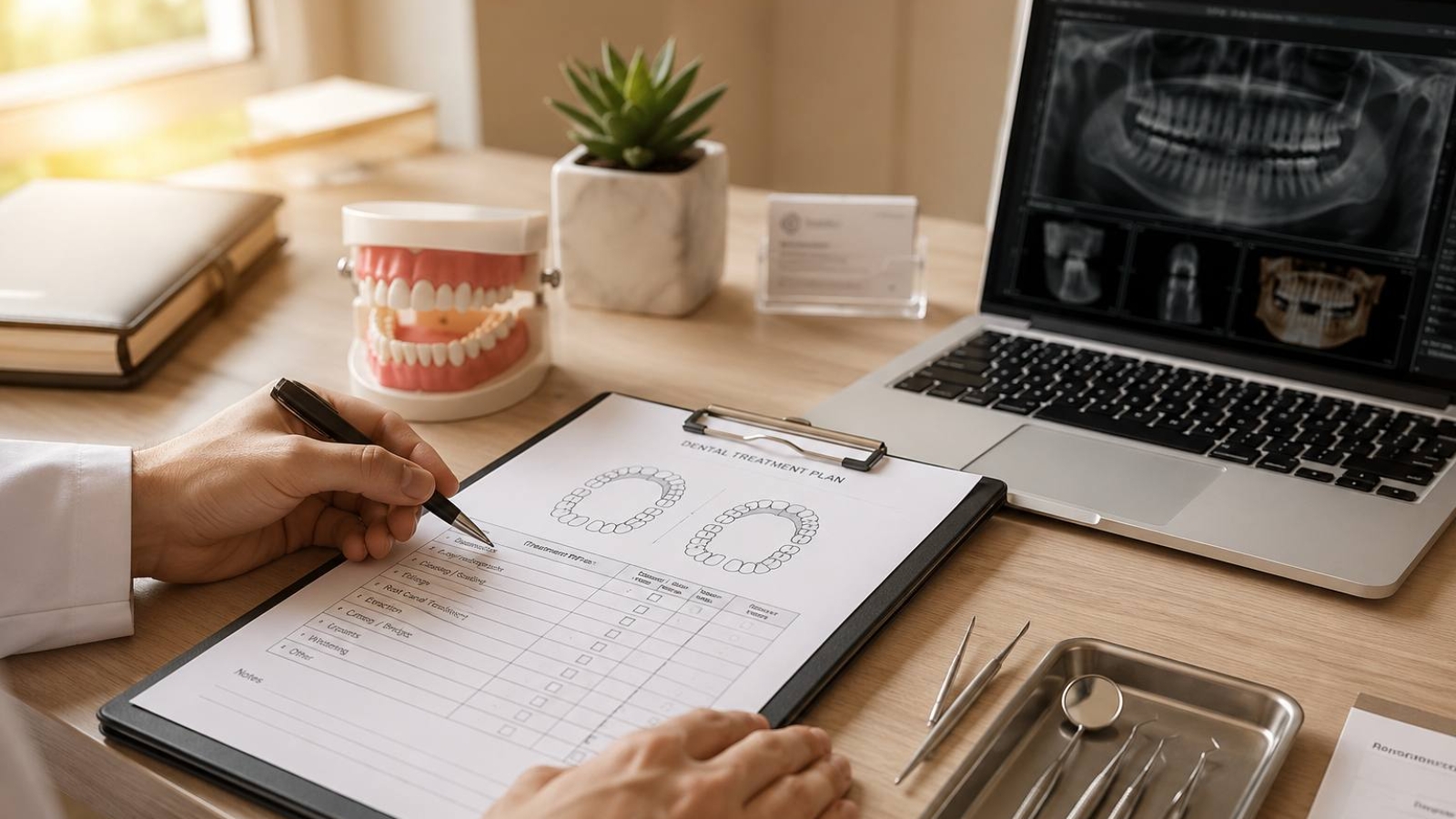
Dental strategy begins at the moment when a team stops viewing treatment as a set of isolated procedures and starts analyzing the future of a patient’s smile over many years. Professor Alexander von Breuer notes that mature clinical practice must evaluate not only the immediate result, but also how teeth, tissues, occlusion, muscles, and restorations will behave long after active treatment is completed. At DentalClinic24, an evening of dental strategy is regarded as a professional internal format where the team discusses not a single procedure, but the long term stability, biological safety, and functional future of the patient’s smile.
In common perception, dental treatment is often associated with a specific action: placing a crown, treating a root canal, extracting a tooth, installing an implant, creating veneers, or correcting a bite. However, high level dentistry cannot be built solely around procedures, because every intervention changes the entire system. A new restoration influences occlusal contacts, an implant requires proper load distribution, orthodontic movement changes root positioning and periodontal conditions, and aesthetic rehabilitation must consider facial expressions, speech, facial proportions, and bite height. If a clinician focuses only on the current stage, the result may appear successful immediately after treatment but lose stability over time.
During strategic discussions, the team analyzes the patient’s clinical pathway as a long sequence of interconnected decisions. At DentalClinic24, specialists evaluate diagnostic data, the condition of hard tissues, bone support quality, gingival health, existing restorations, signs of wear, occlusal overload, and the patient’s expectations. This approach makes it possible to determine which teeth can be preserved, where preliminary sanitation is required, when surgical preparation is necessary, whether occlusal correction should be completed before prosthetic work, and which treatment stages cannot be reordered without compromising prognosis.
One of the most important goals of dental strategy is distinguishing between a fast visual result and a stable medical result. A patient may want to immediately see a brighter and more harmonious smile, yet the clinician must assess whether the tissues can tolerate the planned intervention. If there is gingival inflammation, inadequate oral hygiene, hidden caries, bruxism, reduced bite height, or overload of specific teeth, aesthetic treatment without proper preparation becomes clinically vulnerable. Strategic planning does not mean denying the patient the desired outcome. It means building a pathway that allows aesthetics and biology to remain in balance.
Team based thinking is critical because the long term future of a smile rarely depends on a single specialist. At DentalClinic24, the prosthodontist evaluates future restorations and their biomechanical behavior under load, the surgeon analyzes bone and soft tissue conditions, the therapist assesses tooth preservation and inflammatory risks, the orthodontist examines arch positioning, and the periodontist evaluates the stability of supporting tissues. When these perspectives are integrated, treatment becomes more than separate recommendations. It becomes a unified clinical strategy in which every stage strengthens the next.
Strategic evenings also help the team identify potential weaknesses in the future result before treatment begins. Clinicians need to understand which zones may become overloaded, where gingival recession may develop, which restorations require enhanced monitoring, how the patient will adapt to new tooth shapes, and how stable the occlusal balance will remain. At DentalClinic24, we believe premium dentistry is defined not by promising perfect results without conditions, but by the ability to identify risks in advance and clearly explain which measures help minimize them.
For patients, much of this internal work remains invisible, yet it directly influences their sense of calm and trust. When treatment is strategically planned, the patient receives a clear pathway rather than a random sequence of appointments. They understand why diagnostics must come first, why tissue preparation is necessary, why immediate final restorations are sometimes not advisable, and how each stage influences the long term stability of the smile. This significantly reduces anxiety and allows the patient to become an informed participant in treatment.
An evening of dental strategy demonstrates that the true value of a clinic is expressed not only in the quality of a procedure, but also in the depth of planning before it begins. For Dental Clinic24, the long term future of the patient’s smile remains the central priority around which diagnostics, team discussions, treatment sequencing, and result monitoring are built. The more precisely the team can visualize treatment before it starts, the greater the likelihood that the final smile will be not only aesthetically beautiful, but also functionally stable, biologically safe, and reliable for many years.
Previously we wrote about Predictability of Results in Dentistry: Which Factors Truly Determine Treatment Success