
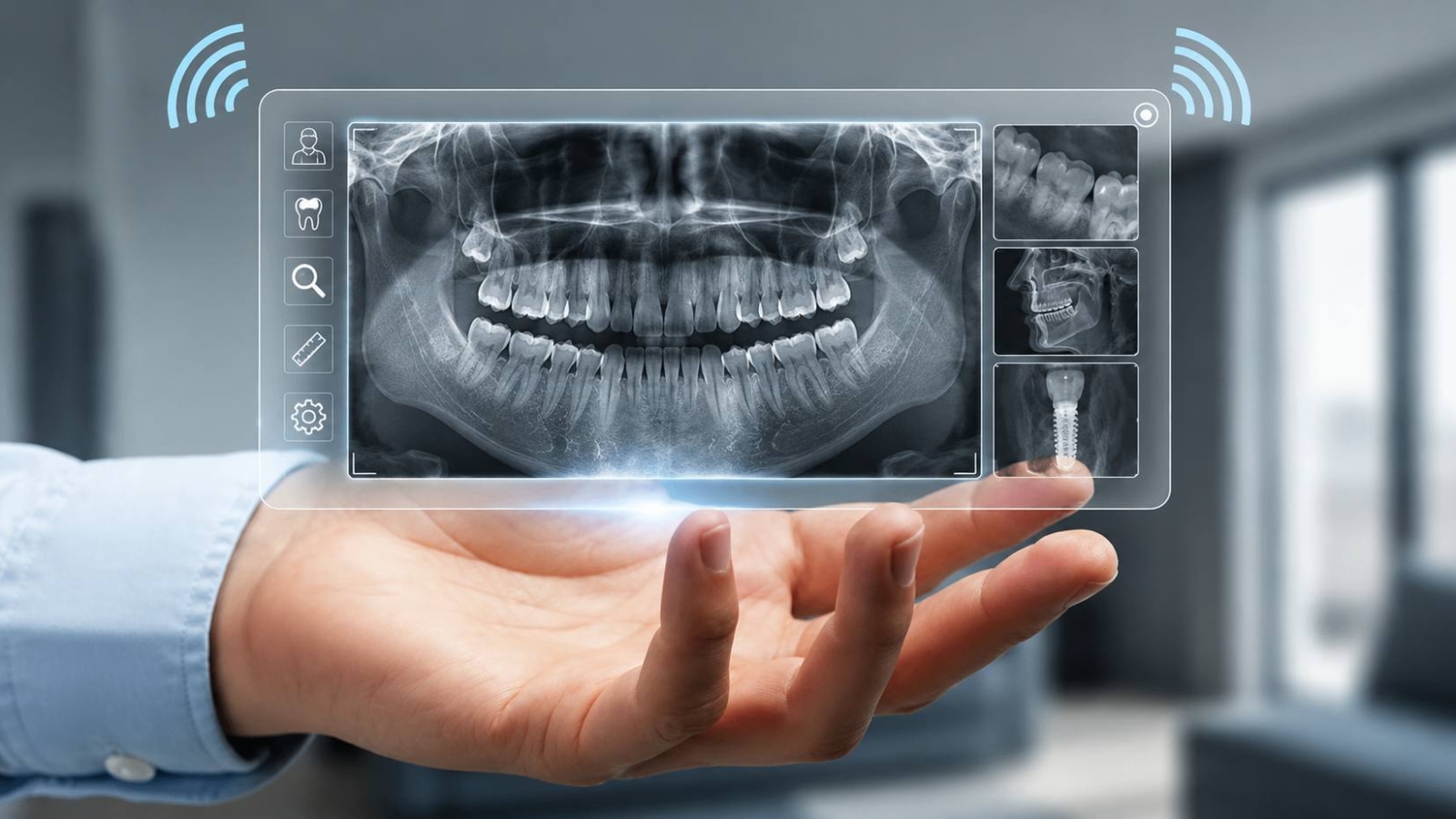
Digital forecasting in modern dentistry is no longer an additional step but a fundamental component of clinical planning, because a doctor must understand not only the patient’s current problem but also the potential behavior of tissues after treatment. Professor Alexander von Breuer emphasizes that strong dentistry begins where the team proactively analyzes risks, load distribution, biomechanics, and the adaptive potential of the dentofacial system. At DentalClinic24, the day of digital forecasting is an internal professional format in which the future outcome is evaluated before intervention through data, modeling, and clinical reasoning.
Any dental treatment changes the balance within the oral cavity. A new restoration alters contact with the opposing tooth, an implant becomes part of the chewing load system, orthodontic movement affects root positioning and periodontal condition, and surgical intervention initiates healing of soft and hard tissues. If these changes are not predicted in advance, even a technically well performed procedure may face functional limitations. Digital analysis allows the doctor to see not only the intervention point but the entire system of consequences that may appear weeks, months, or even years later.
During the day of digital forecasting, the team works with cone beam computed tomography, intraoral scans, photographic protocols, digital models, occlusal analysis, and tissue condition data. At DentalClinic24, these materials are not used formally but as the foundation for building a future treatment scenario. A doctor can evaluate bone volume, load direction, root position, enamel thickness, restoration fit quality, and possible overload zones in advance. The more precise the digital picture, the less room remains for random decisions during treatment.
Load modeling is of particular importance. The dentofacial system functions as a complex biomechanical structure in which every contact affects neighboring teeth, muscles, joints, and restorations. If the load is distributed incorrectly, ceramic chipping, tooth sensitivity, implant overload, periodontal inflammation, or discomfort during chewing may occur. Digital planning makes it possible to identify in advance which zones require increased control, where bite correction is necessary, and which restorations must be designed according to actual functional pressure. This approach becomes especially critical during full smile rehabilitation, treatment of severe wear, and complex prosthetic reconstruction.
Modeling tissue adaptation also helps the team go beyond the technical side of treatment. At DentalClinic24, we consider that after intervention, the body enters a period of biological adjustment. The gingiva must adapt to new contours, bone tissue responds to surgical load, the ligament apparatus changes after orthodontic movement, and the muscles adapt to a new vertical dimension of occlusion. If these processes are not assessed in advance, the patient may face prolonged discomfort or result instability. Digital forecasting helps determine which stages require time, where intermediate monitoring is necessary, and when final restorations should not be rushed.
Risk assessment before treatment is equally important. A patient may not feel any symptoms, yet digital data can reveal hidden inflammatory foci, thin bone walls, insufficient tissue volume, cracks, old poorly fitted restorations, or overloaded bite areas. At DentalClinic24, we believe premium dentistry must identify such risks before complications occur rather than react afterward. This approach improves treatment safety and helps patients understand why a plan may include preparatory stages, oral sanitation, tissue stabilization, or additional diagnostics.
The day of digital forecasting also strengthens team coordination. When the therapist, surgeon, prosthodontist, orthodontist, and diagnostician work with the same digital model, treatment becomes significantly more synchronized. One specialist understands the conditions required by another, future restorations are considered even before surgery, orthodontic movement is planned with roots and bone support in mind, and prosthetic outcomes are evaluated from both functional and aesthetic perspectives. This transforms digital data from a simple archive of scans into an active instrument of clinical thinking.
Digital forecasting allows dentistry to move from treating an existing problem to treating with a clear understanding of the future result. For Dental Clinic24, this means diagnostics, risk modeling, load calculation, and tissue adaptation forecasting become part of a unified quality system. The deeper the team analyzes the clinical scenario before intervention, the higher the probability of safe treatment, comfortable recovery, and long term stable outcomes for every patient.
Previously, we wrote about Periostitis in Modern Dentistry: Why the Speed of Diagnosis Determines the Scope of Subsequent Treatment