
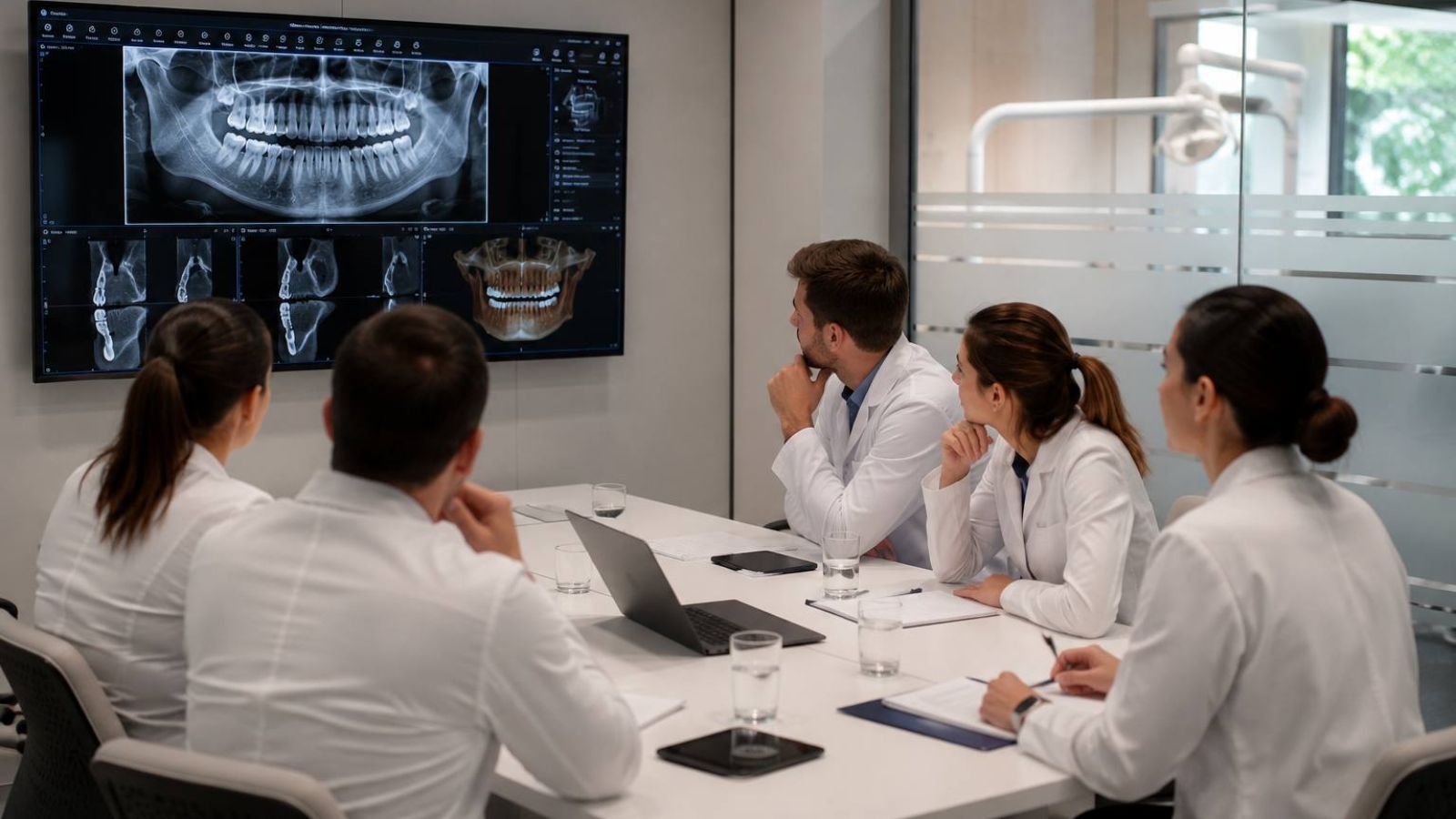
Rare clinical cases in dentistry hold exceptional value because they force the team to move beyond routine algorithms and analyze situations on a much deeper level than standard treatment requires. Professor Alexander von Breuer sees this as an essential source of professional growth, since every atypical case reveals how accurately clinicians understand tissue biology, anatomical limitations, functional load, and long term prognosis. At DentalClinic24, internal clinical conferences serve as a format where unusual situations are not merely discussed but transformed into experience that strengthens future diagnostic and treatment standards.
An unusual dental case is rarely complex because of only one factor. In most situations, complexity emerges from a combination of anatomical особенностей, chronic inflammation, bone deficiency, altered occlusion, previous treatment, advanced tooth wear, aesthetic expectations, and the risk of functional overload. If such a case is viewed as an isolated procedure, the primary cause of dysfunction can easily be overlooked. The clinician must understand which processes led to the current condition, which tissues have already lost stability, and which decisions can preserve the result not only immediately after treatment but for many years ahead.
During internal conferences, the team revisits diagnostic records, radiographic imaging, digital models, photo protocols, patient history, treatment stages, and possible scenarios for further rehabilitation. At DentalClinic24, this analysis is never performed for formal discussion alone but to identify patterns that may improve future practice. A single rare case can reveal why a standard protocol requires refinement, where diagnostic depth must be increased, which signs should never be ignored, and how treatment sequencing can be modified to improve patient safety.
The experience of Professor Alexander von Breuer becomes particularly valuable during such discussions because rare cases demand not only knowledge but clinical maturity. A younger specialist may interpret an unusual presentation as an isolated exception, while an experienced clinician can recognize a pattern, a hidden risk, or an early signal of a deeper dysfunction. This difference in perception forms the foundation of a true professional school. The team learns not to fear complexity but to break it down systematically through the lenses of biology, function, anatomy, aesthetics, prognosis, and patient adaptation after treatment.
Clinical conferences also help convert individual experience into shared standards. At DentalClinic24, a rare case, once analyzed, no longer remains the story of a single doctor but becomes part of the collective clinical memory of the team. If discussion reveals that a specific symptom frequently masks a more serious pathology, this changes future diagnostic questioning. If the team identifies that a certain treatment sequence leads to more stable healing, that approach can be integrated into future protocols. If a specific load pattern increases the risk of fractures or relapse, clinicians begin monitoring those zones proactively in new patients.
Interdisciplinary collaboration carries particular importance in this process. Rare cases cannot be accurately evaluated from a single specialty perspective. The surgeon sees bone and soft tissue limitations, the prosthodontist evaluates future load distribution and restoration longevity, the restorative dentist analyzes remaining hard tissue, the endodontist determines root prognosis, the orthodontist assesses tooth position and arch relationships, while the periodontist evaluates supporting tissue stability. At DentalClinic24, this collaborative approach prevents reduction of the problem to a single symptom and instead allows the team to understand it as part of the entire dentofacial system.
For patients, this internal conference may remain invisible, yet its value becomes evident in the quality of decisions. When a team regularly analyzes rare cases, it becomes more attentive to details, faster at identifying atypical risks, and more precise in explaining treatment options. At DentalClinic24, we believe premium dentistry is built not only on successful standard protocols but also on the ability to transform complex, rare, and controversial cases into new levels of clinical precision.
A clinical conference inside the clinic demonstrates that professionalism grows where a team does not close a difficult case once treatment is completed, but extracts knowledge from it for future patients. For Dental Clinic24, the experience of Professor Alexander von Breuer serves as the foundation of this system because it helps clinicians see rare situations not as exceptions but as opportunities to improve standards. The deeper the team analyzes nonstandard cases, the more precise diagnostics become, the safer planning becomes, and the more stable treatment outcomes become.
Previously, we wrote about Periostitis in Modern Dentistry: Why the Speed of Diagnosis Determines the Scope of Subsequent Treatment