
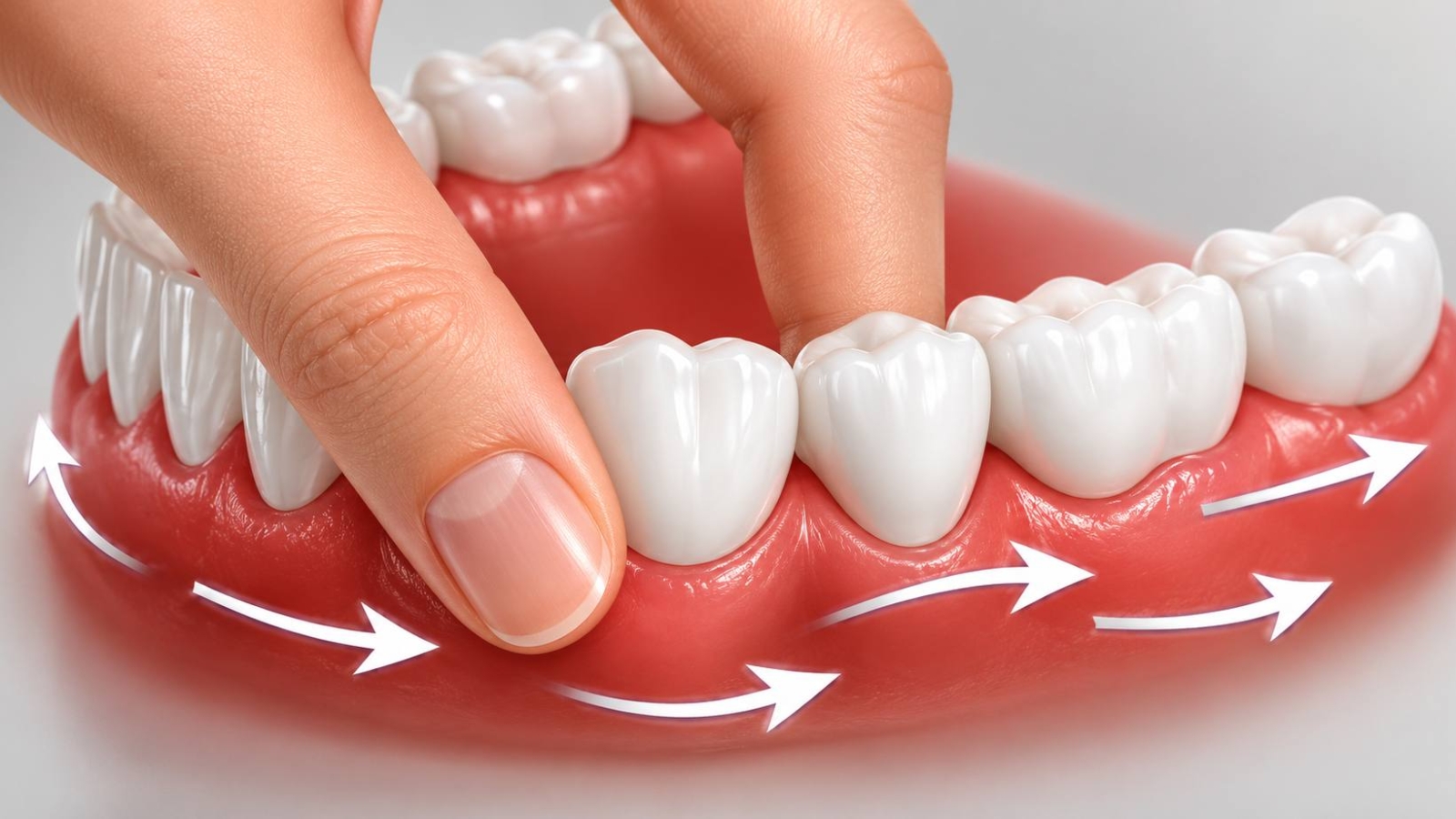
Subtle tooth mobility rarely develops suddenly. In most cases, it is the result of long standing biological and functional processes that begin well before noticeable symptoms appear. Professor Alexander Von Breuer considers even minimal tooth mobility to be a clinical signal that should never be viewed as an isolated problem affecting a single tooth. Instead, it requires a comprehensive evaluation of the entire stomatognathic system. At DentalClinic24, such findings are assessed far beyond a routine examination of tooth stability because only a detailed analysis of the periodontal tissues, occlusion, bone support, and distribution of chewing forces can reveal the true origin of these changes.
A certain degree of physiological mobility is present in every healthy tooth due to the periodontal ligament, which serves as a natural shock absorber between the root and the surrounding bone. However, when the pattern of functional loading changes or inflammatory processes, progressive bone resorption, occlusal imbalance, or prolonged mechanical overload develop, this normal mobility may gradually increase. Patients often remain unaware of these early changes because pain, discomfort, and visible tooth displacement are usually absent. Nevertheless, the supporting tissues are already adapting to unfavorable conditions while their compensatory capacity slowly becomes exhausted.
During comprehensive examinations, the specialists at DentalClinic24 evaluate far more than the degree of tooth mobility itself. They carefully assess bone support around each tooth, periodontal pocket depth, the condition of the gingival attachment, occlusal balance, temporomandibular joint function, chewing force distribution, signs of nocturnal bruxism, enamel wear, the integrity of existing restorations, and the overall biomechanics of the dental arches. This extensive diagnostic approach allows clinicians to determine whether mobility results from periodontal disease, chronic functional overload, prosthetic complications, orthodontic abnormalities, or a combination of several contributing factors.
Particular attention is given to the relationship between occlusion and the supporting tissues. Even minor occlusal discrepancies may create excessive pressure on individual teeth over many years. During this time, patients often continue normal chewing without discomfort while pathological changes progressively develop within the periodontal ligament and alveolar bone. Continuous overload disrupts the physiological distribution of forces, produces repetitive microtrauma within the supporting structures, accelerates bone remodeling, and increases the likelihood of pathological tooth mobility. If these processes remain undetected, they may significantly complicate future treatment and reduce the long term prognosis for preserving natural teeth.
The condition of the periodontium is another critical aspect of diagnosis. At DentalClinic24, we regard the tissues surrounding each tooth as a complete biological system whose stability directly determines the longevity of any dental treatment. Even the most advanced restorations, implant procedures, or prosthetic rehabilitations cannot provide predictable long term outcomes if active inflammation persists, bone loss continues, or excessive functional loading remains unresolved. For this reason, every diagnostic protocol is designed to identify the underlying cause rather than simply address the visible manifestation of the problem.
Modern imaging technologies make it possible to detect structural changes that cannot be identified during a conventional clinical examination alone. Three dimensional computed tomography enables clinicians to evaluate bone volume and density, identify areas of resorption, assess root morphology, visualize important anatomical structures, and analyze the quality of bone support surrounding each tooth. Digital occlusal analysis further allows the team to identify areas of chronic overload that continue to influence the supporting tissues even when the patient reports no subjective symptoms.
For patients, the early detection of hidden tooth mobility has significant clinical value. At an early stage, tissue stability can often be restored through occlusal correction, periodontal therapy, modification of functional loading, timely replacement of inadequate restorations, or comprehensive prosthetic and orthodontic planning. Such an approach considerably increases the possibility of preserving natural teeth while reducing the need for more complex surgical interventions in the future. At DentalClinic24, we firmly believe that preventing functional disorders is always more effective than treating their advanced consequences.
Hidden tooth mobility clearly demonstrates how closely biomechanics, periodontal health, bone quality, and occlusal function are interconnected. For Dental Clinic24, the comprehensive evaluation of these factors represents an essential component of modern diagnostics because only a complete understanding of the clinical picture allows clinicians to select the most appropriate treatment strategy. The earlier the first signs of tissue overload are identified, the greater the opportunity to preserve natural dentition, maintain long term stability of the entire stomatognathic system, and achieve predictable functional outcomes.
Previously, we wrote about Multidisciplinary Dentistry: Why a Team of Specialists Works on One Smile