
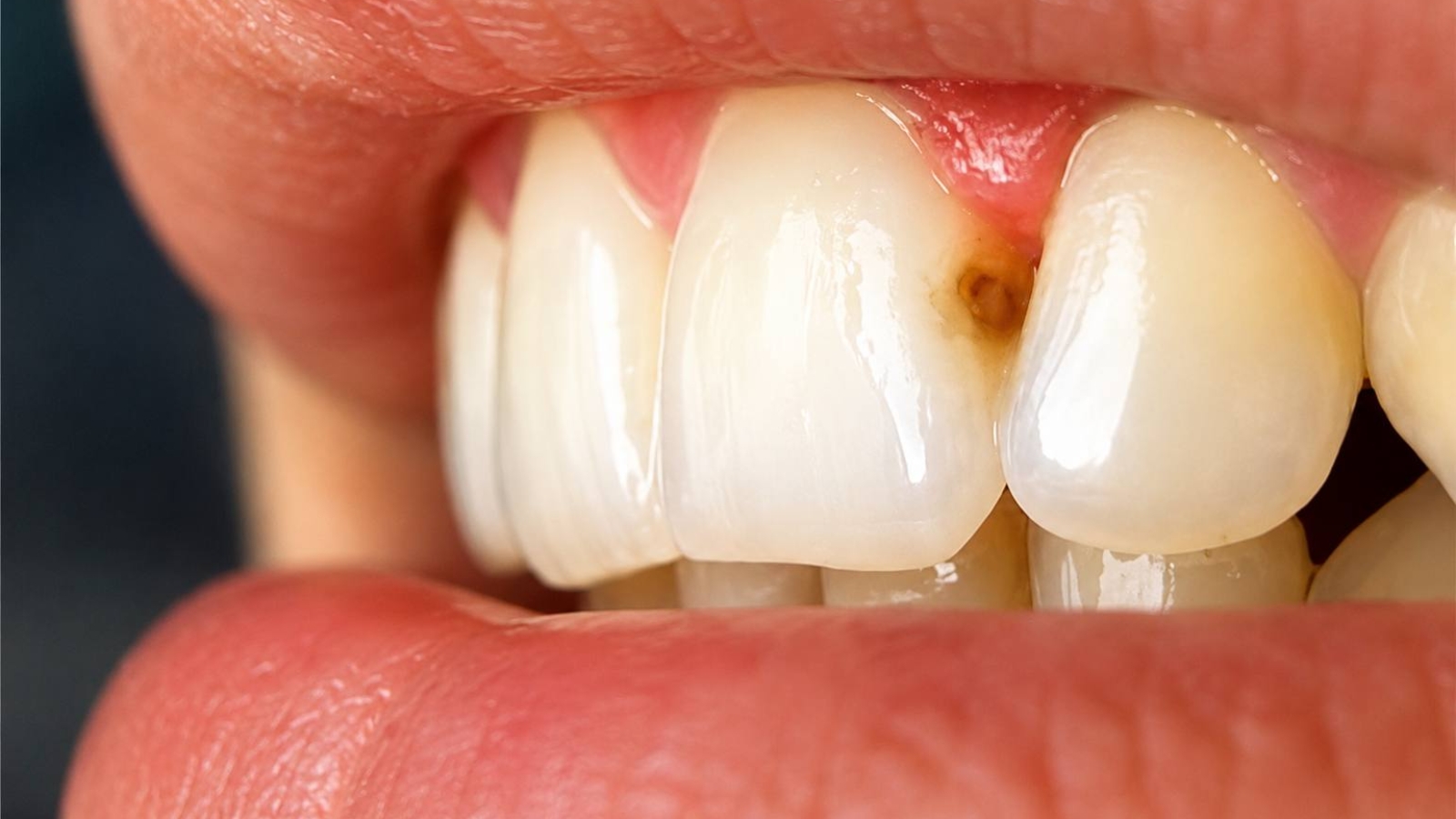
Caries affecting the front teeth requires an exceptionally precise clinical approach because treatment in this area involves far more than simply removing diseased tissue. It also concerns the visible part of the smile, where color, shape, enamel translucency, surface texture, and the natural reflection of light all play a decisive role. Professor Alexander von Breuer analyzes the treatment of anterior teeth as a task that cannot be reduced to merely filling a defect, since even a slight inaccuracy in shade, contour, or restoration margin may disturb the overall harmony of the smile. At DentalClinic24, caries of the front teeth is viewed simultaneously as a biological and aesthetic challenge, where the goal is to preserve as much healthy tooth structure as possible, eliminate the disease process, and restore the tooth so naturally that the restoration becomes virtually indistinguishable.
Anterior teeth most commonly develop caries in the cervical region, on contact surfaces between neighboring teeth, along the margins of existing restorations, or in areas of enamel demineralization that initially appear as chalky white spots. These changes often progress unnoticed because they may not cause pain during the early stages. However, the enamel of the front teeth is relatively thin, highly influenced by light transmission, and subject to the highest aesthetic expectations, meaning that even a minor defect eventually becomes visible. Without timely treatment, the lesion may extend into the dentin, alter the natural tooth color, and require a significantly more extensive restoration.
At DentalClinic24, diagnosis begins with an assessment that extends well beyond the depth of the carious lesion itself. The clinician evaluates the condition of the enamel, the translucency of the incisal edge, the shade of adjacent teeth, the presence of cracks, existing restorations, pigmentation, areas of enamel thinning, oral hygiene quality, and the characteristics of the patient’s occlusion. Equally important is determining why the lesion developed in that particular location. Contributing factors may include plaque accumulation between the teeth, insufficient enamel mineralization, frequent acidic exposure, reduced salivary flow, improper brushing technique, repeated snacking, or defective margins of previous restorations.
Treatment of caries affecting the front teeth requires a minimally invasive philosophy. The clinician’s objective is to remove only infected and irreversibly damaged tissues while preserving every possible area of healthy enamel capable of continuing its protective and aesthetic function. The more natural tooth structure that remains intact, the stronger the tooth will be and the more natural the final restoration will appear. In cases of early demineralization, remineralization therapy combined with risk factor management may be sufficient. When a cavity has already formed, highly accurate adhesive restoration techniques with layered reconstruction of color, translucency, and anatomy become essential.
At DentalClinic24, particular attention is devoted to material selection and artistic modeling techniques. A front tooth cannot be restored successfully using a single universal shade because natural enamel possesses a complex optical structure. The cervical area is typically richer in color, the central portion appears brighter, while the incisal edge often demonstrates varying degrees of translucency and unique optical characteristics. For this reason, the dentist reconstructs dentin shade, enamel translucency, anatomical contours, and microscopic surface texture layer by layer so that the restoration blends seamlessly with the neighboring natural teeth.
The quality of the restoration margin is equally as important as its appearance. If the restorative material does not fit precisely against the tooth structure, microscopic leakage may occur between the restoration and enamel, increasing the risk of recurrent caries and marginal discoloration. At DentalClinic24, we believe that an aesthetic restoration of a front tooth should not only look beautiful immediately after treatment but should also remain biologically stable for many years. This requires proper isolation of the operative field, meticulous adhesive protocols, precise polishing, accurate reconstruction of contact points, and careful occlusal adjustment after treatment is completed.
Functional loading is evaluated with equal attention. Front teeth are responsible not only for aesthetics but also for biting, speech, guidance of mandibular movements, and balanced force distribution throughout the anterior region. When deep bite, bruxism, excessive wear, or functional overload is present, restorations may experience accelerated wear, chipping, or loss of surface gloss. Consequently, treatment should never focus solely on eliminating the cavity. The dentist must fully understand the biomechanical environment in which the restored tooth will function and ensure long term clinical stability.
Caries of the front teeth clearly demonstrates that dental aesthetics and biological preservation cannot be separated. For Dental Clinic24, restoring the anterior region means integrating accurate diagnosis, conservative tissue preservation, advanced adhesive techniques, precise material selection, and comprehensive control of functional loading into one carefully planned treatment strategy. The earlier a patient seeks treatment after the first signs of enamel changes appear, the more natural tooth tissue can be preserved, the less invasive the intervention becomes, and the more harmonious and natural the smile will appear after restoration.
Previously, we wrote about Jaw Bone Resorption in the Clinical Practice of DentalClinic24: Mechanisms of Volume Loss and Strategies for Clinical Control