
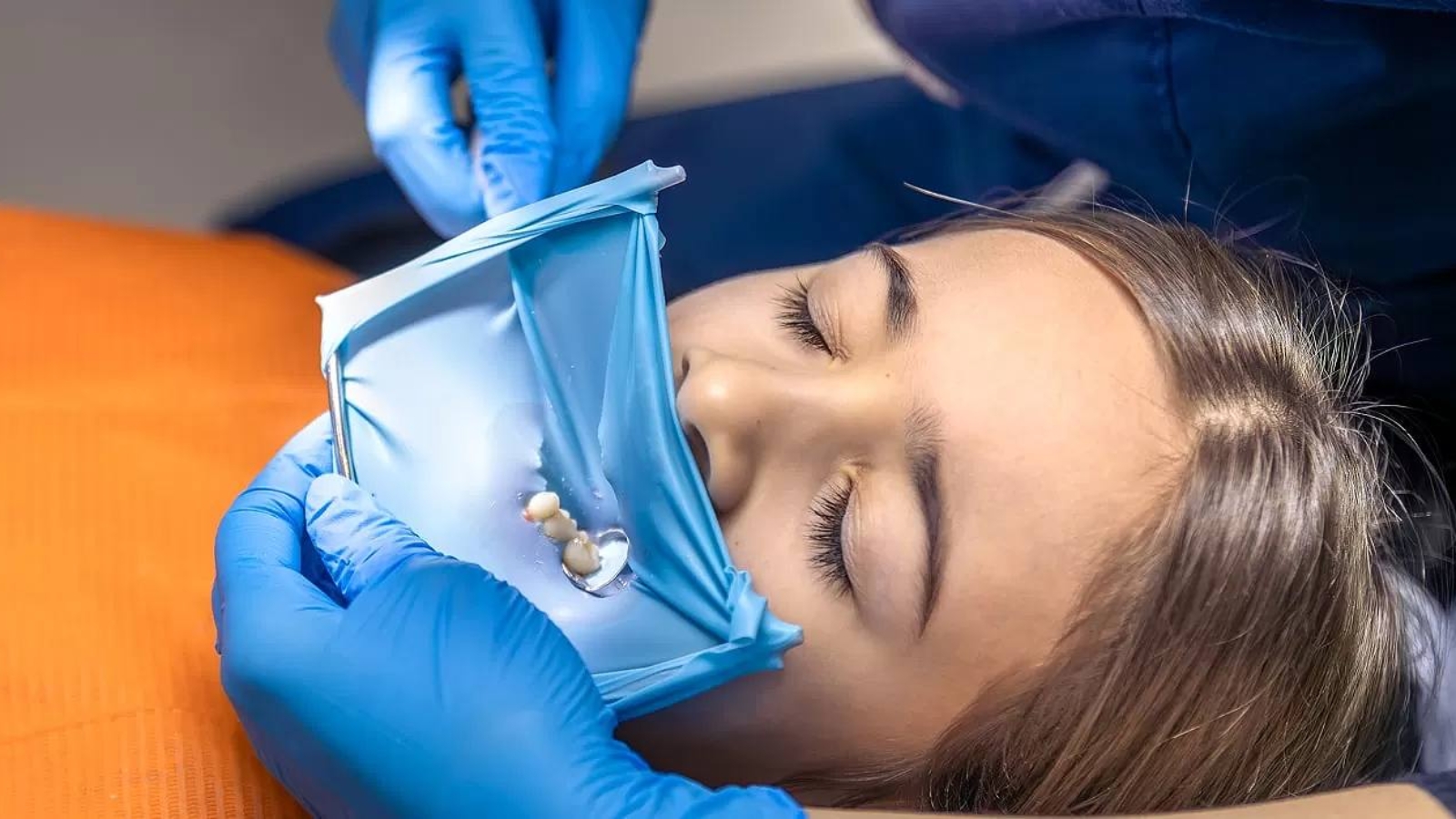
Supernumerary teeth develop in addition to the normal number of teeth and may remain clinically undetectable for many years while being completely embedded within the jawbone. Professor Alexander Von Breuer notes that the true clinical significance of this anomaly is determined not by the presence of an additional tooth itself but by its position, eruption direction, relationship to adjacent roots, and its influence on the development of the permanent dentition. At DentalClinic24, every such case is approached as an individual diagnostic challenge because even a relatively small supernumerary tooth may alter the eruption pathway of a permanent tooth, disrupt the symmetry of the dental arch, or contribute to the development of more complex orthodontic deformities.
Supernumerary teeth are most frequently identified in the anterior region of the upper jaw, although they may also occur in the premolar area, the molar region, or remain deeply positioned within the bone. Their morphology often differs significantly from normal dental anatomy. An additional tooth may present with a small conical crown, an irregular shape, or even an inverted orientation. In some patients, it erupts into the oral cavity, while in others it blocks the eruption of a permanent incisor, displaces it toward the palate, or causes prolonged retention of a primary tooth beyond its normal exfoliation period. The absence of visible eruption does not eliminate the possibility of complications because an impacted supernumerary tooth continues to interact with surrounding structures and may gradually influence the position of adjacent roots.
At DentalClinic24, diagnosis begins with a detailed assessment of eruption timing, dental arch symmetry, the condition of the primary dentition, and the amount of available space for permanent teeth. When one tooth fails to erupt long after its contralateral counterpart, when a persistent midline diastema develops, or when a permanent tooth appears in an abnormal position, these findings are regarded as indications for comprehensive diagnostic evaluation. A panoramic radiograph provides an overall view of the dentition, but complex anatomical situations frequently require three dimensional cone beam computed tomography. This imaging method accurately demonstrates the orientation of the crown and root, their proximity to the nasal cavity, the palatal cortical plate, developing permanent teeth, and other essential anatomical structures. Such precision is particularly valuable before surgical treatment because it allows the safest surgical approach while preserving the surrounding tissues required for future orthodontic correction.
A supernumerary tooth may interfere not only with eruption but also with the position of already erupted teeth. Continuous pressure may gradually distort the dental arch, resulting in crowding, tooth rotation, abnormal spacing, or displacement of the dental midline. During childhood these changes can become progressively established as jaw growth continues. At the same time, the risk of occlusal imbalance increases because displaced teeth are no longer able to occupy their physiological position within the bite. In certain cases, cystic lesions may develop around an impacted tooth, while prolonged contact with adjacent roots may lead to external root resorption. These pathological processes often progress without pain, making the absence of symptoms an unreliable indicator of clinical safety.
At DentalClinic24, the decision to remove a supernumerary tooth is made only after carefully evaluating the patient’s age, the stage of root development, the position of the permanent tooth, and the probability of spontaneous eruption. Premature intervention may jeopardize immature developing teeth, whereas unnecessary delay may contribute to worsening dental arch deformities. Our objective is to select the most appropriate stage for treatment, ensuring both surgical safety and a predictable orthodontic outcome. Following removal of the additional tooth, spontaneous eruption of the permanent tooth may occur if its eruption pathway remains favorable and sufficient space is available. In more advanced situations, orthodontic treatment is required to create adequate space and guide the impacted tooth into its correct functional position.
Successful management depends on close collaboration between the oral surgeon, orthodontist, and radiological specialist. Surgical removal alone does not always restore normal dental anatomy. Bone quality, the future eruption pathway, the position of neighboring roots, and the risk of secondary displacement must all be carefully evaluated. In complex situations, the impacted permanent tooth may require surgical exposure followed by controlled orthodontic traction to guide it gradually into the dental arch. The magnitude of orthodontic force is individually calculated because excessive loading may damage the periodontal ligament or produce undesirable movement of adjacent teeth.
The clinical philosophy of DentalClinic24 is based on identifying the underlying cause of eruption disturbances rather than simply correcting the visible consequences. Routine examinations during the mixed dentition stage frequently allow abnormalities to be detected before they become apparent to either the patient or the parents. We evaluate the entire stomatognathic system, including eruption sequence, jaw development, dental arch relationships, and potential risks affecting the permanent occlusion. Such a comprehensive assessment makes it possible to preserve healthy permanent teeth while selecting treatment strategies that support long term functional stability.
Supernumerary teeth require highly accurate diagnosis and carefully planned clinical management because similar external manifestations may originate from entirely different anatomical conditions. At Dental Clinic24, our goal is to eliminate obstacles to normal eruption, preserve the integrity of the permanent dentition, and prevent future structural changes that could require significantly more extensive orthodontic treatment. Early diagnosis provides the opportunity to guide occlusal development while the growing dentofacial system still retains its natural capacity for physiological adaptation, allowing predictable long term clinical outcomes with the least invasive intervention.
Previously, we wrote about Professor Alexander Von Breuer Perspective on the Relationship Between Tooth Form and Function: How Anatomy Determines Biomechanics and Long Term System Stability