
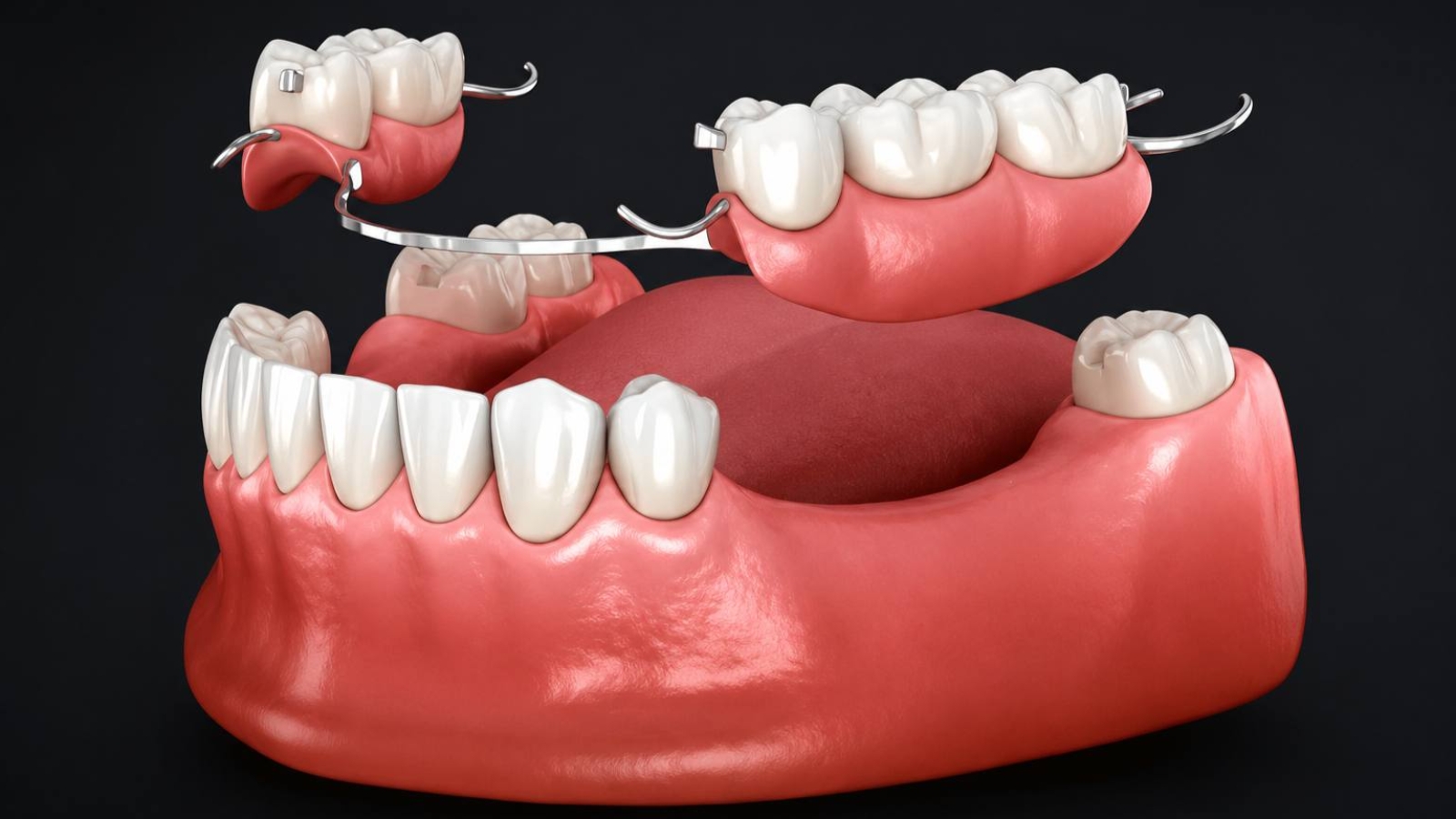
A temporary dental prosthesis should never be regarded as merely a simplified restoration used while waiting for the definitive prosthetic solution. Its clinical role is considerably broader because, during this transitional stage, it must restore chewing efficiency, support the surrounding soft tissues, preserve natural facial proportions, evaluate the future shape of the teeth, and prepare the patient for the final prosthetic rehabilitation. Professor Alexander Von Breuer analyzes temporary prosthetic treatment as a fully integrated component of the rehabilitation protocol because the adaptation of the entire stomatognathic system largely depends on its precision. At DentalClinic24, we use temporary restorations not simply to replace missing teeth but as valuable clinical instruments for assessing functional performance, esthetic harmony, and biological tissue response that cannot be accurately predicted through digital planning or laboratory design alone.
Following tooth extraction, implant placement, or tooth preparation for crowns, the oral tissues immediately begin adapting to new biological conditions. Gingival volume gradually changes, chewing forces are redistributed, certain areas of the mucosa become more sensitive, and the masticatory muscles together with the temporomandibular joints respond to alterations in the vertical dimension of occlusion. If patients remain without a temporary restoration during this period, adjacent teeth may gradually drift toward the edentulous space, opposing teeth may begin to over erupt, and the surrounding soft tissues lose essential structural support. Within the anterior region, lip support and speech articulation may also be noticeably affected. A properly designed temporary prosthesis prevents these undesirable biological changes, stabilizes the dental arch, and establishes controlled conditions for the subsequent stages of rehabilitation.
At DentalClinic24, the selection of a temporary prosthetic solution depends entirely on the individual clinical situation, the number of missing teeth, the condition of the supporting tissues, and the anticipated duration of temporary use. In one patient, a temporary crown on a prepared tooth may be appropriate, whereas another may require a removable temporary prosthesis following multiple extractions, while patients undergoing implant rehabilitation may benefit from implant supported provisional restorations when sufficient primary stability has been achieved. Before fabrication, we carefully evaluate gingival health, occlusal relationships, adjacent tooth position, functional contacts, and the expected biomechanical loading. There is no universal temporary restoration suitable for every patient because each prosthesis must correspond precisely to the individual’s anatomy while avoiding excessive pressure in areas undergoing healing or tissue remodeling.
One of the most important purposes of a temporary prosthesis is the evaluation of future occlusal function. Definitive crowns and bridges must not only reproduce natural esthetics but also interact harmoniously with the opposing dentition during every functional movement. Even minimal changes in cusp inclination or vertical dimension may produce occlusal overload, muscular tension, temporomandibular discomfort, or instability of the final restoration. Temporary prostheses allow clinicians to observe how patients adapt to newly established occlusal contacts, how freely the mandible moves, and whether discomfort develops during chewing. Whenever necessary, the restoration can be modified before fabrication of the definitive prosthesis, when opportunities for structural adjustments become considerably more limited.
Equally important is the opportunity to evaluate esthetic parameters under real life conditions. Temporary restorations allow assessment of tooth length, width, incisal edge position, smile dynamics, lip support, and speech during everyday activities. At DentalClinic24, esthetic analysis extends far beyond static photographs because the true appearance of a smile is determined while speaking, smiling naturally, and expressing facial emotions. Patients have the opportunity to experience the proposed tooth design in daily life, while clinicians can refine proportions and morphology before manufacturing the final ceramic restorations. This stage becomes especially valuable during comprehensive anterior rehabilitations where even slight alterations in tooth length may significantly influence facial appearance, smile balance, and phonetics.
Temporary prostheses also play a critical role in shaping the gingival architecture. Following implant placement or soft tissue augmentation procedures, the future emergence profile of the definitive restoration must be carefully established to ensure natural gingival contours and long term tissue stability. The contours of the temporary prosthesis gradually support the surrounding soft tissues while guiding biological adaptation. Pressure must remain precisely controlled because excessive compression may produce inflammation, tissue blanching, or gingival recession, whereas insufficient support fails to maintain proper anatomical contours. During follow up appointments, clinicians evaluate gingival color, thickness, and stability before modifying the provisional restoration whenever necessary. Once ideal tissue architecture has developed, these contours are accurately transferred to the definitive prosthetic restoration, significantly improving the final esthetic outcome.
The material selected for a temporary prosthesis depends on both the anticipated duration of use and the expected functional load. It must provide adequate strength, excellent biocompatibility, smooth surface quality, and sufficient flexibility to permit future modifications whenever required. Rough surfaces promote bacterial plaque accumulation and may irritate surrounding gingival tissues, making careful finishing and polishing essential components of prosthetic fabrication. Temporary restorations should never possess sharp margins, create excessive pressure upon the mucosa, or interfere with effective oral hygiene. Patients receive detailed instructions regarding cleaning procedures because provisional restorations require the same level of attention as definitive prosthetic work. Plaque accumulation around restoration margins or beneath removable prostheses may compromise tissue health before the final stage of treatment begins.
The adaptation period provides clinicians with valuable diagnostic information that cannot be obtained during a single appointment. Patients report chewing efficiency, prosthesis stability, perception of vertical dimension, speech changes, and overall soft tissue comfort. At DentalClinic24, we consider these observations an important part of the diagnostic process rather than subjective complaints that should simply be tolerated. If a temporary restoration creates pressure, instability, irritation, or occlusal interference, it must be professionally adjusted. Patients should never attempt to become accustomed to persistent discomfort because such symptoms may indicate improper fit, excessive loading, or biological changes occurring during healing. Timely correction protects supporting tissues while preserving the planned sequence of rehabilitation.
Temporary prosthetic treatment becomes particularly important during complete or extensive oral rehabilitation. In these complex situations, clinicians are restoring not a single tooth but the entire functional system, including occlusal relationships, vertical dimension, mandibular position, and muscular coordination. Definitive restorations should never be fabricated until the selected treatment parameters have demonstrated long term stability. Temporary prostheses allow clinicians to observe adaptation over several weeks or months, verify the absence of pain, evaluate temporomandibular joint function, and refine tooth morphology before final ceramic fabrication. Although this approach requires additional time, it substantially reduces the likelihood of remanufacturing complex definitive restorations while providing significantly more predictable functional outcomes.
At Dental Clinic24, temporary prosthetic restorations serve as an essential clinical bridge connecting diagnostics, surgical treatment, and definitive prosthetic rehabilitation within one comprehensive treatment philosophy. They support healing tissues, restore fundamental oral function, protect prepared teeth and dental implants, allow precise evaluation of occlusion, and provide an opportunity to refine esthetics before definitive restoration begins. High quality provisional restorations should never be viewed as compromises because they reveal the biological response of the oral environment while allowing future outcomes to be optimized before irreversible treatment is completed. Careful management of this transitional stage significantly increases treatment precision, minimizes complications, and provides patients with long term functional stability together with highly natural esthetic results.
Previously, we wrote about Consultation with Professor Alexander Von Breuer: How an Accurate Clinical Diagnosis and Treatment Strategy Are Formed in Complex Cases