
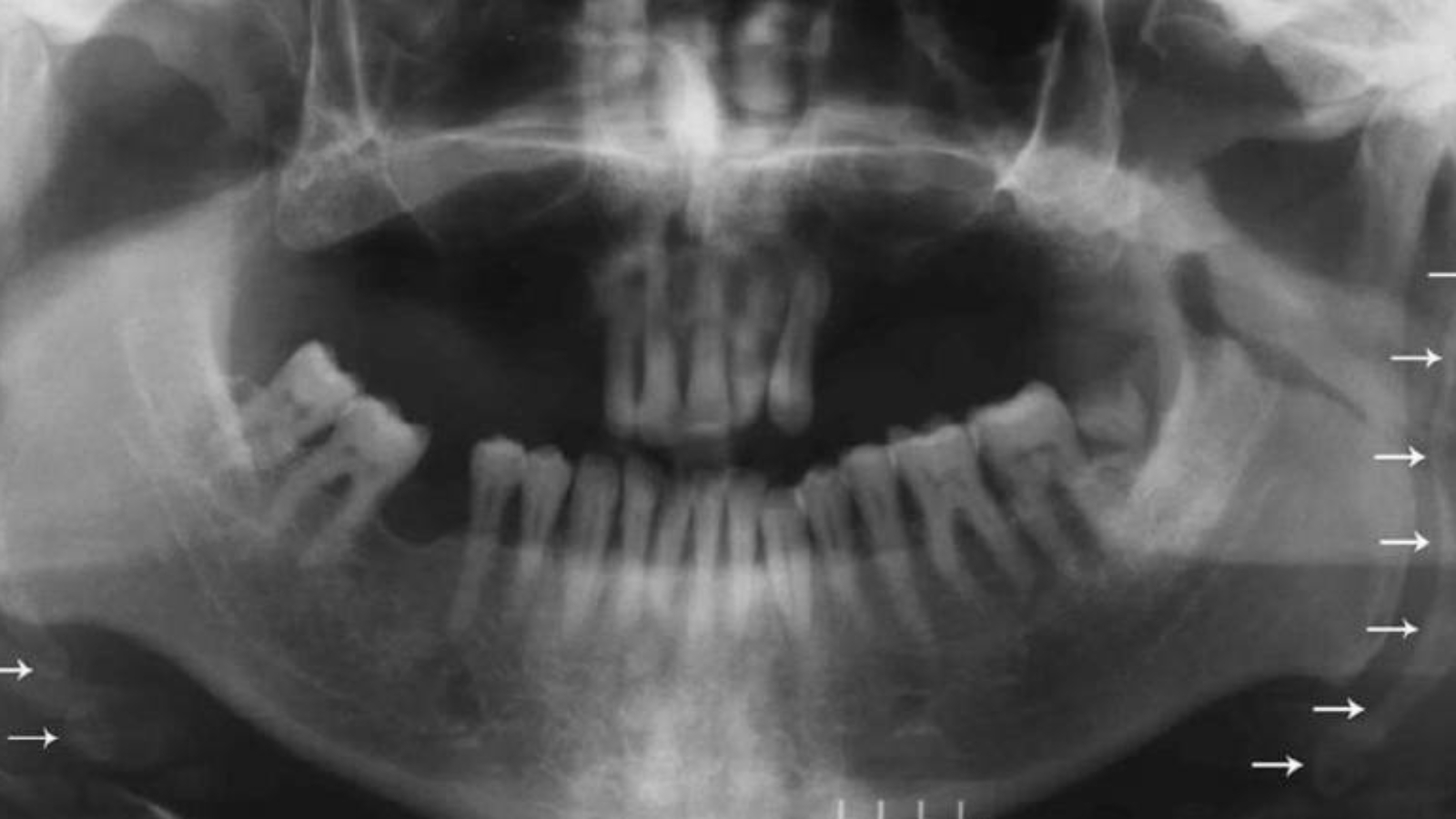
Pain affecting the face, lower jaw, throat, or neck is not always associated with dental disease, temporomandibular joint disorders, or inflammatory conditions of the oral cavity. In certain patients, the underlying cause is stylohyoid syndrome, a complex condition capable of mimicking numerous disorders while remaining undiagnosed for an extended period. Professor Alexander von Breuer analyzes such clinical cases as an example of a condition in which establishing the correct diagnosis requires comprehensive medical reasoning and an in depth understanding of anatomical relationships. At DentalClinic24, we evaluate these patients far beyond the scope of a conventional dental examination because only a thorough assessment of interconnected anatomical structures allows the true source of pain to be identified and an evidence based treatment strategy to be developed without unnecessary interventions.
Stylohyoid syndrome develops when the styloid process of the temporal bone becomes abnormally elongated or when structural changes occur within the stylohyoid ligament, resulting in irritation of adjacent nerves, blood vessels, and surrounding muscular structures. Patients frequently report pain during swallowing, the sensation of a foreign body in the throat, restricted mouth opening, discomfort during head movements, or radiating pain extending toward the ear, tongue, or lower jaw. One of the greatest diagnostic challenges of this condition is that its symptoms closely resemble neuralgias, salivary gland disorders, otolaryngological diseases, temporomandibular joint dysfunction, and even complications following dental treatment. As a result, many individuals undergo numerous consultations and investigations before receiving an accurate diagnosis while the actual cause of their symptoms remains unrecognized.
Modern diagnosis of stylohyoid syndrome requires close collaboration between multiple medical specialties. At DentalClinic24, we evaluate not only the condition of the dentofacial system but also neurological manifestations, skeletal anatomy, pain distribution patterns, masticatory muscle function, temporomandibular joint performance, and advanced diagnostic imaging findings. High resolution computed tomography plays a particularly significant role by allowing precise visualization of the styloid process, its anatomical orientation, its relationship with neighboring structures, and any potential mechanical interaction with neurovascular tissues. This comprehensive diagnostic information substantially improves clinical accuracy while enabling physicians to confidently exclude other disorders that present with similar symptoms.
Equally important is the selection of the most appropriate therapeutic strategy. Treatment decisions depend not only on symptom severity but also on the extent of anatomical abnormalities, disease duration, the presence of chronic inflammation, and the patient’s overall health status. In selected cases, conservative management aimed at reducing inflammation and minimizing neural irritation may provide significant clinical improvement. When pronounced anatomical abnormalities are identified, surgical correction may become necessary following careful treatment planning based on each patient’s unique clinical characteristics. At DentalClinic24, we believe that every therapeutic decision should be supported by a comprehensive evaluation of the entire clinical picture because symptom management without addressing the underlying anatomical cause cannot provide predictable long term outcomes.
Clinical experience consistently demonstrates that an interdisciplinary approach significantly shortens the diagnostic pathway while reducing the likelihood of unnecessary procedures. Close cooperation between dentists, neurologists, and maxillofacial surgeons makes it possible to evaluate every aspect of the patient’s condition, correlate findings obtained through different diagnostic methods, and create an individualized treatment plan based exclusively on objective clinical evidence. At Dental Clinic24, we regard this integrated model as the modern standard for managing patients with complex craniofacial pain syndromes because it allows restoration of function, elimination of the underlying source of chronic pain, and maintenance of the highest level of safety throughout every stage of treatment. Comprehensive clinical reasoning ultimately becomes the foundation of accurate diagnosis and enables predictable outcomes even in rare conditions that require the expertise of several medical disciplines working together.
Previously, we wrote about Gum Swelling as a Clinical Sign of Inflammation: Why Changes in Soft Tissue Volume Require Precise Diagnosis and Timely Dental Monitoring