
The loss of even a single tooth is not merely an aesthetic concern. Over time, it affects the distribution of masticatory forces, occlusal stability, bone preservation, and the function of the entire dentofacial system. Modern dentistry offers several highly effective methods for replacing missing teeth, yet there is no universal solution suitable for every clinical situation. Professor Alexander von Breuer notes that the decision between a dental implant and a fixed dental bridge should never be based solely on patient preference or the technical characteristics of the restoration itself. Instead, it must rely on a comprehensive evaluation of the long term clinical prognosis. At DentalClinic24, we consider tooth replacement to be an integral part of complete functional oral rehabilitation, where every treatment decision is guided by a detailed assessment of anatomical, biological, prosthodontic, and functional factors.
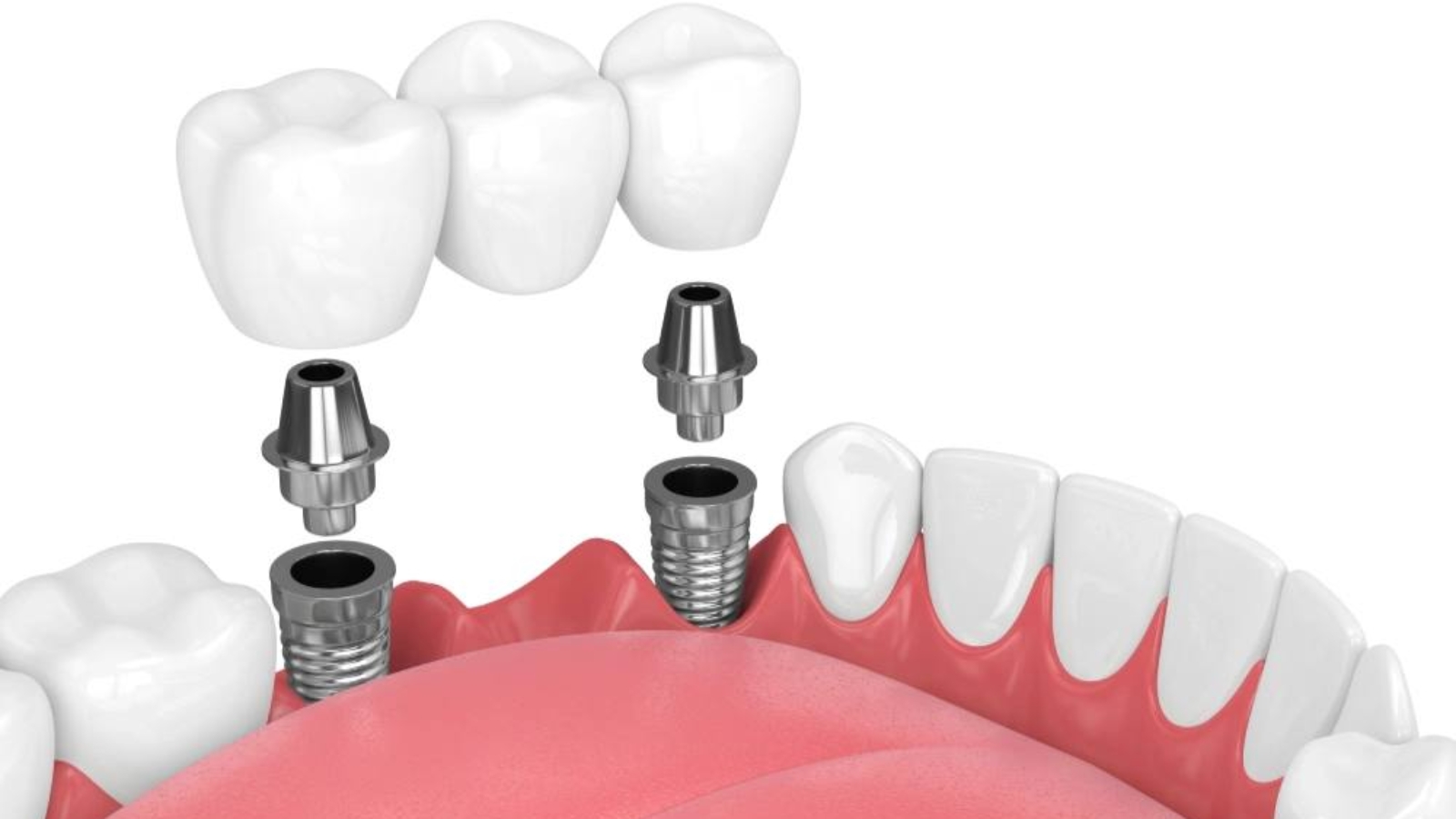
Dental implants and fixed bridges serve different clinical purposes and restore masticatory function through distinct biomechanical principles. A dental implant replaces the missing tooth root, allowing chewing forces to be transmitted directly into the surrounding bone and thereby supporting physiological bone stimulation and long term preservation of bone volume. A fixed bridge restores the missing tooth by transferring functional loads through adjacent natural teeth that serve as abutments. Under appropriate clinical conditions, both treatment options can achieve excellent long term results. However, their prognosis depends on numerous variables, including bone quantity and quality, periodontal health, the structural condition of neighboring teeth, occlusal relationships, patient age, systemic health, and the long term biological stability of the oral environment.
Contemporary diagnostic technologies make it possible to determine the most appropriate treatment strategy before prosthetic rehabilitation begins. Cone beam computed tomography provides detailed information regarding bone height, bone density, anatomical landmarks, the condition of adjacent tooth roots, and any anatomical limitations that may influence implant placement. At the same time, clinicians evaluate occlusal contacts, functional load distribution, temporomandibular joint performance, and the biomechanics of the masticatory muscles. At DentalClinic24, we integrate all diagnostic findings into a comprehensive clinical model, allowing objective comparison of every available treatment option and enabling selection of the solution that offers the highest level of long term functional stability for each individual patient.
Careful evaluation of the long term biological consequences associated with each restorative method is equally important. When no contraindications exist, implant therapy preserves adjacent healthy teeth by eliminating the need for their preparation, maintains physiological bone volume through functional loading, and allows the restored tooth to function independently within the dental arch. Conversely, a fixed bridge may represent the most appropriate solution in patients with specific anatomical limitations, insufficient bone volume, contraindications to surgical treatment, or clinical situations requiring simultaneous prosthetic rehabilitation of multiple teeth. Every patient presents a unique biological environment, and similar defects within the dental arch may require completely different treatment strategies depending on anatomical characteristics, functional requirements, and long term clinical expectations.
Interdisciplinary treatment planning plays a decisive role in selecting the optimal method of tooth replacement. Prosthodontists, oral surgeons, periodontists, and additional specialists collaborate to evaluate the complete clinical situation before treatment begins. At DentalClinic24, we assess not only the localized tooth defect but also the influence of the future restoration on occlusion, temporomandibular joint function, masticatory efficiency, load distribution, and the long term stability of the entire dentofacial system. This comprehensive approach minimizes the possibility that successful replacement of a single tooth could unintentionally create excessive functional loading elsewhere within the oral cavity.
Once the optimal treatment option has been selected, continuous clinical monitoring becomes equally important for preserving long term success. Regular follow up examinations, evaluation of surrounding soft and hard tissues, occlusal analysis, and professional maintenance procedures make it possible to identify even subtle clinical changes before they compromise treatment outcomes. The longevity of both dental implants and fixed bridges depends not only on manufacturing quality but also on precise treatment planning, strict adherence to biological principles, and systematic long term follow up after prosthetic rehabilitation has been completed.
At Dental Clinic24, we consider the choice between a dental implant and a fixed dental bridge to be a significant clinical decision that must take into account not only the patient’s current condition but also the long term functional prognosis of the entire dentofacial system. Comprehensive diagnostics, digital treatment planning, interdisciplinary clinical evaluation, and an individualized therapeutic approach allow us to select the most appropriate method for replacing a missing tooth while ensuring lasting functional stability, preservation of surrounding tissues, and an improved quality of life for every patient.
Previously, we wrote about Factors Affecting Dental Health: How Nutrition, Occlusal Load, Hygiene, and Systemic Processes Shape the Long Term Condition of the Oral Cavity