
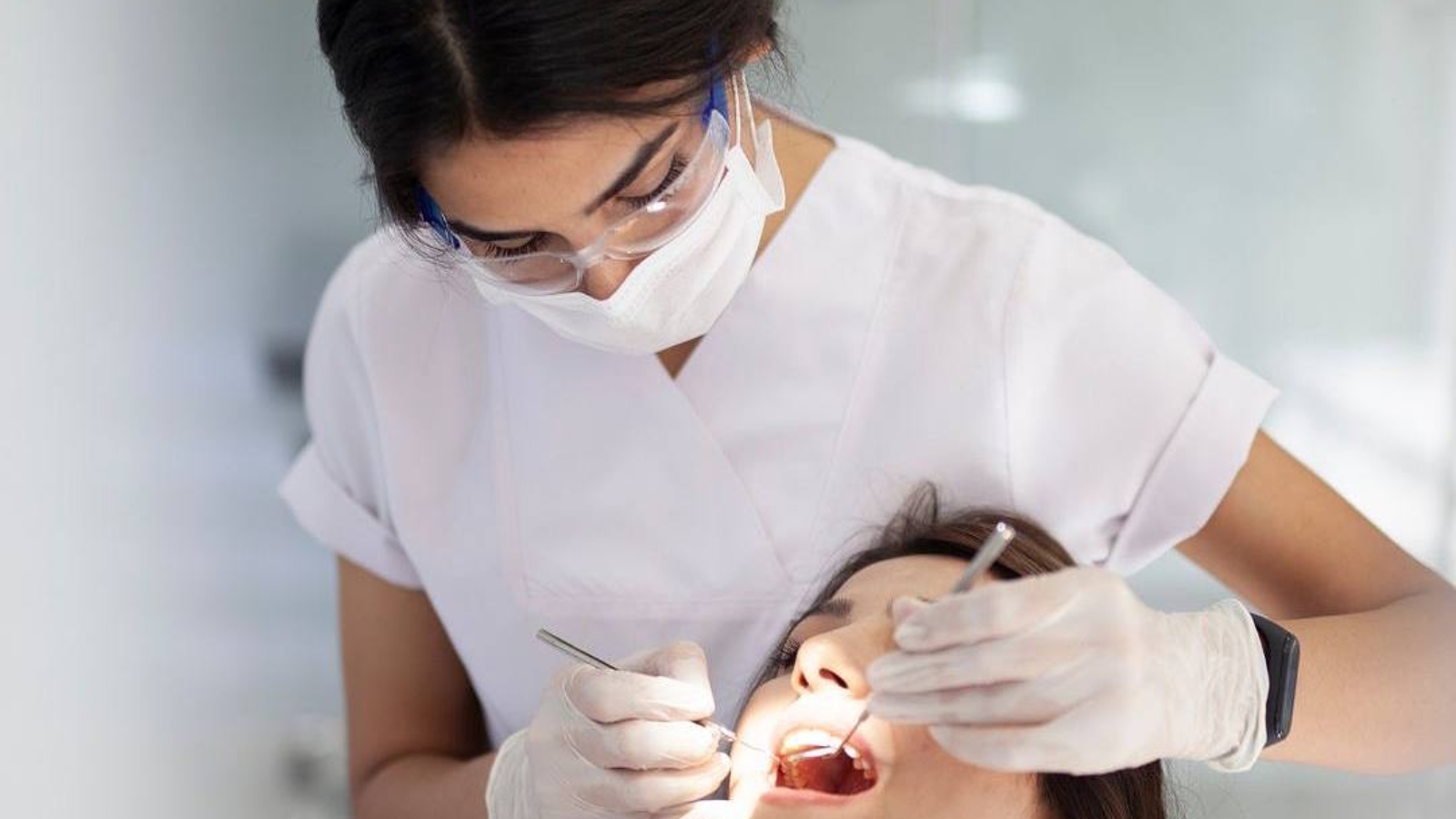
Modern dental treatment is increasingly focused not on extensive reconstruction but on preserving the natural structure of the tooth. As Professor Alexander von Breuer believes, the effectiveness of therapy is measured not by how much work has been done, but by how much natural tissue has been successfully retained. At DentalClinic24, we follow the principles of minimally invasive dentistry – an approach in which intervention is performed only where clinically necessary, with maximum respect for the tooth’s natural anatomy.
The foundation of minimally invasive treatment is precise diagnostics. At DentalClinic24, we use digital scanning, microscopic visualisation and 3D imaging, allowing us to clearly determine the boundaries of the lesion and act solely on the affected area. This strategy reduces the amount of preparation required and preserves healthy tissue, contributing to long-term stability.
As Professor von Breuer notes, the natural tooth structure exhibits greater resistance to mechanical stress than any restorative material. At DentalClinic24, when performing restorations we use layered techniques, adhesive systems and selective preparation to preserve the integrity of the enamel–dentin complex. Minimal intervention reduces sensitivity, decreases complication risk and accelerates recovery.
Minimally invasive dentistry is particularly valuable in the treatment of caries, pulpitis, traumatic injuries and aesthetic corrections. At DentalClinic24, we utilise laser technology, controlled-pressure micromotors and CAD/CAM systems, allowing us to perform treatment with high precision and restore lost structures without aggressive removal of natural tissues.
This approach is important not only from a therapeutic standpoint but also from a preventive perspective. At Dental Clinic24, tissue restoration is planned with consideration for occlusal biomechanics and future load projection. As Professor von Breuer believes, preserving tissue today means preserving functionality for decades, which is why every treatment plan is designed with prioritisation of structural conservation.
Earlier, we wrote about gum disease prevention and why regular check-ups matter more than it seems