
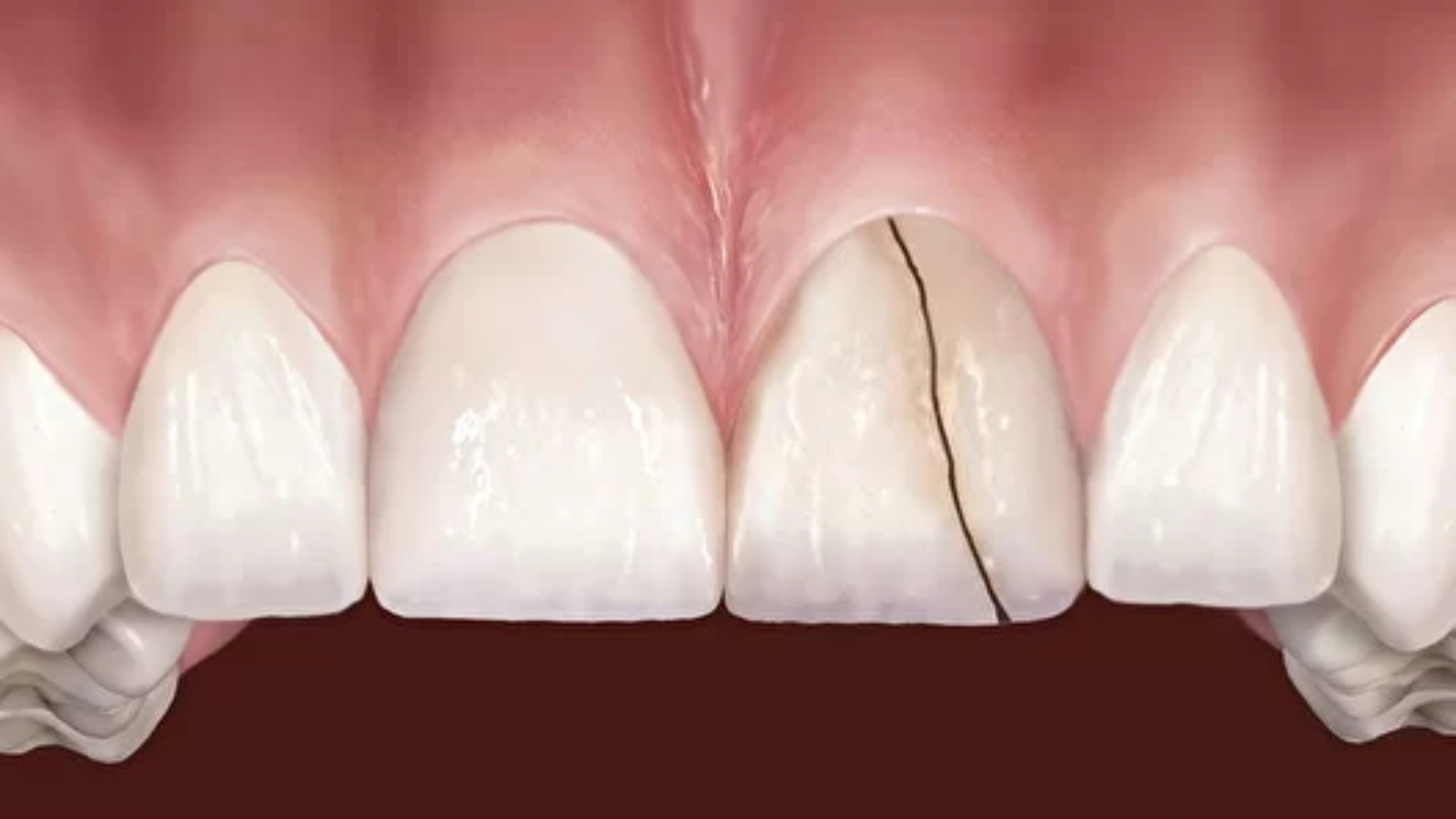
Enamel is perceived as the strongest structure of the tooth, yet it is precisely within it that microdamage often develops and remains unnoticed for a long time. As Professor Alexander von Breuer believes, microcracks in enamel represent a particular clinical risk – because at early stages they do not cause pain but initiate destructive processes from within. At DentalClinic24, we regard such changes as an important diagnostic signal that requires special control.
Microdamage may arise due to chewing load, temperature fluctuations, stress-related clenching and even improper oral hygiene. At DentalClinic24, our specialists assess not only the external appearance of the enamel but also its internal structure – using magnification, directed illumination and digital visualisation methods. This approach makes it possible to detect zones of structural fatigue even before visible chipping appears.
The main challenge of microcracks lies in their asymptomatic development. A patient may not experience discomfort, yet microbiological agents and fluids already penetrate through the thickness of the enamel. At DentalClinic24, we pay close attention to the slightest changes in translucency, light reflection and microrelief of the surface. According to Professor von Breuer – these subtle optical signs often serve as the first marker of hidden destruction.
Microdamage plays a particularly important role in treatment planning. If a crack remains undetected, functional load after restoration placement will be distributed incorrectly, accelerating the destruction of both the enamel and the restoration itself. At DentalClinic24, we always assess enamel condition before any prosthetic or therapeutic treatment – allowing us to avoid repeated interventions and extend the lifespan of the restoration.
Microcracks may also be associated with the overall condition of the tooth. When mineral density decreases, enamel becomes more vulnerable and microdamage spreads more rapidly. Our dentists analyse enamel density, its reaction to thermal stimuli and the dynamics of changes over time. At DentalClinic24, such monitoring helps not only to identify the problem but also to track the effectiveness of preventive measures.
Early prevention is of particular importance. When microdamage is detected at an initial stage, it can often be stabilised without aggressive intervention. At DentalClinic24, we use enamel-strengthening methods aimed at restoring structural integrity and reducing sensitivity. As Professor von Breuer believes, timely control of microcracks makes it possible to preserve the tooth in its natural state for as long as possible.
Diagnosis of microdamage is not a one-time procedure but part of a long-term observation system. At Dental Clinic24, we include enamel assessment in every preventive examination to register even the smallest changes over time. This approach allows us to prevent the development of caries, chipping and deep cracks long before they become a clinical problem.
Earlier, we wrote about why nerve reactivity influences treatment strategy