
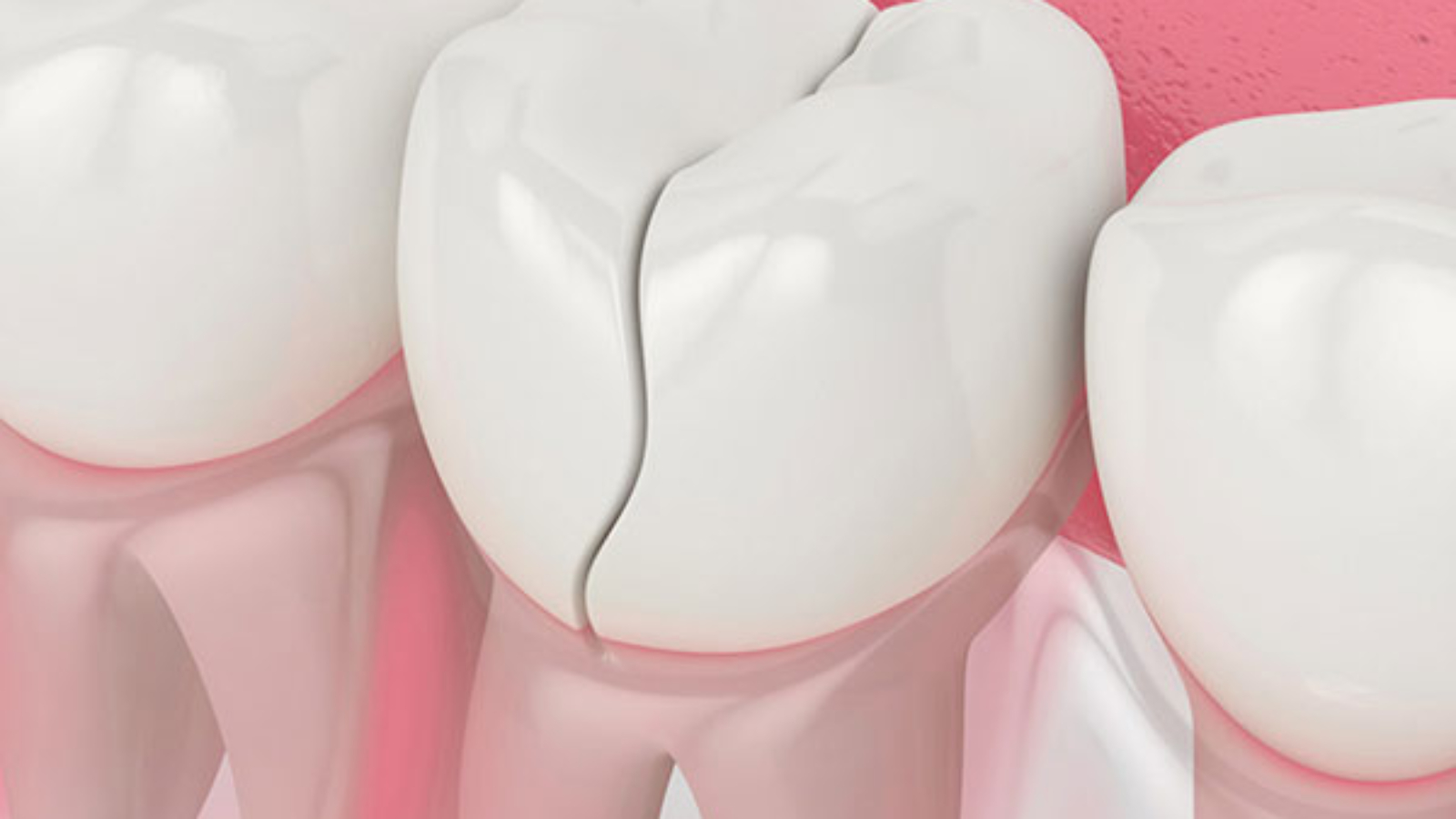
Patients often rely on the external appearance of a tooth – if the filling looks intact and causes no discomfort, everything seems fine. However, clinical practice shows the opposite. As Professor Alexander von Breuer believes, hidden cracks beneath fillings are among the most insidious forms of destruction – because they develop without pain or symptoms for a long time. At DentalClinic24, we treat such changes as a separate category of risk that requires special control.
After a filling is placed, the tooth continues to experience chewing load, temperature fluctuations and micromovements. Over time, a zone of tension may form at the junction between the filling and the tooth tissues. It is precisely in these areas that microcracks most often develop. At DentalClinic24, we view such zones as potential sites of future destruction even when everything appears visually stable.
The particular danger of hidden cracks lies in the fact that they do not immediately affect the nerve. While damage develops within the dentin, the patient feels no pain. However, bacteria begin to penetrate inside, the seal is compromised and secondary caries forms. At DentalClinic24, we often detect such processes incidentally – during routine check-ups rather than because of patient complaints.
The filling material and the tooth tissue have different elasticity. They respond differently to load, expand with heat and contract with cooling. This difference gradually increases internal stress. At DentalClinic24, we take this feature into account when selecting materials and when predicting their service life. According to Professor von Breuer – it is precisely the mismatch of physical properties that often triggers the mechanism of microdamage.
Hidden cracks are especially dangerous in the chewing zones, where functional load is maximal. Even in the absence of pain, the tooth may already be in a stage of gradual destruction. At DentalClinic24, we always analyse occlusion and the distribution of chewing pressure – because overload accelerates internal damage.
An additional risk factor is bruxism and chronic clenching. During the night, pressure on fillings is many times greater than during the day. Under such conditions, microcracks form faster and destruction progresses more rapidly. At DentalClinic24, such conditions are identified by characteristic wear patterns and changes in restoration dynamics.
The danger of hidden cracks also lies in the fact that visually the filling may remain ideal while destruction is occurring beneath it. When acute pain finally appears – the process has often progressed too far and simple replacement of the filling is no longer possible. At DentalClinic24, we strive to detect such changes at early stages, when gentle restoration is still possible.
Modern diagnostics make it possible to identify microdamage long before clinical complications arise. At DentalClinic24, we use a comprehensive approach – imaging, load analysis and dynamic monitoring of restorations. This approach allows us to move from “pain-driven” treatment to the prevention of hidden destruction.
Hidden cracks represent destruction without external signs. As Professor von Breuer believes, the absence of symptoms does not mean the absence of a problem – it is merely a temporary stage in its development. At Dental Clinic24, we regard control over the internal condition of teeth as a key element in preserving long-term treatment results.
Earlier, we wrote about medication load and how antibiotics, hormones and antidepressants change oral tissues