
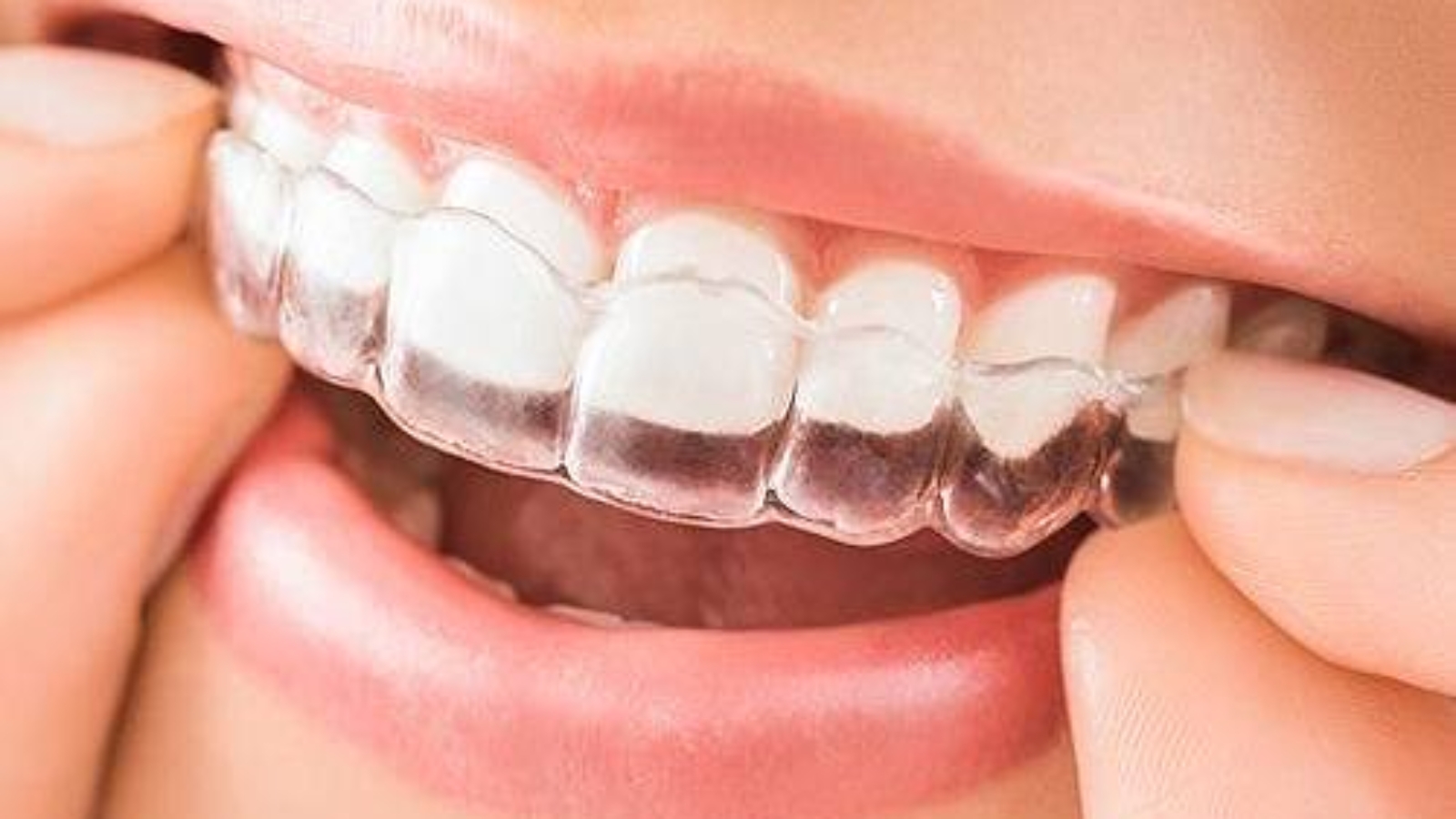
Modern teeth alignment is no longer associated exclusively with braces. In the opinion of Professor Alexander von Breuer, aligner therapy most accurately reflects the principles of controlled biomechanics – when tooth movement occurs not through rigid pressure, but through a sequence of precise micromovements. At DentalClinic24, we consider aligners to be a tool for fine-tuning the dental arch rather than merely an aesthetic alternative to classical systems.
Each aligner creates a strictly defined vector of force. The tooth is not “pushed” into its new position, but gradually moves within the physiological limits of the ligament apparatus. At DentalClinic24, this approach helps preserve periodontal health, reduce the risk of root resorption and avoid overload of individual areas of the dental arch.
The biomechanics of aligner therapy are based on sequencing. Each aligner is calculated so that movement follows a strictly planned trajectory – without sudden jumps or uncontrolled shifts. At DentalClinic24, treatment planning is always based not only on tooth position, but also on muscle function, occlusion, joint mechanics and bone support.
Special attention is paid to load distribution. Unlike bracket systems, where pressure is concentrated at fixation points, aligners cover the entire crown surface of the tooth. This ensures a more even transmission of force to the ligaments and significantly reduces the risk of local overloads. At DentalClinic24, uniform load distribution is considered one of the key factors of long-term stability.
Aligner therapy is particularly sensitive to calculation accuracy. Even a minimal error in tooth position at the planning stage can lead to an accumulation of inaccuracies throughout the subsequent phases. At DentalClinic24, we treat digital modelling as the foundation of the entire therapy, because it is here that the long-term prognosis is established.
It is essential to understand that aligners work only with strict compliance to the wearing schedule. The biomechanics of alignment are designed for the continuous presence of controlled force. Violations of the schedule lead to slower tooth movement, loss of precision and the need to recalculate treatment stages. At DentalClinic24, we always explain in detail how the patient’s discipline directly influences the final outcome.
Aligners allow specialists to work not only with aesthetics, but also with functional disorders. Correction of crowding, rotations, inclinations and interdental spaces affects the distribution of chewing load and the stability of occlusion. At DentalClinic24, alignment is always regarded as part of the overall biomechanical system rather than as isolated tooth movement.
Aligners are especially valuable in adult patients. In such cases, there are often worn surfaces, existing restorations, bone changes and altered muscle activity. At DentalClinic24, the controllability of force makes it possible to work safely in conditions of reduced adaptive capacity of tissues.
Despite the high level of technology, the key role in aligner therapy is still played by the clinician’s judgement. The software defines the trajectory, but it is the specialist who determines whether this trajectory is appropriate for the specific biological situation. In the opinion of Professor von Breuer, a digital model does not replace the doctor – it strengthens the doctor’s clinical decision.
Aligners make it possible to achieve high precision only under a comprehensive approach. Not only calculations are important, but also tissue adaptation control, dynamic analysis and evaluation of muscle and joint response. At Dental Clinic24, aligner therapy is always accompanied by clinical monitoring at every stage of tooth movement.
Alignment without bracket systems is not a simplified path – it is a more refined form of orthodontic work. It requires greater attention to detail, higher planning accuracy and deeper understanding of biomechanics. This is why aligners today are becoming not just an aesthetic solution, but a tool for controlled transformation of the dentofacial system.
Earlier, we wrote about how clinical practice shapes the precision and predictability of treatment