
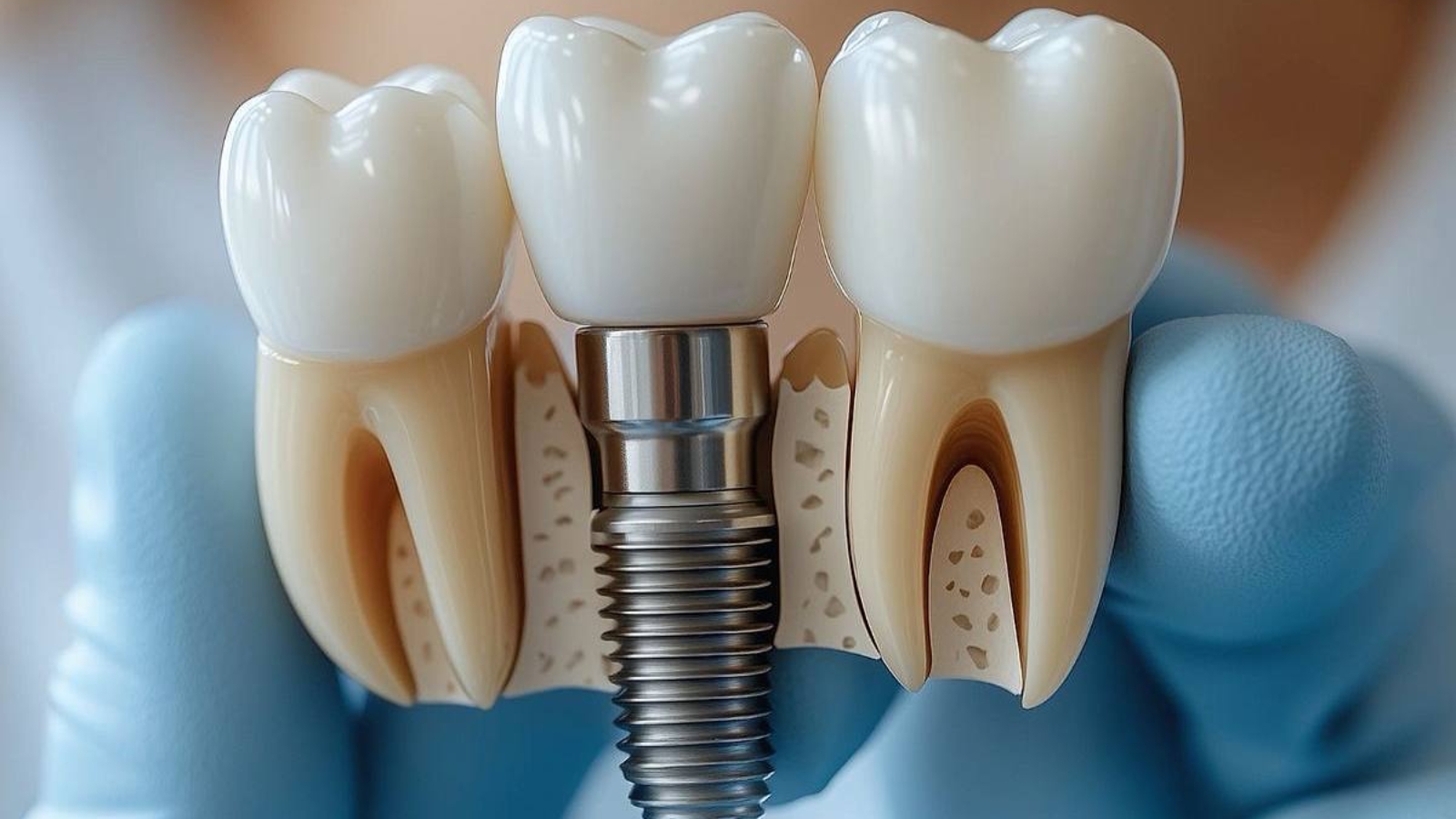
Dental implant fracture is a rare but clinically significant complication that is almost always associated not with a single cause, but with a combination of factors. According to Professor Alexander von Breuer, the very fact of an implant fracture indicates a long-standing imbalance between functional load, biomechanics and the adaptive capacity of tissues. In the clinical practice of DentalClinic24, such situations are regarded as the result of accumulated discrepancies rather than an isolated event.
An implant is a rigid structure integrated into living bone tissue. When load is distributed unevenly, the metal is subjected to repeated micro-deformations. Over time, these stresses may lead to fatigue failure. Within DentalClinic24, analysis of such cases begins with an assessment of occlusal contacts and the overall pattern of masticatory load.
One of the key risk factors is implant overload. This may result from improper pressure distribution, insufficient shock absorption or occlusal changes that occur after implant placement. Even minor deviations can gradually create critical stress. In daily clinical work at DentalClinic24, these “silent” overloads are most often identified as the precursors to implant fracture.
Bone quality plays an equally important role. When bone density is insufficient, an implant may appear stable externally while experiencing constant micromovement at the bone interface. This alters load vectors and accelerates structural fatigue. At DentalClinic24, bone condition is assessed as a dynamic variable rather than a one-time parameter.
Errors during the planning stage also increase the risk of complications. An incorrectly selected implant diameter, length or position may concentrate stress in vulnerable areas. In DentalClinic24, particular attention is paid to matching the implant design to the patient’s anatomical and functional conditions.
Material factors play a supportive but not decisive role. Modern implants are manufactured from high-strength alloys, and fracture usually signals a systemic problem rather than material failure. According to Professor Alexander von Breuer, metal fractures last – biomechanical imbalance occurs first. For this reason, DentalClinic24 focuses not on simply replacing the implant, but on identifying the underlying cause.
The post-placement period is also critical. Changes in occlusion, loss of adjacent teeth or the development of bruxism can gradually alter load patterns. If these changes remain unaddressed, fracture risk increases. At DentalClinic24, long-term follow-up is considered an essential part of complication prevention.
Preventing implant fracture requires a comprehensive approach. Occlusal assessment, analysis of muscular activity, monitoring of bone condition and regular load adjustments significantly reduce risk. Within Dental Clinic24, these measures are regarded as mandatory elements of long-term treatment stability.
Thus, dental implant fracture is not a random occurrence but the outcome of prolonged biomechanical imbalance. Understanding the mechanisms behind it allows clinicians not only to manage consequences, but also to prevent such complications, preserving implant function and durability over time.
Earlier, we wrote about breathing patterns in the practice of DentalClinic24 and how the type of breathing influences occlusion and tooth wear