
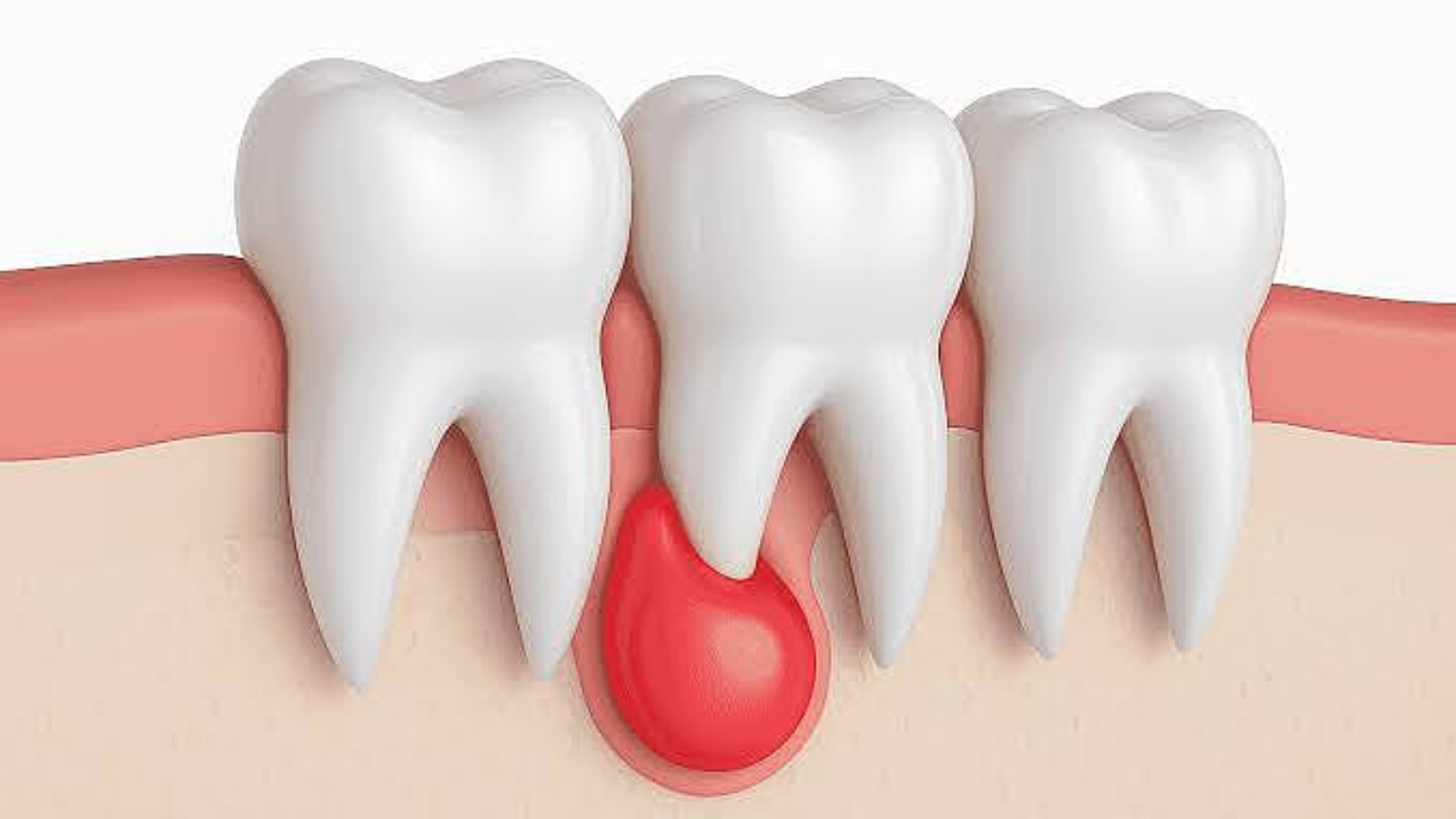
A dental cyst is not merely a radiographic finding, but a pathological process that can silently progress and compromise surrounding tissues. Professor Alexander von Breuer says that the key challenge in treating dental cysts lies in eliminating the pathological focus while preserving the anatomical and functional integrity of the tooth. At DentalClinic24, this principle forms the basis of the clinical approach to cyst management.
A cyst most often develops as a consequence of chronic inflammation in the periapical region. It may remain asymptomatic for a long time, gradually increasing in size and causing bone resorption. At DentalClinic24, early detection is considered crucial, as timely intervention significantly expands the possibilities for tooth preservation.
Treatment strategy depends on several factors – cyst size, localisation, involvement of adjacent structures and the condition of the affected tooth. In many cases, conservative or minimally invasive methods can be applied. At DentalClinic24, priority is given to approaches that allow elimination of the cystic lesion without compromising the tooth’s structural stability.
Endodontic management plays a central role when the cyst is associated with the root canal system. Thorough canal disinfection, sealing and long-term monitoring may lead to gradual regression of the cystic cavity. At DentalClinic24, such treatment is selected only after careful assessment of the tooth’s prognosis and adaptive potential.
In cases where surgical intervention is required, precision becomes essential. Excessive removal of bone or damage to surrounding tissues can negatively affect long-term outcomes. At DentalClinic24, surgical techniques are aimed at preserving as much healthy tissue as possible while ensuring complete removal of pathological contents.
Maintaining tooth function is a key objective throughout treatment. A tooth that remains anatomically intact but loses functional stability cannot be considered a successful outcome. Professor Alexander von Breuer emphasises that preservation of function is as important as elimination of pathology. Therefore, occlusal load and biomechanical balance are always taken into account.
Post-treatment monitoring is an integral part of cyst management. Radiographic control and clinical evaluation allow assessment of bone regeneration and tissue adaptation over time. At DentalClinic24, follow-up is considered essential to confirm long-term stability and prevent recurrence.
For the patient, conservative management of a dental cyst means avoiding unnecessary extraction and preserving natural tissues. This approach reduces the need for complex prosthetic or implant rehabilitation in the future. At DentalClinic24, tooth preservation is viewed as a clinically justified goal whenever prognosis allows.
Thus, treatment of a dental cyst requires a comprehensive and balanced strategy. Accurate diagnosis, careful planning and respect for anatomical and functional principles make it possible to manage cystic lesions effectively. At Dental Clinic24, this approach ensures predictable results and long-term tooth preservation.
Earlier, we wrote about the predictability of dental treatment at DentalClinic24 and how clinical analysis reduces outcome uncertainty