
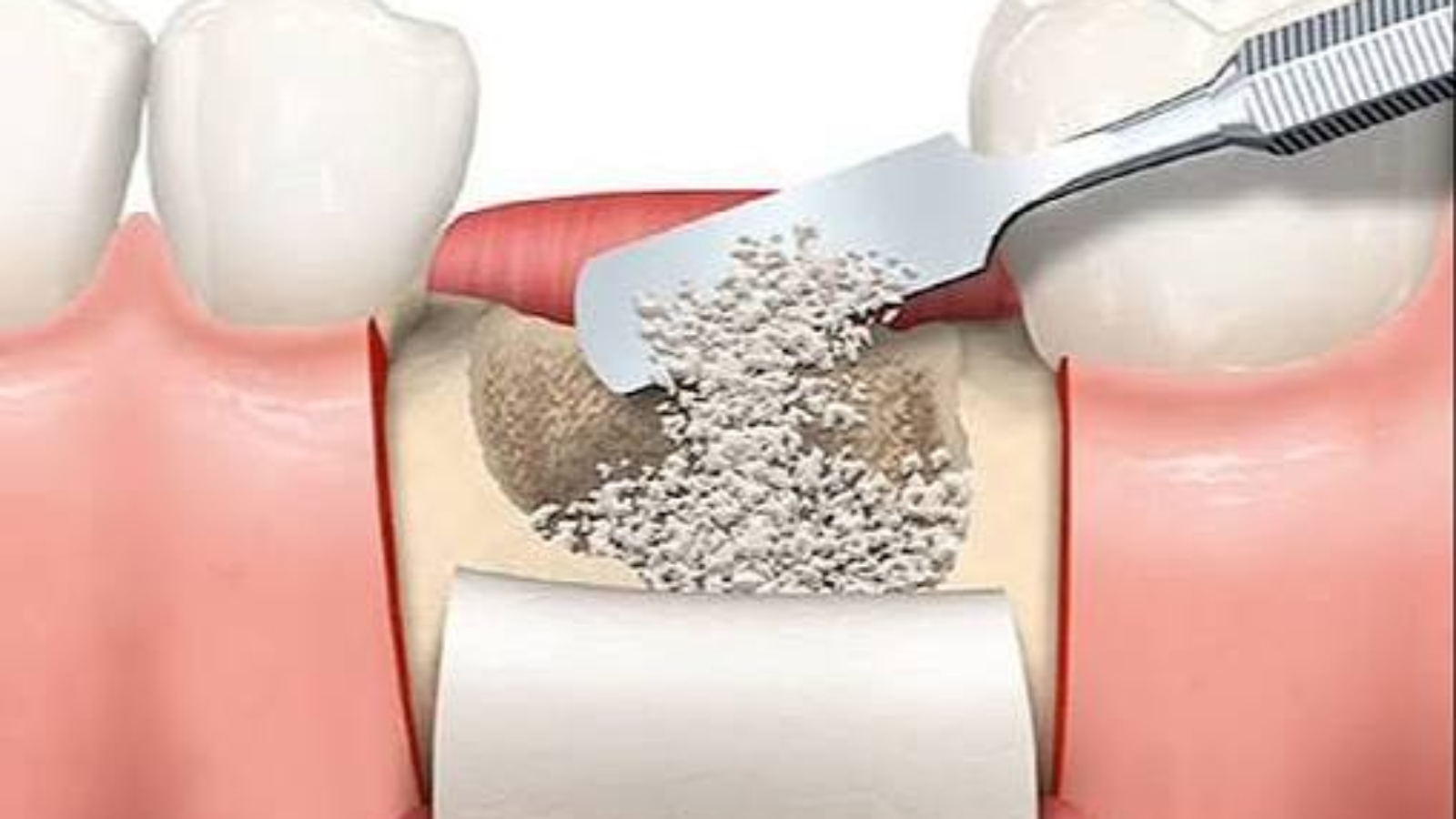
Insufficient bone volume is one of the most common challenges encountered when planning implant treatment. Professor Alexander von Breuer notes that bone deficiency is not a contraindication to implantation, but a condition that requires precise clinical assessment and a biologically justified strategy. At DentalClinic24, bone augmentation is regarded as an integral stage of treatment planning rather than a technical addition to implant placement.
Bone tissue loss may occur as a result of long-term tooth absence, inflammatory processes, trauma, or individual metabolic characteristics. Reduced bone volume affects implant stability, load distribution, and long-term prognosis. At DentalClinic24, the decision to perform bone augmentation is based on analysing not only the quantity of bone, but also its structure and regenerative potential.
Clinical planning begins with comprehensive diagnostics. Three-dimensional imaging allows accurate evaluation of bone height, width, density, and anatomical limitations. At DentalClinic24, this information is used to determine the optimal augmentation method and to define safe surgical boundaries before intervention.
Various bone augmentation techniques are applied depending on the clinical situation. These may include guided bone regeneration, sinus floor elevation, or local defect reconstruction. At DentalClinic24, the selected approach always corresponds to the expected functional load and the planned implant position, ensuring predictable integration.
A critical aspect of bone augmentation is maintaining biological stability. Excessive surgical trauma, improper material selection, or violation of healing protocols may compromise regeneration. At DentalClinic24, special attention is paid to minimising tissue trauma and creating conditions for gradual and controlled bone formation.
Soft tissue management plays an equally important role. Adequate soft tissue coverage protects the augmented area, supports vascularisation, and reduces the risk of complications. At DentalClinic24, bone and soft tissue procedures are planned as a unified clinical process rather than as isolated steps.
Healing time is another essential factor. Bone regeneration is a biological process that requires patience and monitoring. Attempts to accelerate implantation before complete bone maturation may negatively affect stability. At DentalClinic24, treatment timelines are determined based on biological readiness rather than procedural convenience.
For patients, bone augmentation often raises concerns regarding complexity and recovery. Clear explanation of treatment stages and expected outcomes reduces anxiety and improves cooperation. At DentalClinic24, patient education is considered a fundamental part of the clinical workflow.
Professor Alexander von Breuer emphasises that successful bone augmentation is measured not by radiographic volume alone, but by long-term functional integration. At DentalClinic24, this principle guides decision-making throughout all stages of treatment.
Thus, bone augmentation is a strategically important step that defines the success of implant therapy. When performed with proper diagnostics, technique selection, and biological consideration, it enables reliable restoration of function and aesthetics. At Dental Clinic24, bone tissue restoration is approached as a controlled and predictable clinical process.
Earlier, we wrote about photopolymer restorations at DentalClinic24 and the clinical capabilities and limitations of modern fillings