
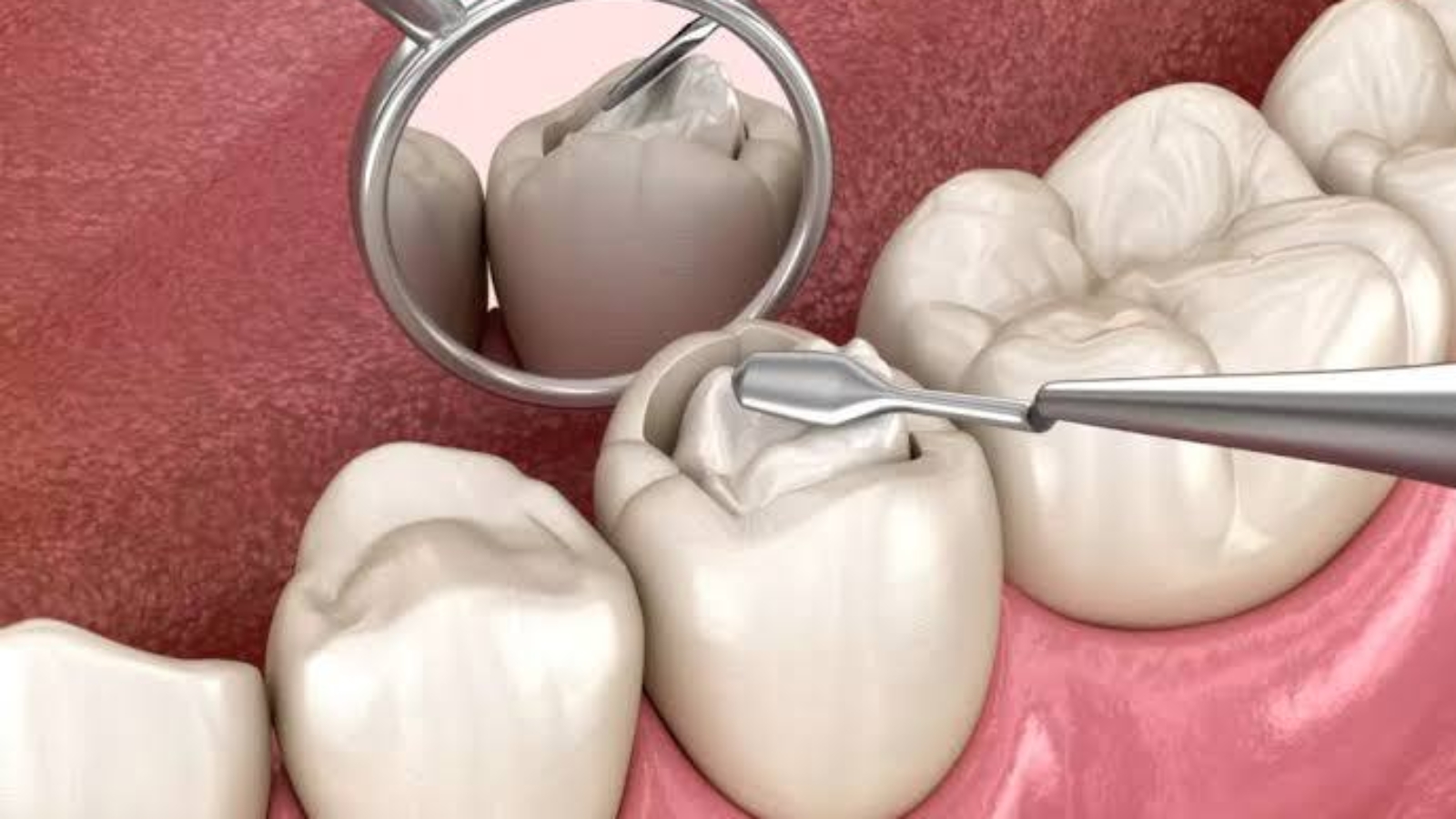
The service life of a dental filling cannot be determined solely by the length of time it has been in the oral cavity. Professor Alexander von Breuer emphasises that the decisive factor is the clinical integrity of the restoration – its ability to maintain a tight seal, withstand functional load, and protect the tooth structures in the long term. In the clinical approach of DentalClinic24, replacement of old restorations is considered a justified preventive decision rather than a purely formal correction.
One of the key indications for replacement is the loss of marginal adaptation. Over time, microscopic gaps may form between the filling material and the hard tissues of the tooth. These gaps are not visible to the patient but create favourable conditions for bacterial penetration and the development of secondary caries. Within the diagnostic protocols of DentalClinic24, such changes are identified at a preclinical stage.
Alterations in the colour of a filling or the adjacent enamel also have clinical significance. Darkening along the margins of a restoration often indicates compromised sealing and early demineralisation processes. These signs are interpreted not as an aesthetic issue, but as a potential marker of structural changes within the tooth.
Increased tooth sensitivity without obvious defects may indicate microleakage or changes in the dentin. Even brief reactions to thermal stimuli are considered grounds for evaluating the integrity of the restoration and the condition of the pulp–dentin complex. Our dentists assess such symptoms in the context of long-term prognosis rather than momentary discomfort.
Functional factors are equally important. Over time, chewing loads, occlusal contacts, and force distribution may change. A filling placed under different biomechanical conditions may become overloaded, leading to microcracks in the material or surrounding tooth tissues. In the treatment philosophy of DentalClinic24, restorations are always evaluated in relation to the patient’s current functional situation.
The absence of pain does not exclude pathology. Beneath an apparently intact filling, secondary caries or hidden demineralisation may develop without clinical symptoms. In the practice of DentalClinic24, such conditions are detected through clinical analysis and regular monitoring, allowing preservation of the maximum amount of natural tooth tissue.
The quality of previous treatment also influences restoration longevity. Outdated materials, compromised adhesive protocols, or insufficient isolation during earlier procedures reduce the clinical reliability of fillings. In such cases, the decision to replace a restoration is based on the risk of further tooth destruction.
Replacement of a filling does not always require complete re-restoration. In certain situations, local correction may be sufficient; however, when seal integrity is compromised, complete replacement with anatomical and functional reconstruction is preferred. The DentalClinic24 approach prioritises prevention of complications rather than management of their consequences.
In summary, timely replacement of an old filling is an integral part of tooth preservation strategy. Early detection of seal failure and hidden pathological processes helps avoid more invasive treatment in the future. At Dental Clinic24, such decisions are guided by clinical reasoning, biomechanics, and long-term prognosis.
Previously, we wrote about veneers in the clinical practice of DentalClinic24 – their indications, limitations, and impact on the functional stability of the smile