
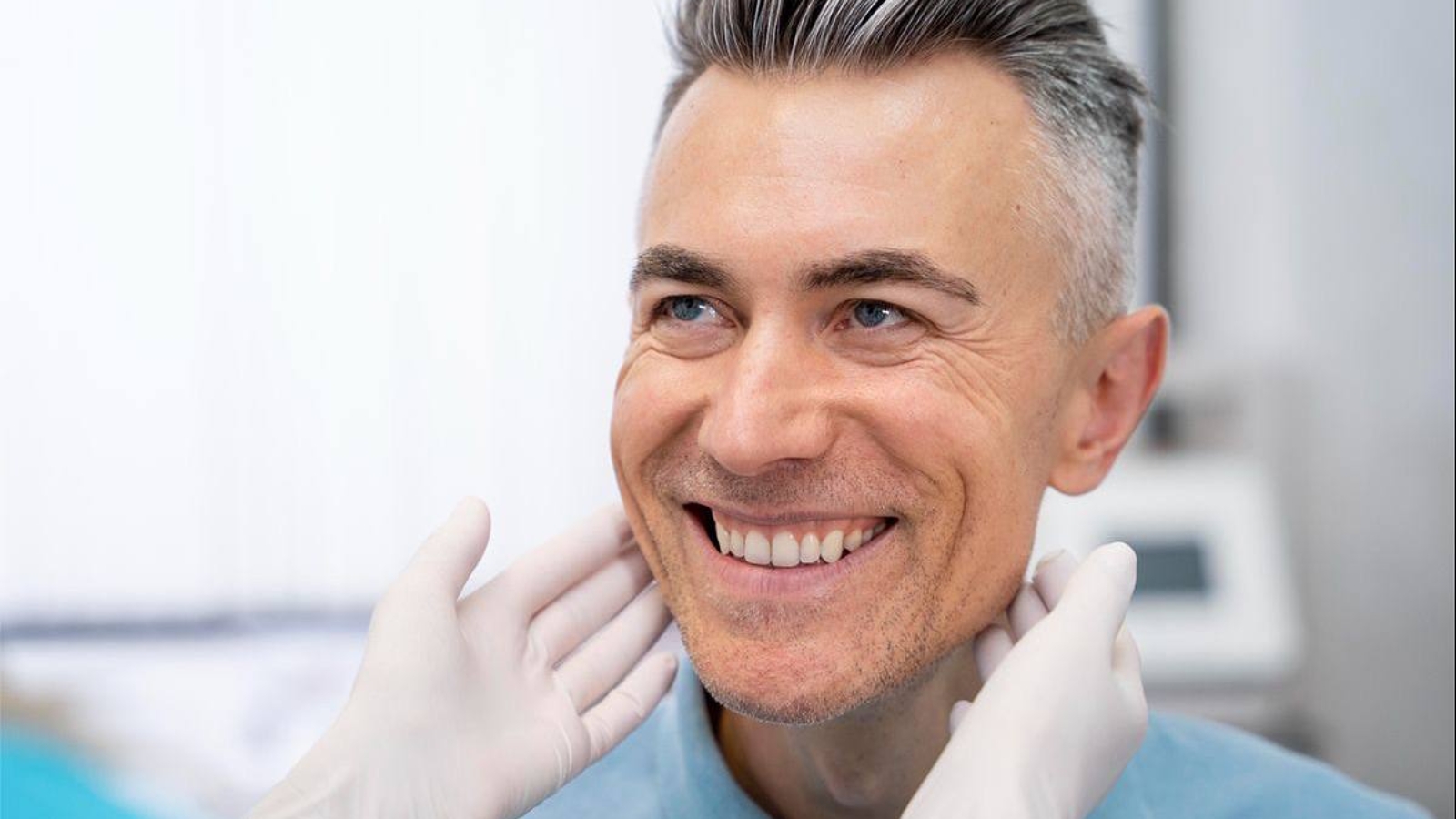
Facial symmetry is one of the key indicators of a harmonious appearance, yet in clinical dentistry it carries not only aesthetic but also functional importance. Professor Alexander von Breuer emphasises that the dentofacial system plays a direct role in shaping facial expressions, soft tissue position, and overall facial dynamics. At DentalClinic24, the assessment of facial symmetry is considered an essential part of dental analysis that directly influences treatment strategy.
Teeth serve as structural support for the soft tissues of the face. Their position, bite height, and the shape of the dental arches determine how muscular tension is distributed and how the contour of the lips, cheeks, and lower third of the face is formed. Even minor occlusal changes can gradually lead to visible asymmetry. At DentalClinic24, these interconnections are analysed at the diagnostic stage.
Facial muscles adapt to functional load. When occlusion is altered or one-sided dental overload is present, muscles begin to function unevenly. This may manifest as asymmetrical lip movement, changes in the smile line, or uneven activity of the masticatory muscles. At DentalClinic24, such signs are regarded as clinical indicators rather than purely cosmetic features.
Facial symmetry becomes especially important during comprehensive treatment. Prosthetic rehabilitation, orthodontic correction, and implant placement affect not only the teeth but also the spatial position of the jaws. At DentalClinic24, treatment planning always includes an evaluation of how changes within the dentofacial system may influence facial mimicry and overall balance.
It is important to recognise that asymmetry is not always congenital. It can develop progressively due to tooth loss, reduced bite height, or long-term adaptation to unfavourable occlusal contacts. At DentalClinic24, these changes are identified before they become noticeable to the patient.
Professor Alexander von Breuer points out that restoring tooth shape alone, without considering facial symmetry, may result in a visually disharmonious outcome. For this reason, at DentalClinic24 smile analysis is always complemented by an evaluation of lip position, smile line, and facial muscle activity.
For patients, a clinical approach to symmetry means a more natural and authentic treatment result. When teeth, muscles, and soft tissues function in coordination, the face retains its natural expressiveness and individuality. At DentalClinic24, this is considered a hallmark of high-quality dental rehabilitation.
Facial symmetry also influences the long-term stability of treatment outcomes. Even load distribution within the dentofacial system reduces the risk of overload, secondary interventions, and functional disturbances. At DentalClinic24, this approach allows not only for aesthetic improvement but also for long-term preservation of systemic health.
Thus, dental treatment inevitably affects facial expression and mimicry. Clinical evaluation of symmetry enables more precise and predictable treatment planning. At Dental Clinic24, this principle forms part of a comprehensive approach where aesthetics and function are viewed as an integrated whole.
Previously, we wrote about teething in infants, clinical observations at DentalClinic24, and signs that require specialist attention