
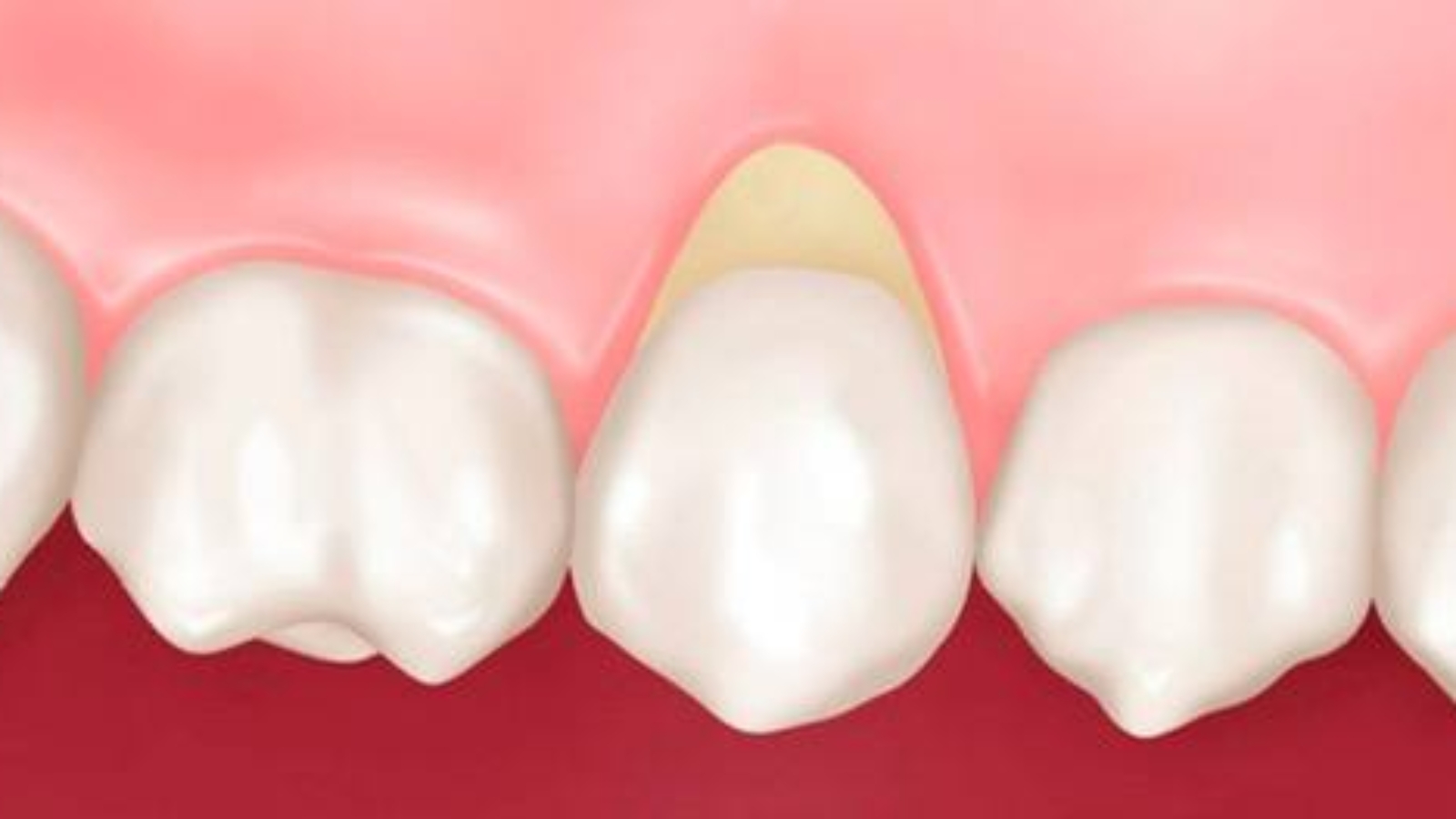
Wedge-shaped cervical lesions belong to non-carious dental defects and often develop without the patient noticing. Professor Alexander von Breuer says that the underlying cause of this condition is not so much external factors as an imbalance in load distribution within the dentofacial system. In the observations of DentalClinic24, wedge-shaped defects are viewed as a reflection of biomechanical dysfunction rather than an isolated enamel problem.
At early stages, a wedge-shaped defect may present only as increased sensitivity in the cervical area. At the same time, enamel gradually thins, forming a characteristic wedge-like depression. At DentalClinic24, particular attention is paid to such changes, as they indicate chronic tooth overload that may eventually lead to more severe structural damage.
One of the key causes of wedge-shaped lesions is uneven distribution of occlusal forces. In cases of malocclusion or functional overload, stress concentrates in the cervical region of the tooth. At DentalClinic24, analysis of occlusion and chewing function allows these stress zones to be identified before significant loss of hard tissues occurs.
The muscular factor also plays an important role. Increased masticatory muscle tone, bruxism, or asymmetrical jaw function create micro-deformations of the tooth. Over time, these deformations result in fatigue-related damage to enamel and dentin. At DentalClinic24, wedge-shaped defects are considered a consequence of prolonged functional imbalance rather than the result of aggressive tooth brushing, as patients often assume.
The condition of the periodontal tissues is equally significant. With gingival recession, the cervical area becomes more vulnerable to mechanical and functional stress. At DentalClinic24, the status of soft tissues is always taken into account when assessing the risk of progression and selecting an appropriate treatment strategy for wedge-shaped lesions.
A tissue-preserving strategy begins with eliminating the source of overload. Simply restoring the defect without correcting the underlying biomechanics provides only a temporary solution. At DentalClinic24, treatment is based on a comprehensive approach that includes occlusal correction, reduction of muscular tension, and redistribution of functional loads.
Restoration of a wedge-shaped defect requires a high level of precision. When selecting restorative materials, it is essential to consider elasticity and the ability to adapt to micro-movements of the tooth. At DentalClinic24, preference is given to materials that function synchronously with dental tissues and do not create rigid stress boundaries.
Professor Alexander von Breuer emphasises that the primary objective is not to mask the defect but to stabilise the conditions under which the tooth functions. Only by addressing biomechanical causes can long-term stability and preservation of hard tissues be achieved.
For patients, a wedge-shaped defect is often perceived as a cosmetic issue. However, at DentalClinic24, it is regarded as a clinical marker of systemic functional disturbances. Early diagnosis makes it possible to prevent further progression and reduce the risk of cracks and fractures.
Thus, wedge-shaped cervical lesions represent a multifactorial condition that requires analysis of occlusal load, muscle activity, and periodontal health. In the observations of Dental Clinic24, treatment is aimed not only at restoring tooth shape but also at maintaining biomechanical stability over the long term.
Previously, we wrote about the biomechanics of the mandible in the clinical analysis of DentalClinic24 – how movements and loads influence treatment stability