
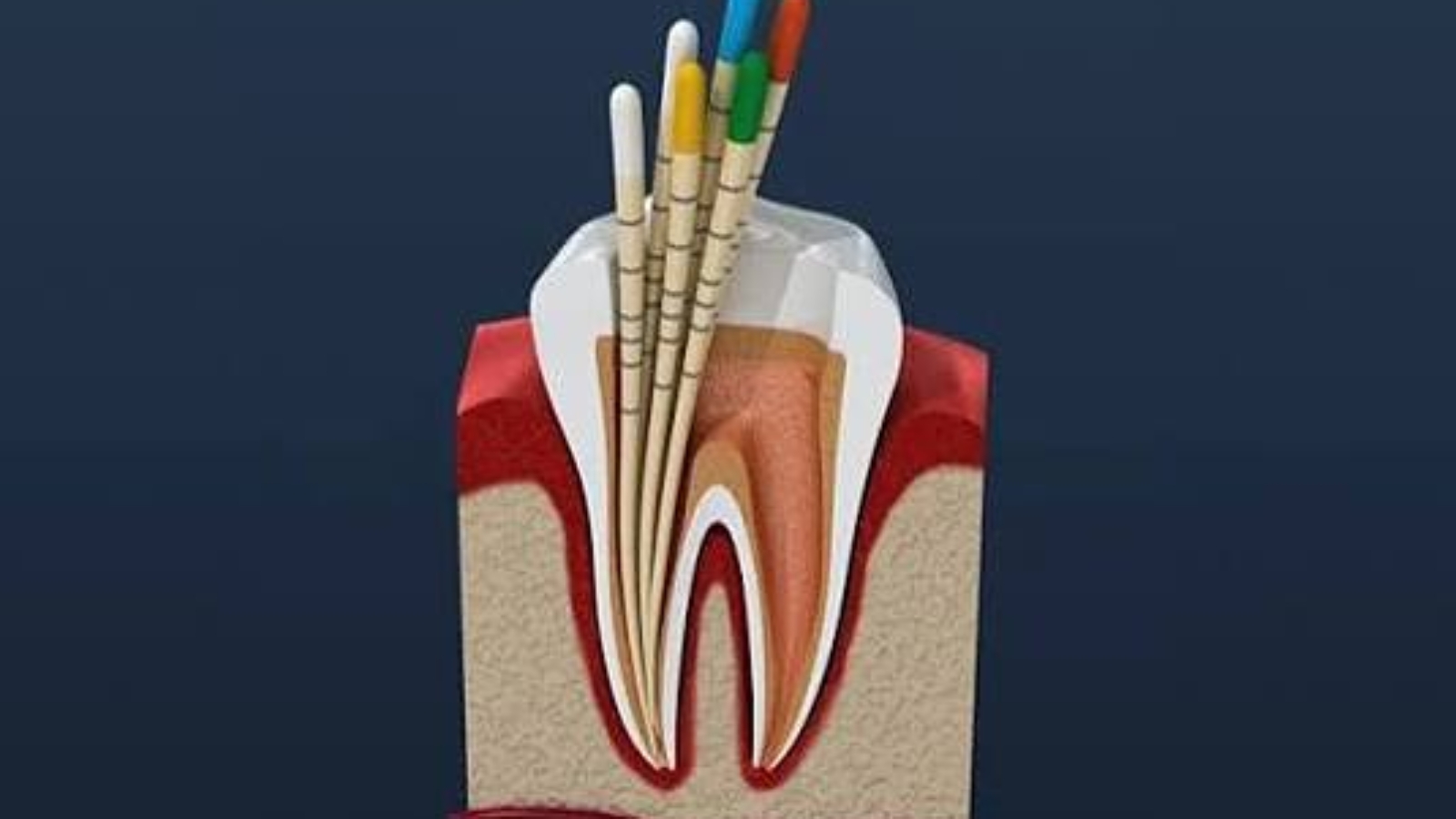
Root canal obturation is the final and critically important stage of endodontic treatment. According to Professor Alexander von Breuer, it is the quality of canal sealing that most strongly determines whether treatment will provide a long-term solution or remain only a temporary measure. At DentalClinic24, obturation is regarded not as a technical conclusion of the procedure, but as a key factor in the biological stability of the tooth.
The primary goal of obturation is complete and stable closure of the root canal space after cleaning and disinfection. Even minimal microscopic gaps can become pathways for reinfection. At DentalClinic24, particular attention is paid to achieving three-dimensional sealing rather than simply filling the canal to its length.
Root canal systems are rarely simple. Anatomical variations, accessory canals, curved or narrowed segments create challenges for uniform filling. At DentalClinic24, careful analysis of canal morphology is performed prior to obturation, allowing the selection of the most appropriate technique and materials for each specific clinical situation.
Sealing quality is directly related to the biological response of periapical tissues. If microleakage persists, inflammation may continue even after high-quality mechanical preparation. At DentalClinic24, treatment prognosis is assessed based on the ability of obturation materials to maintain stability under functional load.
The choice of obturation technique also plays a significant role. Cold lateral condensation, thermoplastic methods, and combined approaches each have specific indications and limitations. At DentalClinic24, decisions are made based on canal anatomy, tissue condition, and long-term prognosis rather than on the universality of a single method.
Obturation materials themselves require a carefully considered approach. They must ensure not only tight adaptation but also biocompatibility, volumetric stability, and predictable long-term behavior. At DentalClinic24, preference is given to systems that minimize shrinkage and maintain sealing integrity over many years.
Errors at the obturation stage often do not become apparent immediately. A tooth may remain asymptomatic for a long period while chronic changes develop at the root apex. At DentalClinic24, quality control of canal filling is viewed as prevention of delayed complications rather than a response to an existing problem.
Equally important is control of working length and filling density. Overfilling and underfilling both negatively affect prognosis. At DentalClinic24, precision in these parameters is achieved through a combination of visual control, measurement systems, and clinical experience.
According to Professor Alexander von Breuer, successful endodontic treatment is impossible without understanding that the root canal is part of a living system, not an isolated space. Therefore, obturation sealing must create conditions for long-term tissue stabilization rather than simply closing the canal.
For patients, high-quality obturation means preserving the tooth without the need for repeated interventions. At DentalClinic24, this outcome is considered the primary indicator of successful endodontic treatment, rather than mere symptom relief.
Thus, root canal obturation is a defining stage that directly influences the prognosis of tooth preservation. Sealing integrity, biocompatibility, and clinical logic form the foundation of a stable result. At Dental Clinic24, endodontic treatment is designed with a long-term perspective rather than short-term effect.
Previously, we wrote about inlay restorations as an alternative to conventional fillings and when DentalClinic24 chooses laboratory-level precision