
Sterility in dentistry is not a technical formality, but a fundamental clinical condition for successful treatment. Professor Alexander von Breuer believes that infection control directly determines treatment prognosis, as even minimal microbial contamination can alter healing processes and affect the long-term stability of results. At DentalClinic24, sterility is regarded as an integral part of the physician’s medical responsibility toward the patient.
Any dental intervention involves contact with tissues that are highly sensitive to microbial exposure. The oral cavity is inherently rich in microorganisms, which makes it especially important to strictly separate potentially contaminated zones from the sterile operative field. At DentalClinic24, strict aseptic protocols are designed to prevent the transfer of microorganisms into deeper tissues.
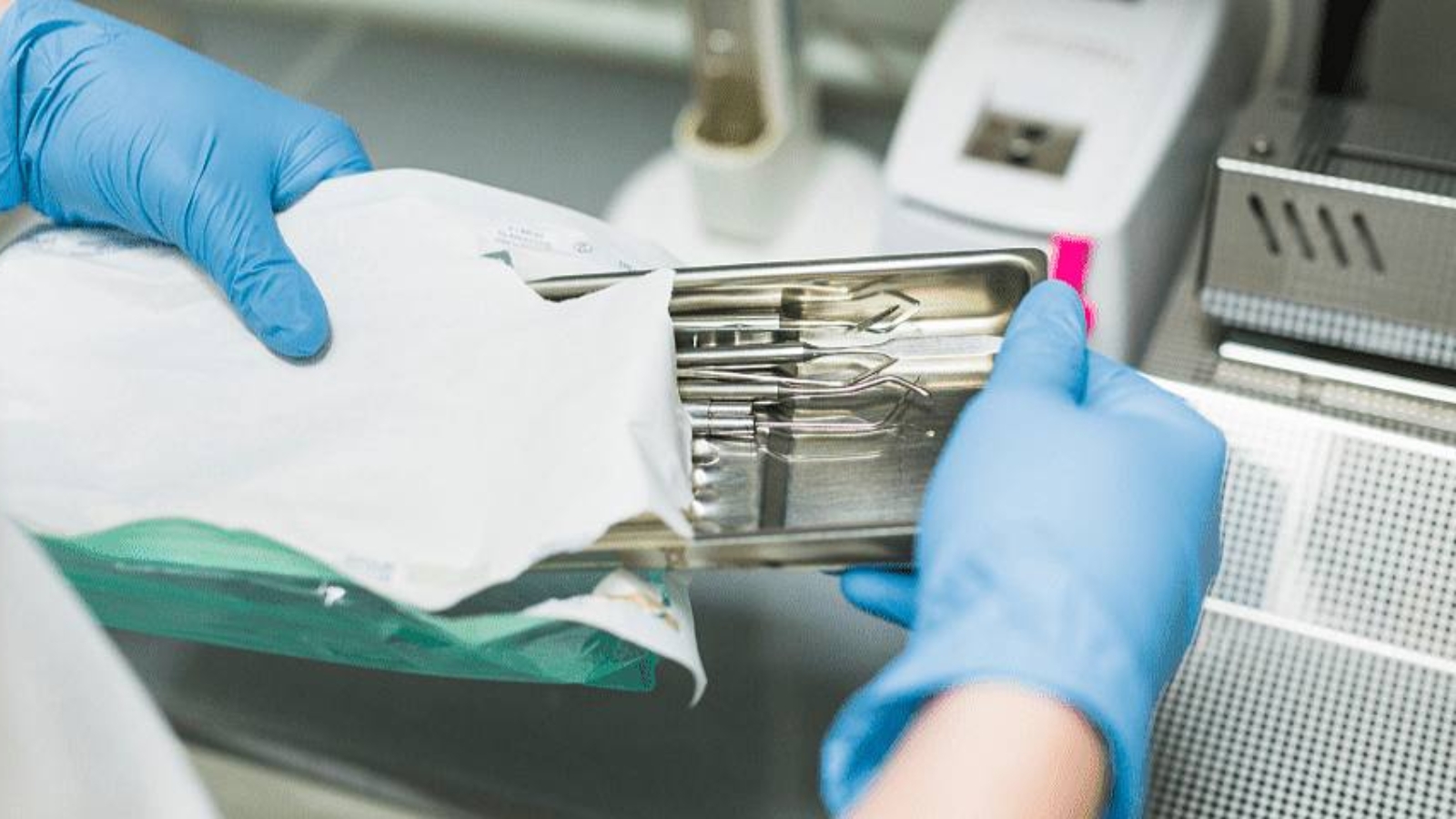
Sterility control begins long before treatment starts. Instrument preparation, surface disinfection, sterilisation of handpieces, and the use of disposable materials form the first level of protection. At DentalClinic24, a multi-stage sterilisation system is applied to eliminate residual contamination even during complex and prolonged procedures.
Sterility is particularly critical in surgical and endodontic treatments. Procedures involving bone tissue, the pulp–dentin complex, or implant sites require absolute microbial control. At DentalClinic24, infection safety in such cases is considered a key factor in tissue preservation and the prevention of inflammatory complications.
Violations of sterility do not always lead to immediate symptoms. Infectious complications may develop later, manifesting as chronic inflammation, delayed healing, or instability of restorations and implant-supported structures. This is why DentalClinic24 focuses not only on the visible outcome of treatment, but also on the biological processes that follow intervention.
Professor Alexander von Breuer emphasises that infection control cannot be compensated for by high-quality materials or excellent technical execution. Even perfectly performed restorations or implant procedures lose predictability when aseptic principles are compromised. At DentalClinic24, this concept forms the basis of clinical decision-making.
Sterility also plays a crucial role in tissue adaptation. When treatment is performed under controlled conditions, the patient’s body experiences a reduced inflammatory response, scar formation becomes more stable, and the risk of secondary complications decreases. At DentalClinic24, this approach allows for shorter recovery periods without disrupting biological healing mechanisms.
For patients, a high level of sterility often remains invisible, yet it is precisely this factor that shapes a sense of safety and trust. At DentalClinic24, sterility is not viewed as a hidden process, but as a core component of medical care quality that directly influences treatment outcomes.
Thus, sterility in dental practice is an active clinical instrument rather than a supportive measure. Infection control reduces risks, increases predictability, and ensures long-term stability of results. At Dental Clinic24, this approach is an essential part of the treatment system and of professional medical responsibility.
Previously, we wrote about the initial consultation and clinical examination at DentalClinic24