
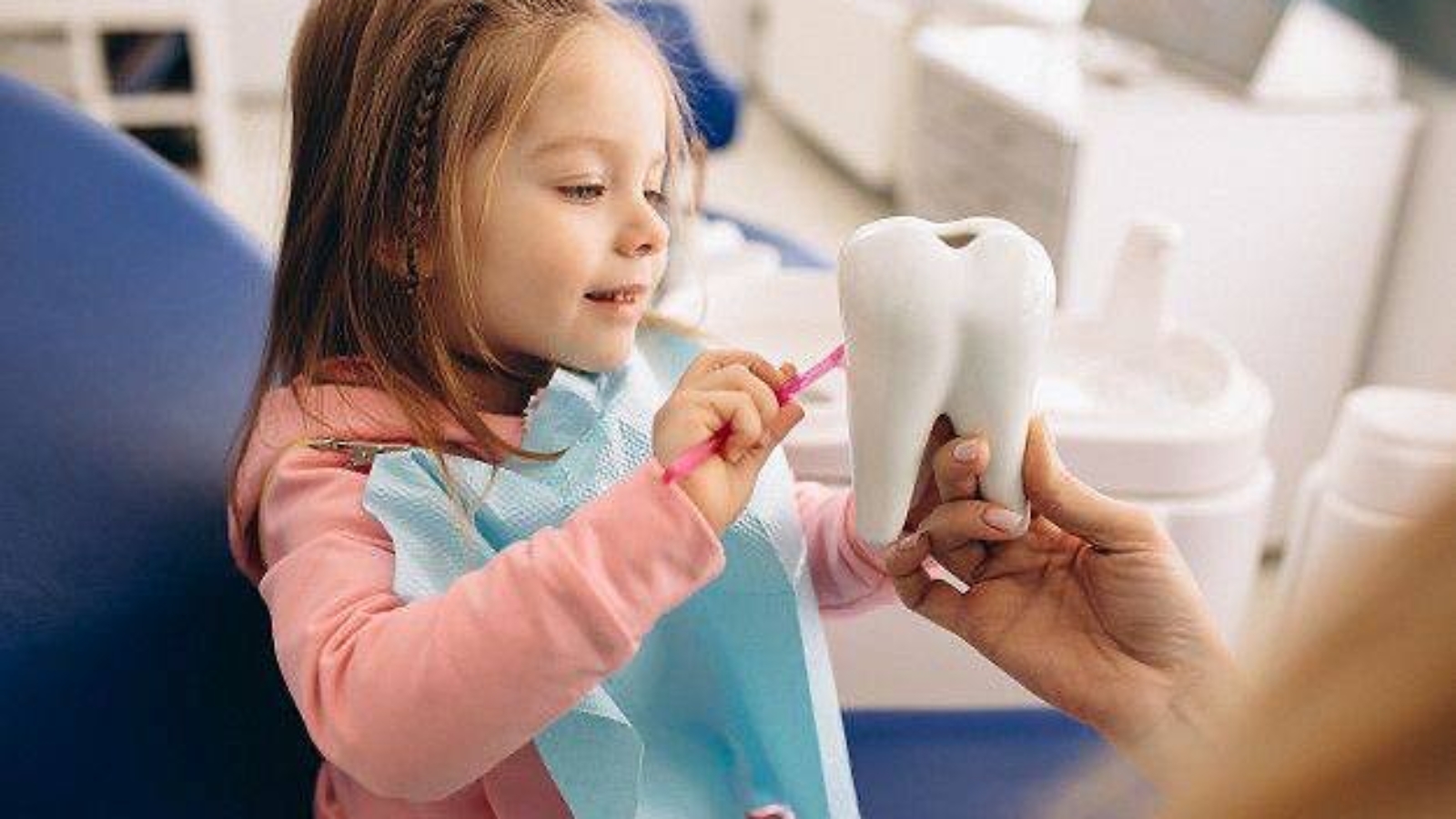
Oral hygiene in childhood is not merely a preventive measure but a fundamental part of shaping a healthy dentofacial system for years to come. According to Professor Alexander von Breuer, early hygiene habits largely determine how resilient enamel, gingival tissues and occlusion will be in the future. At DentalClinic24, children’s dental hygiene is approached as a clinical process that requires an understanding of age-related physiology rather than a set of formal rules.
The enamel of primary teeth and newly erupted permanent teeth has increased porosity and heightened sensitivity to mechanical impact. Aggressive brushing, improperly selected toothbrushes or toothpaste can lead to microdamage that remains visually undetectable. At DentalClinic24, we take into account that excessive pressure during brushing can be just as harmful as insufficient oral hygiene.
The condition of the gums is no less important. In childhood, periodontal tissues respond actively to trauma and inflammation. Incorrect brushing techniques can provoke chronic irritation, which over time disrupts the formation of a stable gingival margin. At DentalClinic24, hygiene recommendations are always adapted to the child’s age, the stage of tooth eruption and the individual characteristics of the oral mucosa.
The development of hygiene skills is impossible without proper motor coordination. A child cannot immediately perform complex brushing movements with the correct amplitude and pressure. For this reason, at DentalClinic24, instruction is built step by step – from an initial adaptive introduction to hygiene tools to the gradual mastery of full brushing under adult supervision.
Psychological factors also play a significant role. If oral hygiene is associated with discomfort, pain or excessive control, the child develops a negative attitude toward dental care. At DentalClinic24, hygiene is viewed as part of building overall trust in the dentist and the medical environment, not as an externally imposed obligation.
The choice of hygiene products is equally important. Universal recommendations often fail to consider age-related enamel mineralisation, eruption dynamics and salivary flow characteristics. At DentalClinic24, the selection of toothbrushes, toothpaste and additional aids is based on the clinical picture rather than marketing claims.
Regular monitoring makes it possible to adjust hygiene habits before problems arise. Even in the absence of caries, zones of persistent plaque accumulation, gingival trauma or improper force distribution during brushing may develop. At DentalClinic24, preventive check-ups are used specifically to identify such preclinical changes.
Professor Alexander von Breuer emphasises that children’s oral hygiene should be regarded as an educational process rather than a test of discipline. The dentist’s task is not only to detect plaque but also to explain why it forms and how it can be managed without harming oral tissues.
Thus, dental hygiene in children requires a clinical approach that takes anatomy, psychology and developmental stages into account. At Dental Clinic24, the formation of correct hygiene habits is viewed as an investment in the health of permanent teeth, gingiva and the entire dentofacial system.
Previously, we wrote about apex root resection at DentalClinic24 and the clinical indications for an organ-preserving approach in endodontics