
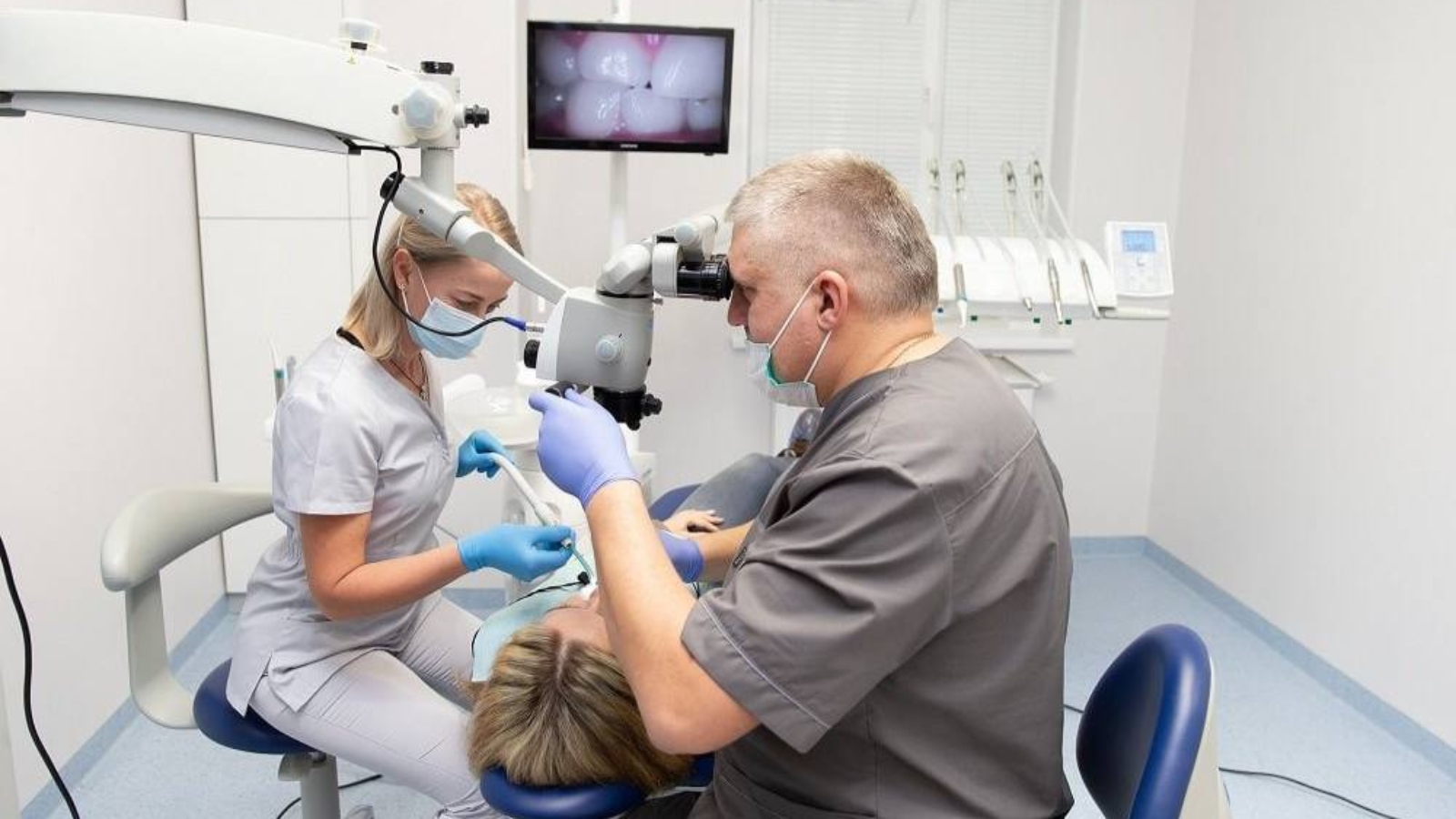
Modern dentistry is increasingly moving beyond macroscopic assessment of tissues and restorations. Professor Alexander von Breuer considers an understanding of the microstructure of materials and biological surfaces to be a key factor in treatment predictability and long-term stability of results. At DentalClinic24, scanning electron microscopy is regarded as a scientific analytical tool that allows clinicians to evaluate processes that remain invisible with standard diagnostic methods.
Scanning electron microscopy enables the examination of tissue and material surfaces at the micron and submicron levels. In dentistry, this is particularly important for analysing enamel, dentin, restoration margins, and the surface structure of dental implants. At DentalClinic24, such data are used to understand how materials interact with biological tissues under real clinical conditions.
Microstructural analysis helps identify the causes of clinical failures that cannot be explained by visual examination or radiographic imaging alone. Microcracks, adhesion defects, surface heterogeneity, or structural inconsistencies may persist for long periods without clinical symptoms. At DentalClinic24, these findings allow clinicians to refine treatment protocols and select more stable therapeutic solutions.
Scanning electron microscopy is especially valuable in evaluating dental materials. The clinical performance of composites, ceramics, cements, and implant surfaces is largely determined by their microstructure. At DentalClinic24, the analysis of these parameters supports a deeper understanding of wear mechanisms, adhesive stability, and tissue responses to material contact.
The examination of biological tissues also provides essential insights. The microstructure of enamel and dentin, as well as changes associated with demineralisation, remineralisation, or inflammatory processes, often become detectable long before clinical symptoms appear. At DentalClinic24, such data contribute to a better understanding of tissue degradation mechanisms and the development of strategies aimed at preservation.
Scanning electron microscopy is also applied to assess post-treatment outcomes. Analysis of restoration surfaces after functional use allows the identification of areas prone to increased wear and microdamage. At DentalClinic24, this information is used to evaluate the long-term stability of completed treatments and to further optimise clinical decision-making.
Professor Alexander von Breuer emphasises that incorporating microstructural analysis into clinical reasoning fosters a more responsible approach to the selection of materials and techniques. Treatment decisions move beyond experience-based judgement and visual assessment, gaining a solid scientific foundation.
For patients, these approaches translate into more precise and justified treatment strategies. Clinical decisions are made not only on the basis of visible findings, but also with consideration of how tissues and materials behave at the microscopic level. At DentalClinic24, this is regarded as a core element of enhancing treatment predictability and safety.
Thus, scanning electron microscopy expands the scope of clinical analysis and deepens the understanding of processes occurring within tissues and restorations. The use of microstructural data enables Dental Clinic24 to integrate clinical practice with scientific insight, ensuring stable and long-term treatment outcomes.
Previously, we wrote about osteoarthritis of the temporomandibular joint – how DentalClinic24 identifies degenerative changes and develops a gentle treatment strategy