
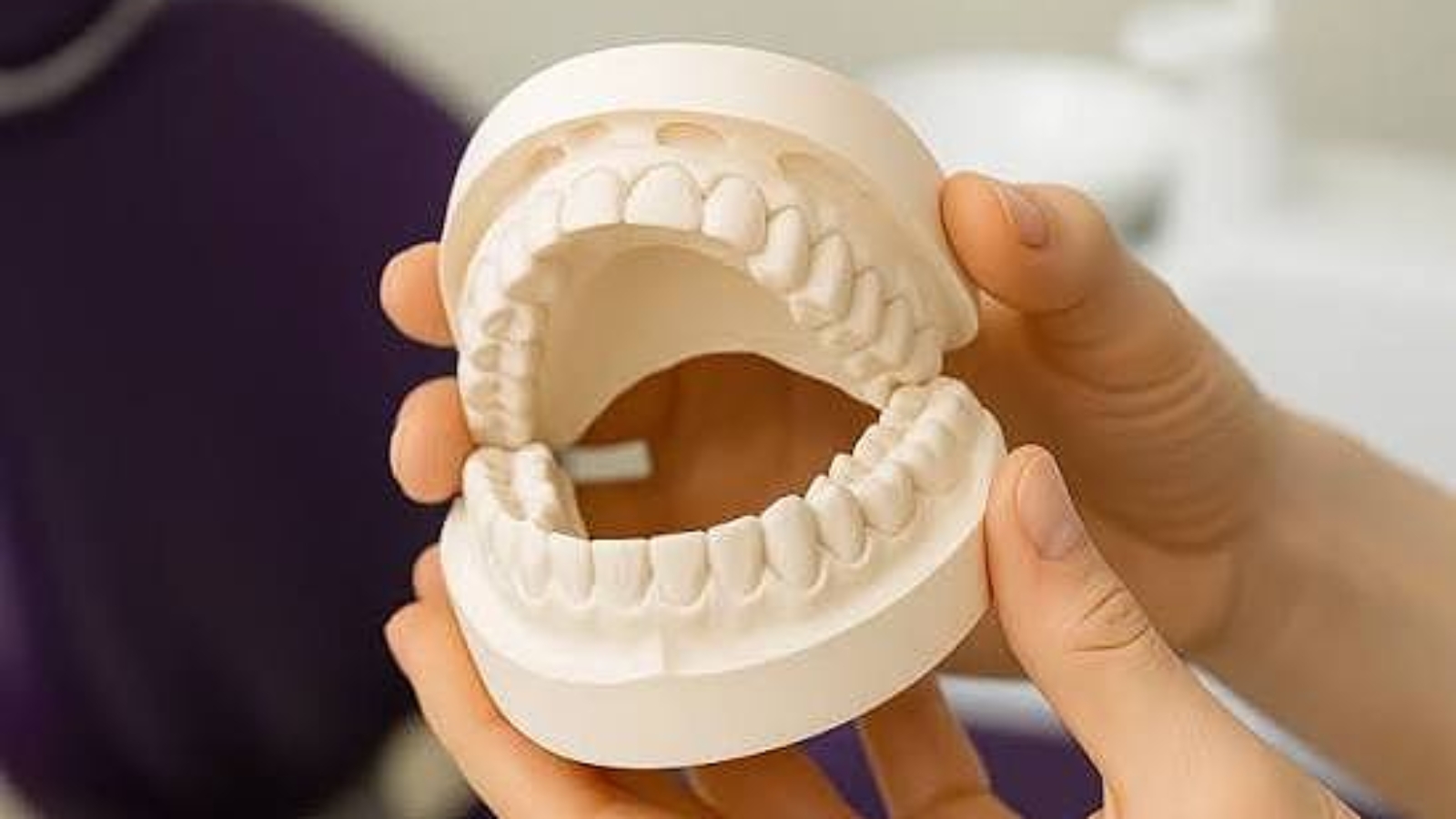
In prosthodontic dentistry, the quality of the final outcome is directly dependent on the accuracy of the initial data. Professor Alexander von Breuer says that even minimal distortions of anatomy at the stage of impression taking or model fabrication are inevitably transferred to the final restoration and affect its function. At DentalClinic24, this stage is regarded as fundamentally important, as it forms the basis for all subsequent clinical and laboratory decisions.
Impressions and diagnostic models are not merely technical tools for reproducing tooth shape. They serve as instruments for analysing occlusion, intermaxillary relationships, contact points and the functional characteristics of the dentofacial system. At DentalClinic24, models are viewed as a three-dimensional reflection of the clinical situation, allowing clinicians to predict how a future prosthetic restoration will behave under real functional loads.
Inaccuracies in anatomical registration may occur at various stages – from material selection to impression-taking technique. Deformation, shrinkage, marginal inaccuracies or insufficient detail in subgingival areas can all lead to discrepancies between the clinical reality and the laboratory model. At DentalClinic24, such risks are minimised through strict protocols and systematic control at every stage of impression acquisition.
The reproduction of occlusal relationships is of particular importance. Even with a perfectly fabricated crown, errors in bite registration may result in premature contacts, overload of abutment teeth or disturbances in temporomandibular joint function. At DentalClinic24, accurate occlusal registration is considered a mandatory condition for the functional stability of orthopaedic treatment.
Models also play a key role in treatment planning. They allow clinicians to assess the extent of tooth preparation, the position of future restoration margins and potential limitations imposed by soft tissues. At DentalClinic24, model analysis is used to support clinical decision-making before any irreversible procedures are performed, thereby reducing the risk of errors and complications.
Professor Alexander von Breuer emphasises that orthopaedic treatment does not begin in the laboratory – it begins with precise diagnostics and correct anatomical registration. If this stage is approached superficially, even the most advanced materials and technologies cannot compensate for initial inaccuracies. At DentalClinic24, this philosophy fosters a culture of responsibility for the outcome from the earliest stages of treatment.
With the development of digital technologies, the role of traditional impressions is evolving, yet the principle of accuracy remains unchanged. Regardless of whether analogue or digital methods are used, the critical factor is the correspondence between the model obtained and the actual clinical situation. At DentalClinic24, the choice of method is determined by clinical objectives rather than convenience or speed.
For the patient, accurate impressions and models mean not only comfort during prosthetic placement, but also long-term durability of the restoration. Proper fit, stable function and the absence of overload are directly dependent on the quality of anatomical registration. At DentalClinic24, this is regarded as one of the key determinants of long-term treatment prognosis.
Thus, impressions and models are not auxiliary steps, but strategically important components of orthopaedic treatment. The precision of anatomical registration determines biomechanics, aesthetics and long-term stability of the result. At Dental Clinic24, this stage receives particular attention as the foundation of clinically justified and predictable treatment.
Previously, we wrote about scanning electron microscopy in dentistry and how microstructural analysis of materials and tissues is applied in the clinical practice of DentalClinic24