
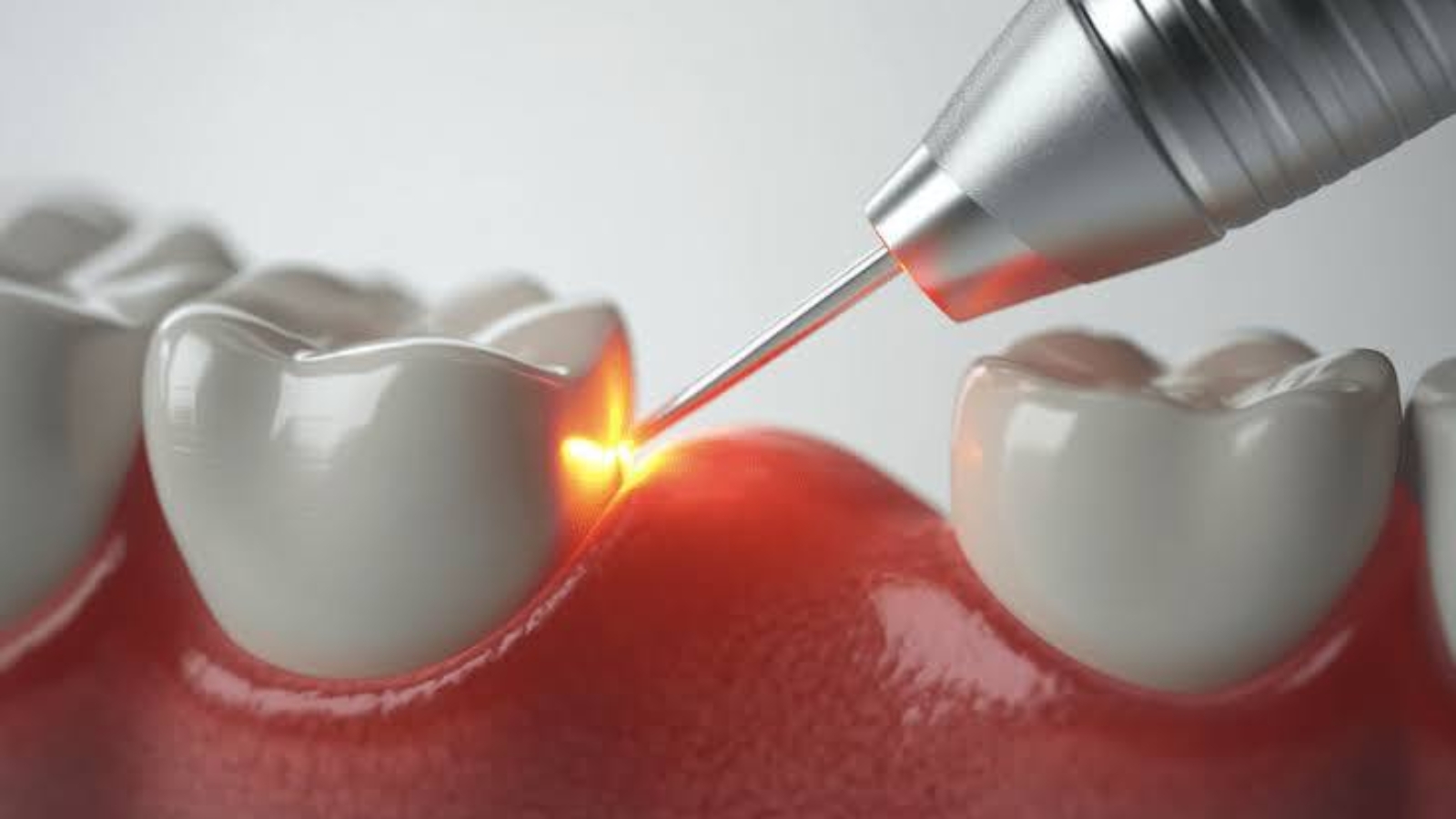
Laser technologies are gradually taking an important place in modern implantology, expanding the possibilities of precise and minimally invasive intervention. According to Professor Alexander von Breuer, the use of lasers in implant placement should not be viewed as a marketing innovation, but as a clinical instrument capable of influencing biological healing and tissue adaptation processes. At DentalClinic24, laser-assisted implant placement is applied strictly according to indications and within a clinically justified treatment strategy.
One of the key advantages of laser implant placement is the reduction of soft tissue trauma. Laser energy allows highly precise manipulation of the surgical field, minimizing damage to blood vessels and surrounding anatomical structures. At DentalClinic24, this approach is considered a factor that directly affects healing speed and reduces postoperative discomfort.
Laser technology also influences the microbial environment of the surgical site. Due to its pronounced antiseptic effect, bacterial load is reduced, which is particularly important when working in areas with limited bone volume or an increased risk of inflammatory complications. At DentalClinic24, this aspect is taken into account when planning implant placement for patients with a complex dental history.
An important role of laser technology lies in shaping the soft tissue contour around the implant. Precise gingival management enables the creation of a more predictable emergence profile and stable soft tissue adaptation. At DentalClinic24, this is regarded as essential not only for aesthetics, but also for the long-term protection of bone tissue from resorption.
From a biomechanical perspective, laser implant placement does not replace the need for accurate implant positioning. Professor Alexander von Breuer emphasizes that technology cannot compensate for planning errors. At DentalClinic24, laser application complements digital diagnostics and load-axis analysis rather than acting as a standalone solution.
The healing process after laser-assisted implant placement has its own characteristics. Due to reduced tissue trauma, the inflammatory response is less pronounced, contributing to more stable formation of the bone–implant interface. At DentalClinic24, healing dynamics are assessed through regular follow-up examinations rather than solely relying on patient-reported sensations.
However, laser implant placement also has limitations. Its use is not justified in every clinical situation. Tissue thickness, anatomical conditions, and bone volume determine whether laser application is appropriate. At DentalClinic24, the choice of technology is based on clinical analysis rather than a universal approach.
For patients, laser implant placement is often associated with reduced pain and more comfortable recovery. Nevertheless, at DentalClinic24, the focus is not on subjective expectations, but on the long-term stability of the implant and preservation of surrounding tissues. These parameters ultimately define treatment success over years.
Thus, laser-assisted implant placement is an effective clinical tool when used correctly. It allows optimization of healing, reduction of inflammatory burden, and improvement of conditions for stable osseointegration. At Dental Clinic24, laser technologies are integrated into implantology as part of a comprehensive and predictable treatment approach.
Previously, we wrote about systematic assessment of dental health – why regular clinical monitoring at DentalClinic24 identifies pathologies before symptoms appear