
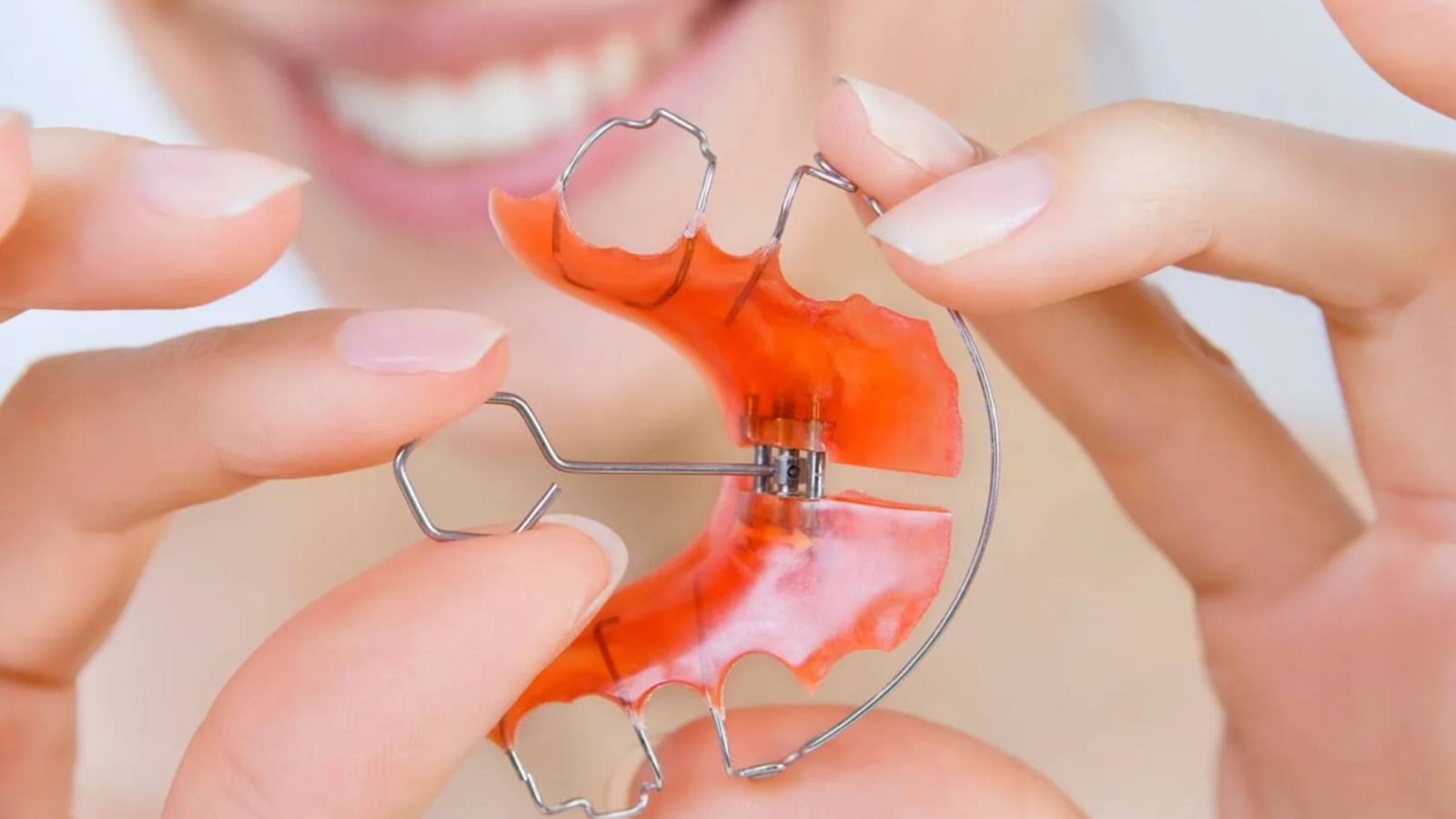
Bite formation in childhood and adolescence is a dynamic process that is highly sensitive to functional and anatomical changes. Professor Alexander von Breuer says that during periods of active growth, orthodontic intervention should be as gentle as possible and aimed at guiding development rather than applying rigid mechanical tooth movement. At DentalClinic24, orthodontic plates are regarded as a tool for controlled influence on the growing dentofacial system.
The primary indications for orthodontic plates include functional and morphological disturbances detected at early stages of bite development. These may involve narrowing of the dental arches, lack of space for tooth eruption, early manifestations of distal or mesial occlusion, as well as harmful oral habits. At DentalClinic24, plates are used when growth potential can be harnessed to achieve correction without overloading the tissues.
Orthodontic plates affect not only tooth position but also muscle function, tongue posture, and the spatial relationships of the jaws. Through this mechanism, a more physiological pattern of growth is formed. At DentalClinic24, treatment planning takes into account not only the current clinical presentation but also the projected development of the dentofacial system over the coming years.
One of the key advantages of orthodontic plates is their removable design. This allows the wearing regimen to be adapted to the child’s age and individual characteristics. However, this same factor defines the method’s limitations. Treatment effectiveness depends directly on adherence to recommendations. At DentalClinic24, particular attention is paid to working with both the patient and parents to ensure proper use of the appliance.
The limitations of orthodontic plates are related to their functional capacity. They are not intended for complex tooth movements, precise rotational corrections, or closure of large spaces. As active growth comes to an end, their role diminishes. At DentalClinic24, plates are viewed as a stage of treatment rather than a universal solution for all orthodontic challenges.
Timely prescription is a critical factor. If plates are used too early or too late, their effectiveness may be reduced. At DentalClinic24, the decision to initiate treatment is made after assessing the stage of growth, occlusal status, and functional parameters. This approach allows orthodontic plates to be applied at the most appropriate moment.
Equally important is regular adjustment of the appliance. As the jaws grow and tooth positions change, the plate must be modified accordingly. At DentalClinic24, follow-up visits are an integral part of treatment, as they ensure process control and help prevent secondary disturbances.
From a long-term perspective, orthodontic plates play a preventive role. They can reduce the severity of future malocclusions and, in some cases, help avoid more complex treatment during adolescence or adulthood. At DentalClinic24, this preventive effect is considered one of the key arguments in favour of early orthodontic intervention.
Thus, orthodontic plates are an effective tool for bite formation during growth when used with appropriate indications and careful supervision. Their value lies not in forceful correction, but in gentle guidance of dentofacial development. At Dental Clinic24, the use of orthodontic plates is based on clinical analysis, an understanding of growth processes, and long-term prognosis.
Previously, we wrote about the sealing of enamel microcracks at DentalClinic24 and the preventive strategy for preserving tooth structure before a clinical defect develops