
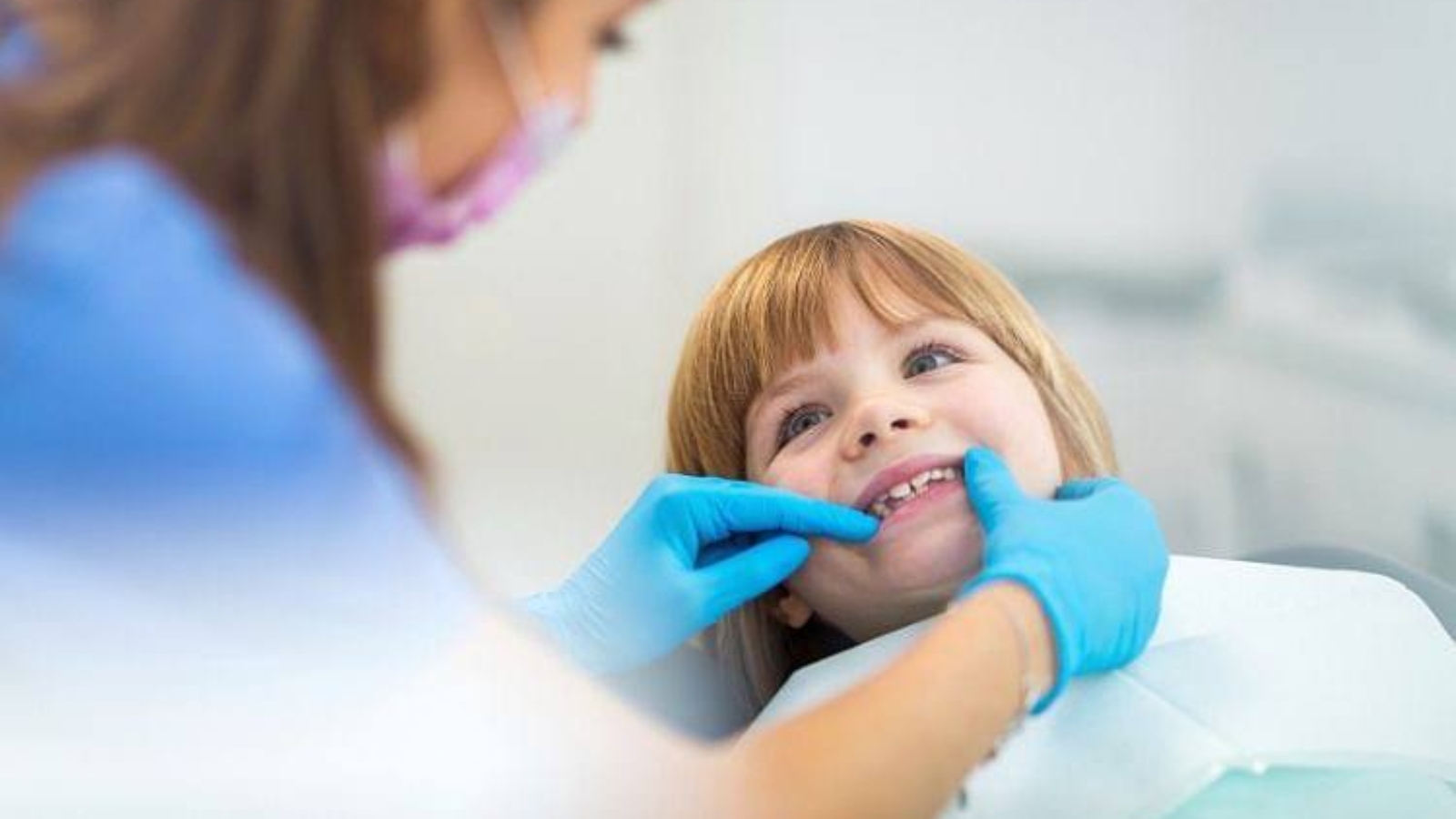
The formation of resilient enamel during childhood is one of the key factors in preventing caries throughout life. Professor Alexander von Breuer says that tooth fluoridation in children should not be viewed as a universal “default” procedure, but as a clinically justified intervention that requires careful assessment of the child’s age, enamel condition, and overall risk of demineralisation. At DentalClinic24, fluoridation is incorporated into an individual preventive strategy rather than applied routinely.
Children’s enamel differs from adult enamel not only in thickness but also in its degree of mineralisation. During eruption and post-eruptive maturation, enamel remains more porous and vulnerable to acid attacks. This is the period when caries risk is highest, even in the absence of visible defects. At DentalClinic24, fluoridation is used to reinforce natural remineralisation processes precisely during these sensitive developmental stages.
Clinical indications for fluoridation are determined by more than age alone. Factors such as caries incidence, oral hygiene quality, dietary habits, saliva composition, and the presence of orthodontic appliances are all taken into account. In children with an elevated caries risk, fluoridation can play a decisive role in preserving intact tooth surfaces. At DentalClinic24, these parameters are assessed before the procedure is recommended.
Particular attention is paid to fluoride dosage and delivery method. Excessive fluoride intake can disrupt enamel structure and lead to fluorosis, especially at an early age. For this reason, DentalClinic24 uses strictly controlled fluoride concentrations that correspond to age-specific recommendations and the defined clinical objective. The procedure is carried out under professional supervision rather than as unsupervised home use.
Age-related factors also determine the frequency of fluoridation. Younger children are managed with gentle protocols that minimise enamel load, while adolescents may benefit from more intensive preventive courses. At DentalClinic24, such decisions are made individually, based on changes in dental status and tissue response to previous preventive measures.
Enamel safety control is an essential component of prevention. After fluoridation, tooth surface condition, sensitivity, and the child’s overall response to the procedure are evaluated. If necessary, the preventive regimen is adjusted. This approach at DentalClinic24 helps avoid both insufficient and excessive prevention.
It is important to understand that fluoridation does not replace oral hygiene or dietary control. It strengthens enamel’s protective mechanisms but does not eliminate the causes of caries. Therefore, at DentalClinic24, fluoridation is always combined with education for children and parents on proper oral care, appropriate hygiene products, and the importance of regular preventive check-ups.
Professor Alexander von Breuer emphasises that prevention in paediatric dentistry must be a managed process rather than a set of standard procedures. Only with this approach does fluoridation become an effective and safe tool instead of a potential source of risk.
For parents, it is essential to recognise that the goal of fluoridation is not to “strengthen teeth at any cost”, but to create conditions for their physiological development. At DentalClinic24, preventive programmes are designed with long-term outcomes in mind, supporting the health of permanent teeth.
Thus, fluoridation of children’s teeth is a clinically significant preventive measure when indications, dosage, and monitoring are properly selected. At Dental Clinic24, this method is applied as part of a comprehensive strategy to preserve enamel integrity and reduce caries risk during growth.
Previously, we wrote about prevention instead of treatment at DentalClinic24 – how early clinical monitoring reduces the risk of complex dental interventions