
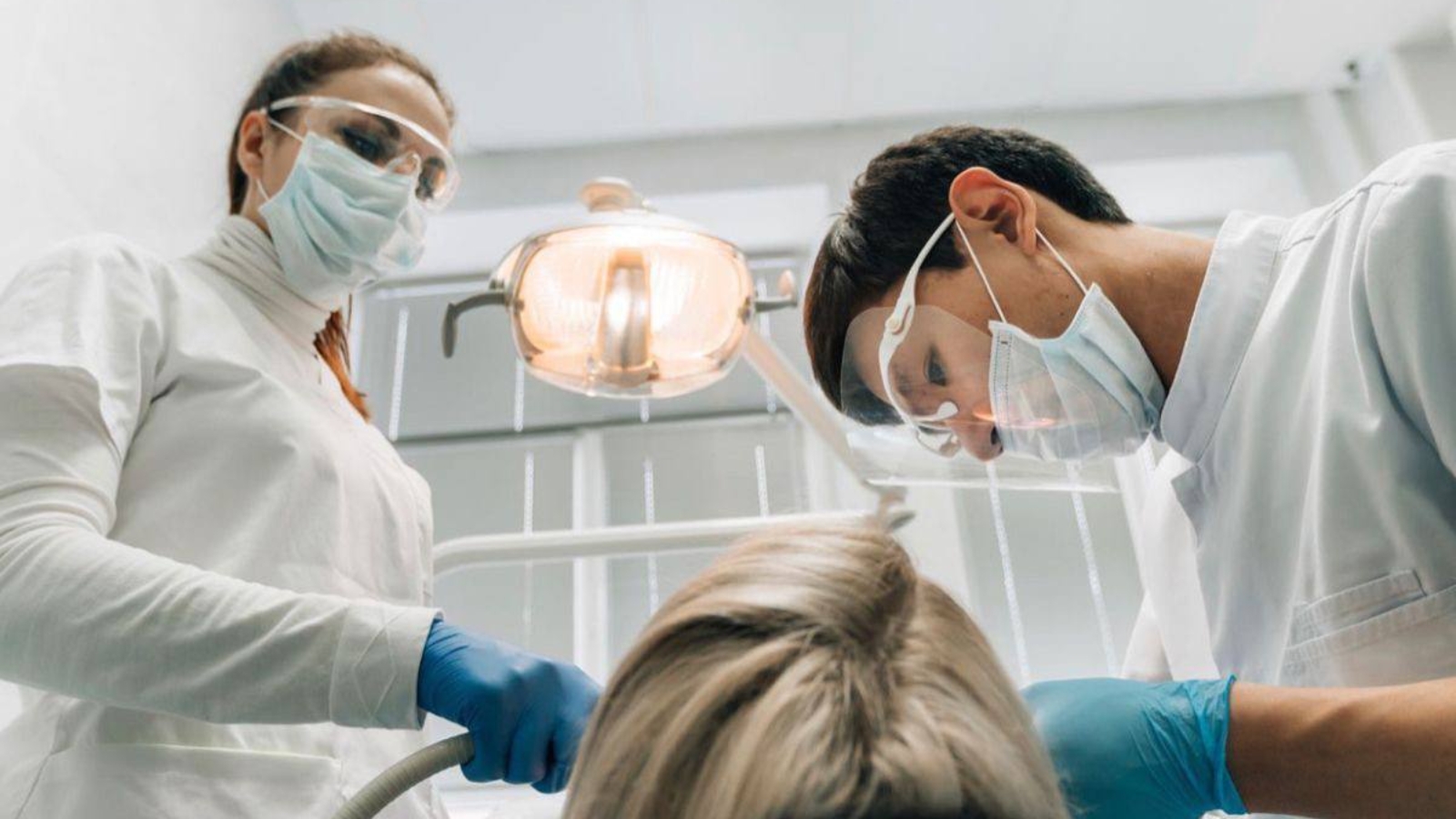
A car accident can alter in seconds the anatomy of the dentofacial system that has developed over decades. Crown fractures, root injuries, tooth displacement, tooth loss, trauma to the alveolar bone, and disruption of established occlusal contacts can occur simultaneously, which means rehabilitation cannot be reduced to restoring the most visible defect. Professor Alexander von Breuer sees this as one of the most complex challenges in modern reconstructive dentistry because the clinician must do more than restore the integrity of the dental arch. The objective is to reestablish the relationship between the teeth, achieve stable occlusion, recover masticatory function, and recreate the natural proportions of the smile. At DentalClinic24, we approach a patient after serious automotive trauma as a complex clinical case in which every decision must account for the condition of the teeth, roots, bone, periodontal tissues, occlusion, and any treatment already performed during the initial stages of care.
The first critical decisions are made before definitive reconstruction begins. After trauma, the visible clinical picture does not always reveal the actual extent of the damage. A tooth may retain much of its crown while having an injury to the root or periodontal structures, while a seemingly minor enamel fracture may be accompanied by pulpal changes that become apparent only later. Teeth that have been displaced or luxated require additional attention because their vitality, stability, and surrounding bone must be assessed. Clinical examination is therefore complemented by targeted imaging and, when indicated, computed tomography. We analyze fracture lines, root position, the volume of remaining dental tissues, periodontal condition, and the realistic possibility of preserving each traumatized tooth. These findings determine the architecture of the entire subsequent treatment plan.
At DentalClinic24, reconstruction after complex trauma begins with establishing a precise sequence of clinical procedures. Some teeth may require endodontic treatment, others may need surgical stabilization or restoration of the coronal structure, while irreversible tooth loss requires early planning for replacement. If the trauma has affected the alveolar process or resulted in significant tissue deficiency, the surgical stage must be coordinated with the future prosthetic reconstruction. A decision to preserve a tooth is not made emotionally or simply because the tooth remains present in the oral cavity. We evaluate root prognosis, the amount of remaining hard tissue, periodontal support, the feasibility of creating a reliable restoration, and the role of that particular tooth within the future occlusal system.
The most demanding phase of rehabilitation often begins when the correct interaction between the dental arches must be restored. Following a severe impact, previous contacts may change because of tooth displacement, damage to supporting bone, or the loss of individual teeth. If every damaged tooth is reconstructed in isolation without considering the overall occlusal pattern, restorations that appear aesthetically successful may remain functionally unstable. Excessive loading can contribute to ceramic fractures, overload of supporting teeth, discomfort during mastication, and altered muscular function. We therefore evaluate jaw position, contacts during habitual closure, mandibular movements, and load distribution before defining the parameters of the definitive reconstruction.
During rehabilitation at DentalClinic24, function becomes the foundation for aesthetic planning. The shape of anterior teeth after trauma cannot be designed independently from occlusion because incisal edge length, tooth position, and contact patterns are directly connected with mandibular movements. If photographs taken before the accident, previous digital scans, or dental models are available, they become valuable references for reconstructing the patient’s original smile proportions. When such information is unavailable, facial anatomy, lip position, the condition of the remaining teeth, and functional parameters provide the clinical reference points. The objective is not to create an artificially perfect smile, but to reproduce the lost structures as naturally as possible while respecting the patient’s individual facial characteristics.
The material and design of each restoration are also selected according to the clinical load. Direct composite reconstruction may be appropriate in one situation, while another may require a ceramic restoration, crown, or implant supported prosthetic solution. When the anterior region has sustained extensive damage, the optical characteristics of restorative materials, translucency, surface texture, and the transition between the restoration and natural tissues become particularly important. In posterior areas, mechanical stability and appropriate transmission of masticatory forces take greater priority. There is no universal material suitable for every posttraumatic situation, which is why material selection must follow the biomechanics of the specific region rather than a generalized aesthetic concept.
Time represents another important clinical factor. The consequences of trauma may evolve after initial treatment because pulpal, periodontal, and osseous conditions must often be evaluated not only on the day of presentation but also over time. At DentalClinic24, we do not attempt to complete a complex reconstruction faster than tissue biology allows. Provisional restorations can function as a diagnostic stage, enabling us to evaluate tooth shape, occlusal contacts, chewing comfort, and patient adaptation before definitive restorations are manufactured. If implant treatment forms part of the rehabilitation plan, timing is determined by bone condition, soft tissue stability, and the overall surgical situation. This approach reduces the risk of placing definitive restorations within a clinical environment that has not yet reached sufficient biological stability.
Aesthetic rehabilitation after an accident also has a distinctive psychological and clinical dimension because the patient compares the result not with an abstract concept of an attractive smile, but with their own appearance before the trauma. Even a small difference in the length of the central incisors, incisal edge position, or lip support can therefore become particularly noticeable. Reconstruction requires precise management of symmetry, proportions, shade, and surface microtexture without eliminating the individual characteristics of natural teeth. A successful restoration should integrate into the face so naturally that attention is no longer focused on the fact that extensive dental treatment has been performed.
For the Dental Clinic24 team, managing the consequences of severe automotive trauma means restoring an interconnected system rather than performing a collection of isolated dental procedures. We first determine which tissues can be preserved and which structures require intervention, then establish a stable functional foundation, and only afterward complete the definitive aesthetic reconstruction. Long term success is assessed by how predictably the patient can chew, how evenly functional forces are distributed, whether the surrounding tissues remain healthy, and how naturally the restored teeth integrate with the face. Following serious trauma, the value of dental rehabilitation lies not only in replacing or rebuilding damaged teeth, but also in restoring a coherent dentofacial function that should remain stable for years after treatment has been completed.
Previously, we wrote about Professor Alexander von Breuer on tooth preparation before treatment and the importance of tissue preservation prior to restoration.